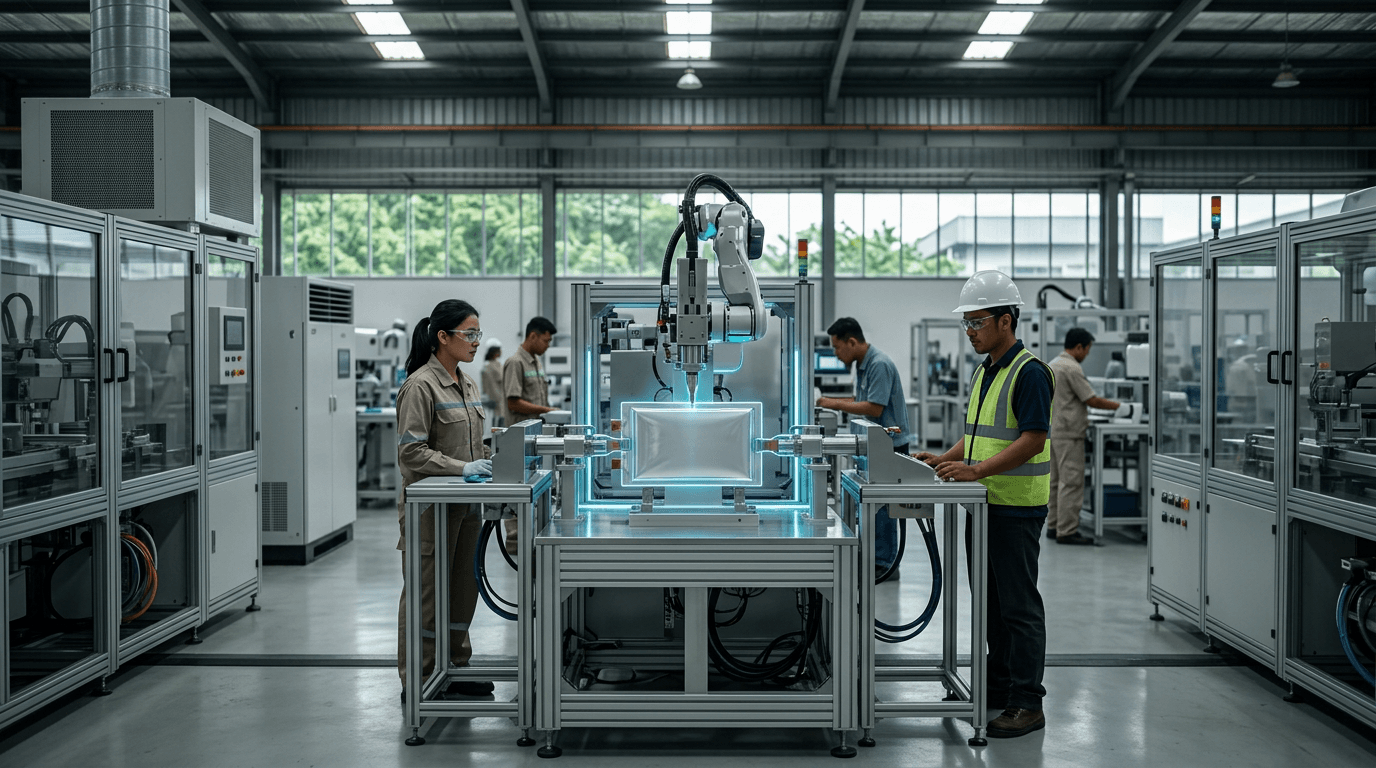
Domestic EV Battery Cell Manufacturing
Geography: Asia Pacific · Southeast Asia · Southeast Asia
Indonesia — Building on its nickel downstream processing success, Indonesia is pursuing domestic EV battery cell manufacturing. LG Energy Solution's $9.8 billion joint venture with Hyundai includes a battery cell factory in Karawang, West Java. CATL is investing in a Sulawesi integrated facility linking nickel processing directly to cathode and cell production.
The ambition is a fully domestic supply chain: Indonesian nickel → Indonesian processing (HPAL) → Indonesian cathode materials → Indonesian battery cells → Indonesian EV assembly. If realized, this would be one of the most vertically integrated battery supply chains outside China. The missing pieces are electrolyte and separator production, still imported from Japan, Korea, and China.
The risk is that evolving battery chemistry threatens the nickel-based strategy. LFP (lithium iron phosphate) batteries, which use no nickel, are gaining market share in affordable EVs — exactly the segment most relevant to Indonesia's domestic market. If LFP dominance continues, Indonesia's nickel-to-battery strategy may be viable only for premium EVs while the mass market moves to nickel-free chemistries.
Research this in Signals
Signals turns a topic into a sourced research record you can inspect and rerun. Your first scan is free, and this one starts with Domestic EV Battery Cell Manufacturing already loaded, so edit it or scan as is.