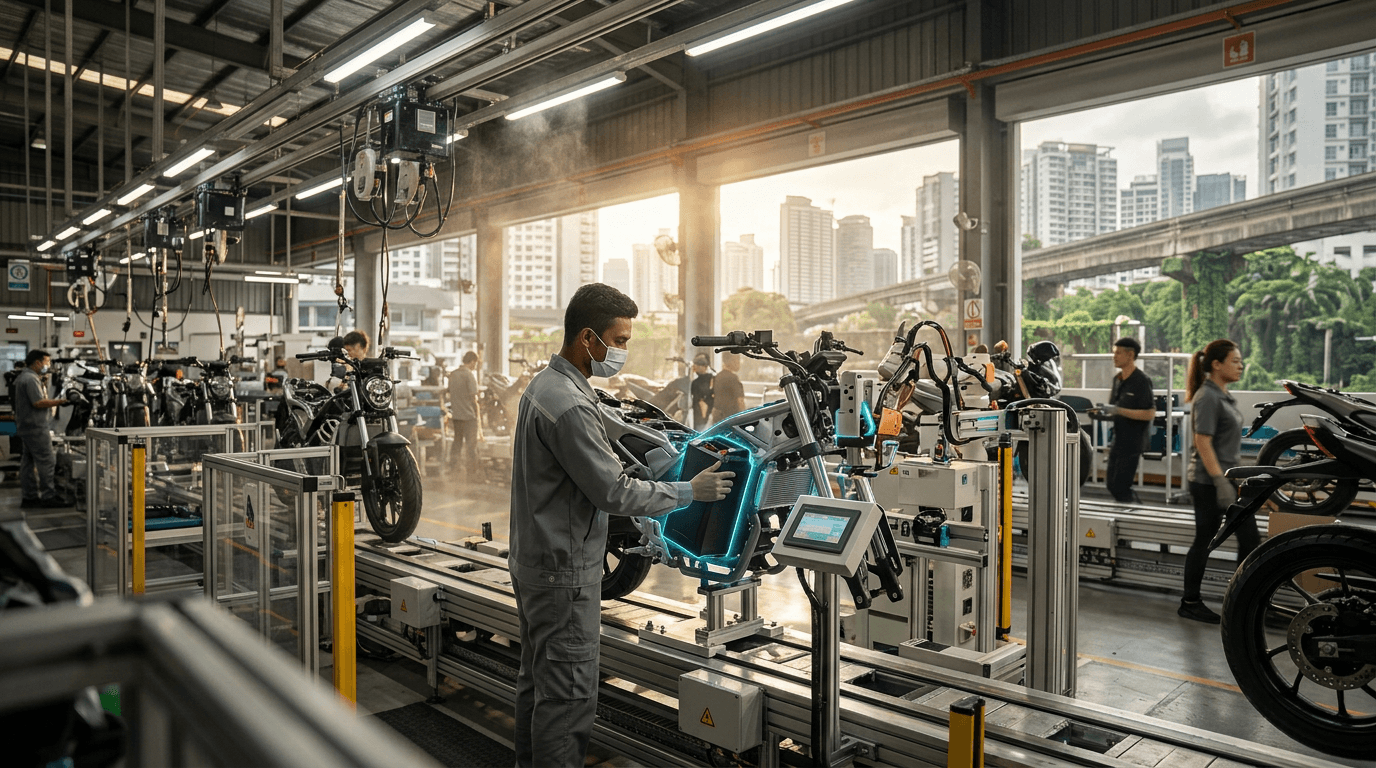
Electric Motorcycle Mass Production
Geography: Asia Pacific · Southeast Asia · Southeast Asia
Indonesia — With 90 million registered motorcycles (the world's third-largest fleet), Indonesia represents the single biggest opportunity for electric two-wheeler adoption. Local startup Alva, alongside Taiwanese Gogoro (battery swapping) and Vietnam's VinFast, are building production capacity. The government offers subsidies and tax incentives for electric motorcycles to accelerate the transition.
The economic logic is compelling: fuel costs for conventional motorcycles consume a significant portion of household income for Indonesia's lower-middle class. Electric motorcycles with swappable batteries could reduce per-kilometer transport costs by 60-70%. Battery swapping also eliminates the charging infrastructure challenge in a country where many urban residents live in apartments without private parking.
Indonesia's nickel downstream processing industry creates a unique vertical integration opportunity: domestic nickel → domestic battery production → domestic EV manufacturing. If this supply chain materializes, Indonesia could become self-sufficient in electric motorcycle production — a sovereignty advantage that most countries lack. The challenge is battery manufacturing quality: producing safe, high-energy-density cells at consumer price points requires manufacturing precision that Indonesia is still developing.
Research this in Signals
Signals turns a topic into a sourced research record you can inspect and rerun. Your first scan is free, and this one starts with Electric Motorcycle Mass Production already loaded, so edit it or scan as is.