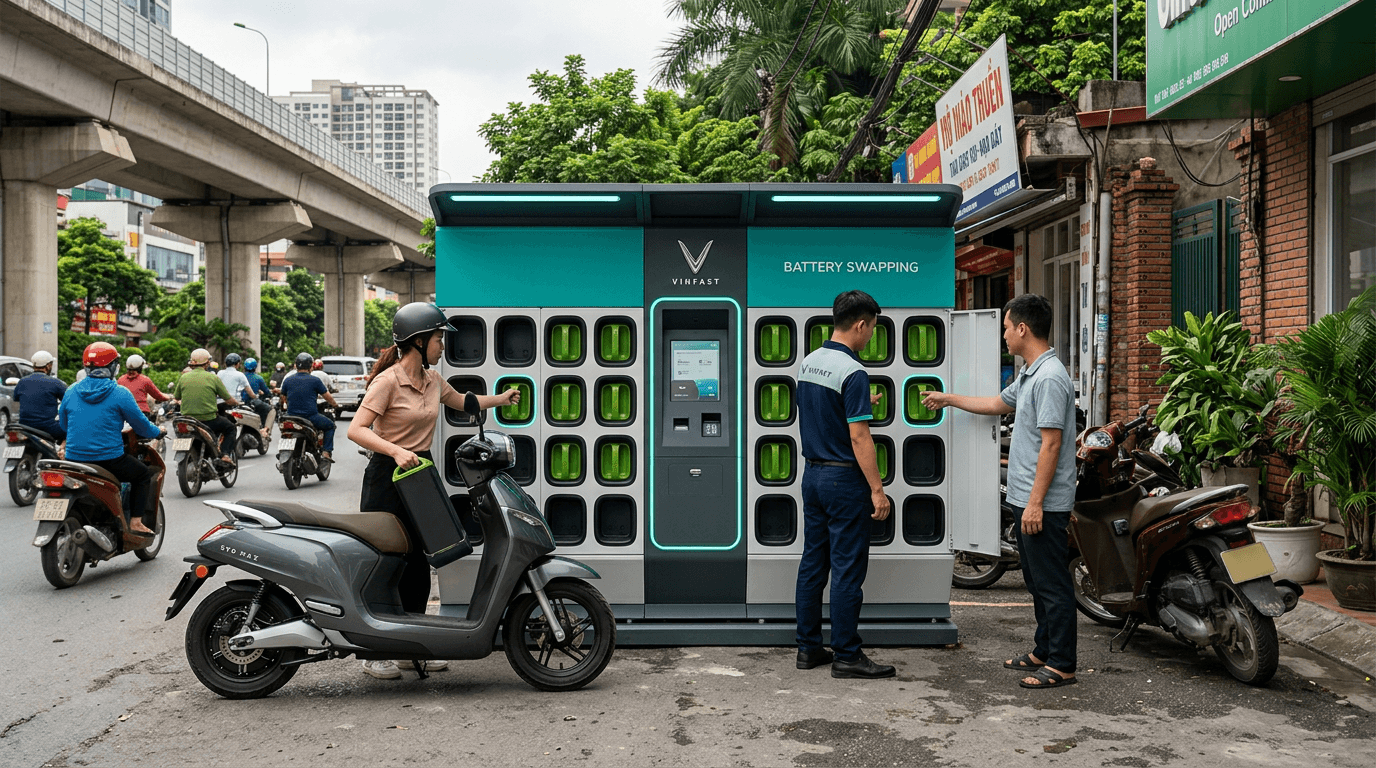
EV Battery Swapping Networks for Two-Wheelers
Geography: Asia Pacific · Southeast Asia · Southeast Asia
Vietnam — VinFast announced a massive battery-swapping network for electric scooters, beginning with the Evo Max model. In a country where 45 million motorbikes are the primary transport mode, battery swapping solves the apartment-dwelling charging problem that home charging cannot. Energy costs per kilometer will be significantly lower than gasoline equivalents.
The technology is specifically adapted to Southeast Asian conditions: dense urban environments, limited garage infrastructure, and a two-wheeler-dominant transport culture. Rather than following the Western model of home-charging four-wheel EVs, Vietnam is building swap-station infrastructure that mirrors the existing petrol station density for motorcycles.
If VinFast succeeds, the battery-swapping model becomes a template for Indonesia (90 million motorbikes), Thailand, and the Philippines. The standardization of swap-compatible batteries across manufacturers could create an ASEAN-wide interoperable energy platform — or, more likely, a fragmented market where first-mover advantage locks in proprietary standards.
Research this in Signals
Signals turns a topic into a sourced research record you can inspect and rerun. Your first scan is free, and this one starts with EV Battery Swapping Networks for Two-Wheelers already loaded, so edit it or scan as is.