AI-Powered Smart Shipyards
Geography: Asia Pacific · East Asia · South Korea
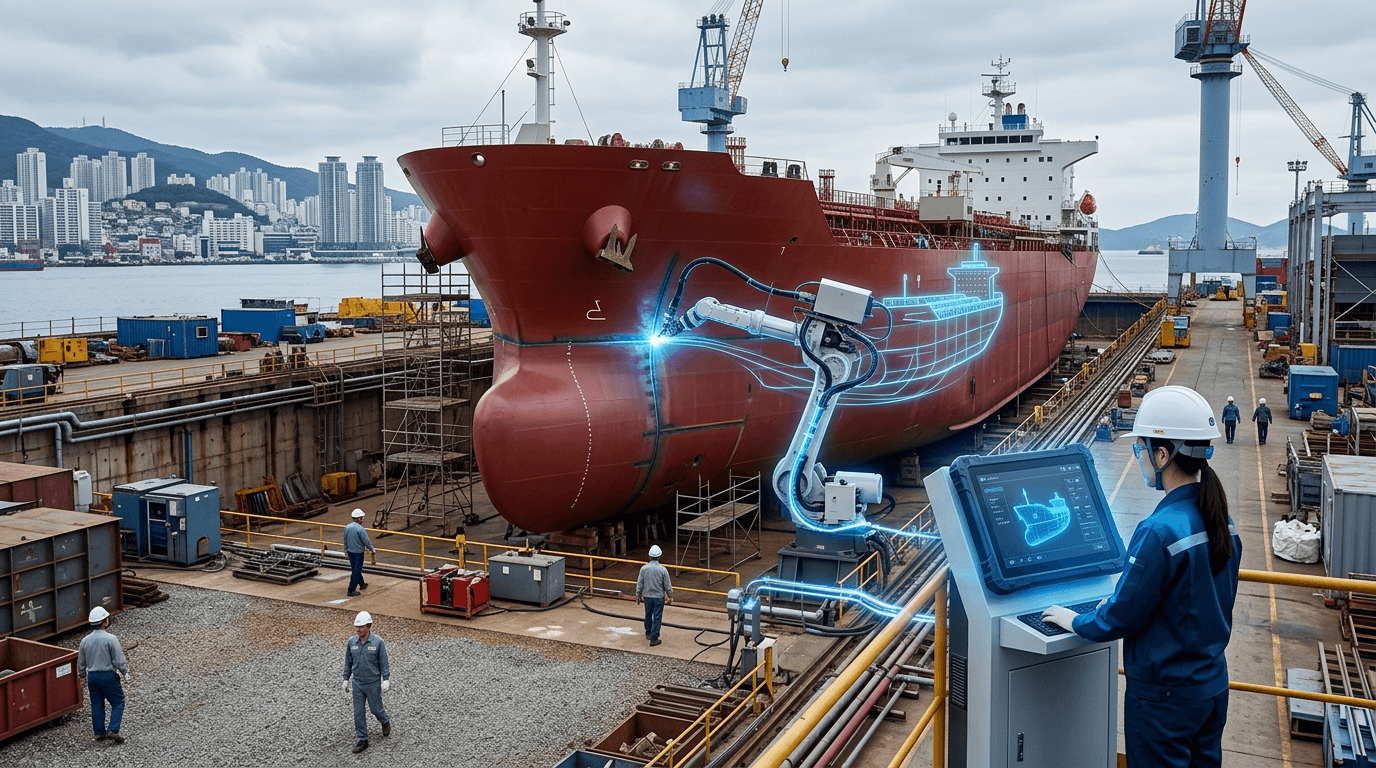
Korean shipyards are integrating AI-powered quality inspection, robotic welding, digital twin simulation, and predictive maintenance into their production processes. HD Hyundai's Ulsan shipyard — the world's largest — uses computer vision to inspect weld quality in real time and digital twins to simulate block assembly before physical construction begins. Samsung Heavy Industries and Hanwha Ocean have parallel smart shipyard programs.
Korea builds approximately 40% of global commercial ships by gross tonnage, specializing in high-value vessels: LNG carriers, container ships, and offshore platforms. These are among the most complex manufactured objects in the world — a single LNG carrier contains 160,000 cubic meters of cryogenic storage operating at -163°C, thousands of kilometers of welding, and miles of piping and electrical systems.
Smart shipyard technologies directly address Korea's structural challenge: an aging workforce and rising labor costs in one of the most physically demanding manufacturing industries. By automating welding, cutting, and inspection, Korean shipyards maintain productivity and quality advantages over lower-cost Chinese competitors. The technology also reduces build times by 10-15%, which matters enormously for an industry where order backlogs stretch years into the future.
Research this in Signals
Signals turns a topic into a sourced research record you can inspect and rerun. Your first scan is free, and this one starts with AI-Powered Smart Shipyards already loaded, so edit it or scan as is.