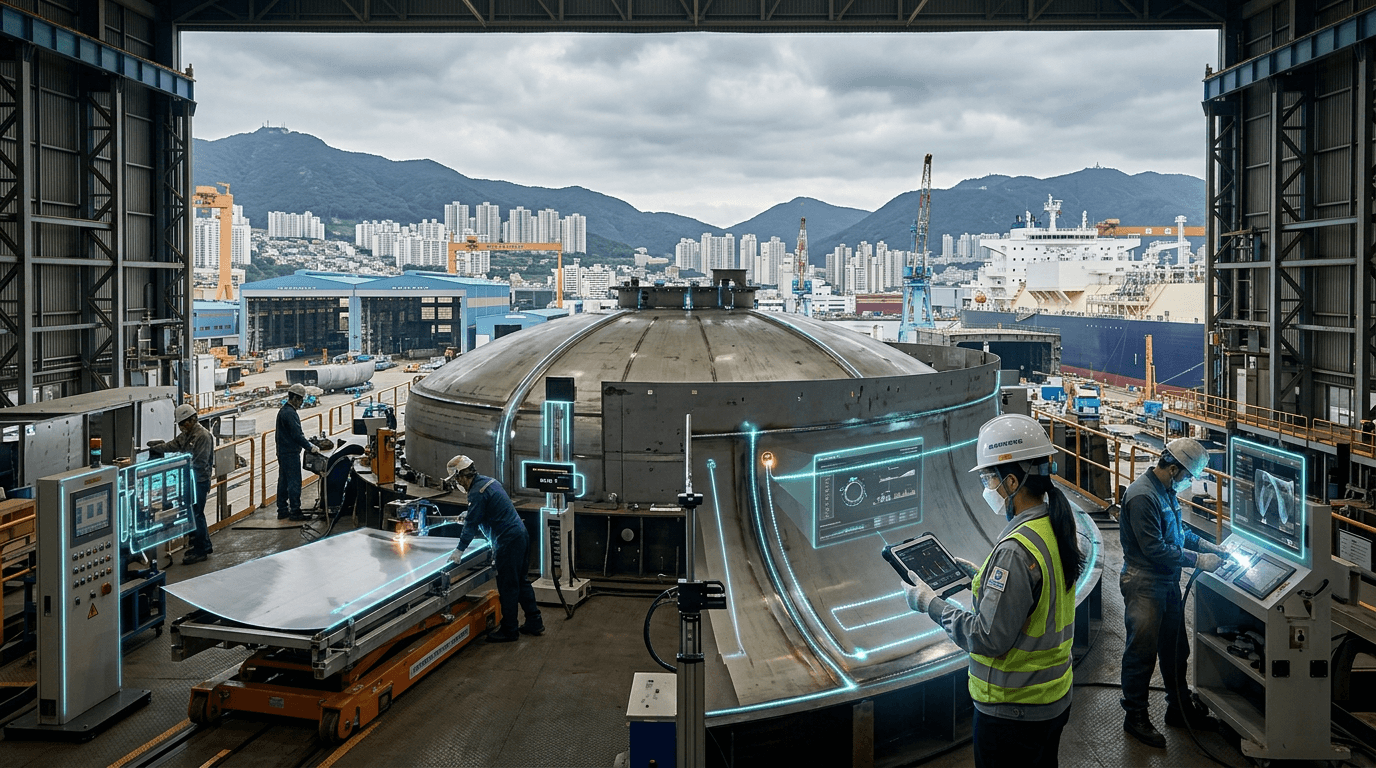
LNG Carrier Manufacturing Dominance
Geography: Asia Pacific · East Asia · South Korea
HD Hyundai Heavy Industries, Samsung Heavy Industries, and Hanwha Ocean collectively control over 70% of global LNG carrier orders. These ships are among the most technically demanding vessels to build, requiring cryogenic containment systems (membrane or Moss-type) that keep liquefied natural gas at -163°C during transoceanic voyages. Korean yards hold decades of accumulated expertise in the specialized welding, insulation, and testing required.
The global LNG trade is growing rapidly as countries transition from coal and seek energy security (particularly in Europe post-Russia). LNG carrier orders have surged, with Korean yards holding backlogs that extend past 2028. A single LNG carrier costs $250-350 million, making this one of the highest-value manufactured products in the world.
China's Hudong-Zhonghua and Jiangnan shipyards are building LNG carrier capacity, but Korean yards maintain quality and delivery advantages that justify premium pricing. For many LNG project sponsors and financiers, Korean-built carriers are effectively the standard — the insurance and certification processes are well-established, and the track record spans hundreds of successful vessels over decades.
Research this in Signals
Signals turns a topic into a sourced research record you can inspect and rerun. Your first scan is free, and this one starts with LNG Carrier Manufacturing Dominance already loaded, so edit it or scan as is.