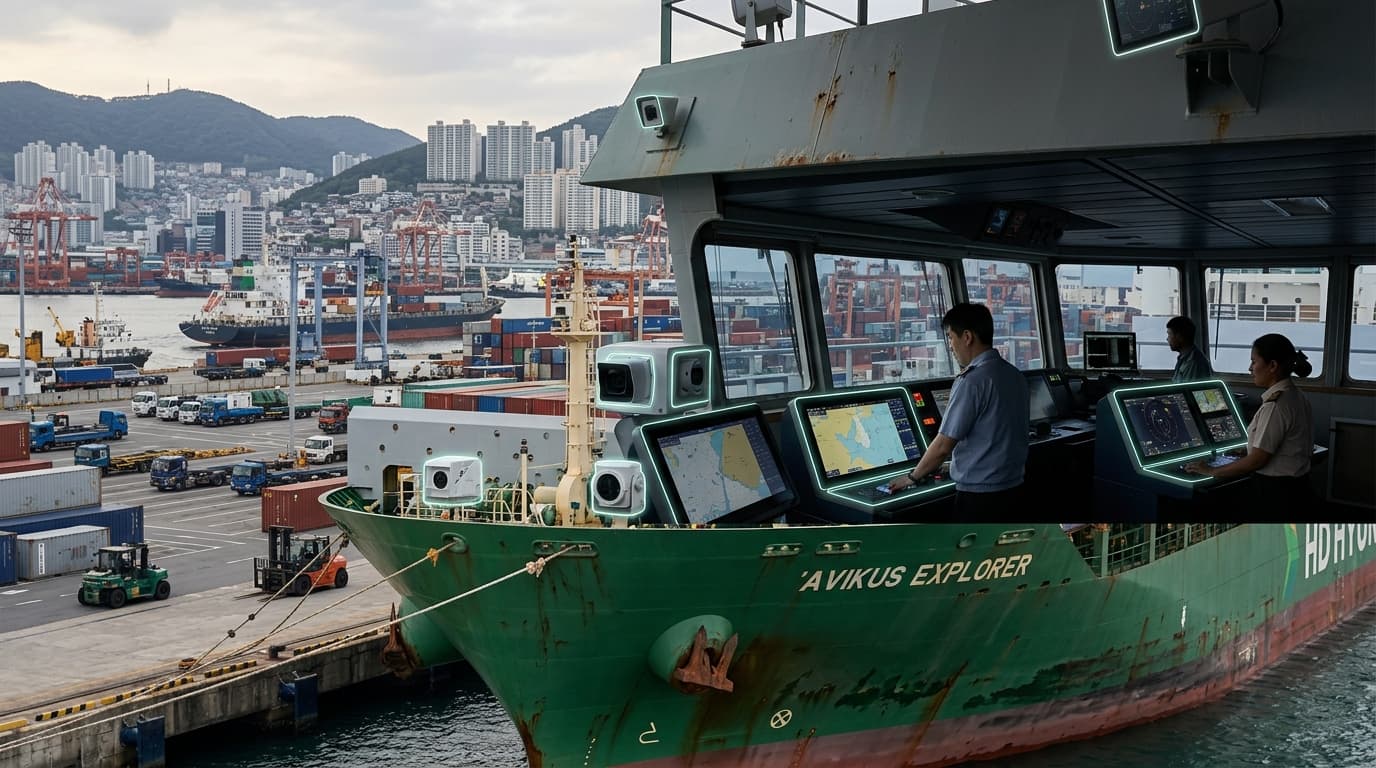
Autonomous Ship Navigation
Geography: Asia Pacific · East Asia · South Korea
Avikus, HD Hyundai's autonomous navigation subsidiary, completed a 10,000km transpacific voyage from Ulsan to Costa Rica in 2022 with an LNG carrier operating under autonomous navigation for 50% of the journey. The company's HiNAS (Hyundai intelligent Navigation Assistance System) uses AI to optimize routing, collision avoidance, and fuel consumption, and is now being deployed across HD Hyundai's commercial vessel fleet.
Autonomous shipping addresses the maritime industry's three biggest challenges: labor shortages (the global shipping industry faces a shortage of 90,000 officers), fuel costs (which represent 50-60% of operating expenses), and safety (human error causes 75-96% of maritime accidents). Avikus claims its AI navigation reduces fuel consumption by 7-10% through optimized speed and routing.
Korea's advantage in autonomous shipping comes from owning both the shipbuilding yards and the technology development — HD Hyundai can design ships with autonomous systems integrated from the hull up, rather than retrofitting. This vertical integration mirrors the Samsung model in electronics: controlling the entire stack from hardware to software creates systems that work more reliably than bolt-on solutions.
Research this in Signals
Signals turns a topic into a sourced research record you can inspect and rerun. Your first scan is free, and this one starts with Autonomous Ship Navigation already loaded, so edit it or scan as is.