Autonomous Driving Startup Ecosystem
Geography: Asia Pacific · East Asia · South Korea
Korea's autonomous driving ecosystem extends beyond Motional to include 42dot (acquired by Hyundai for $174M, now leading software-defined vehicle architecture), Seoul Robotics (3D perception using lidar), RideFlux (autonomous shuttles for industrial complexes), and several university spin-offs from KAIST and SNU. The Seoul Metropolitan Government has designated autonomous driving test zones in Sangam and Gangnam.
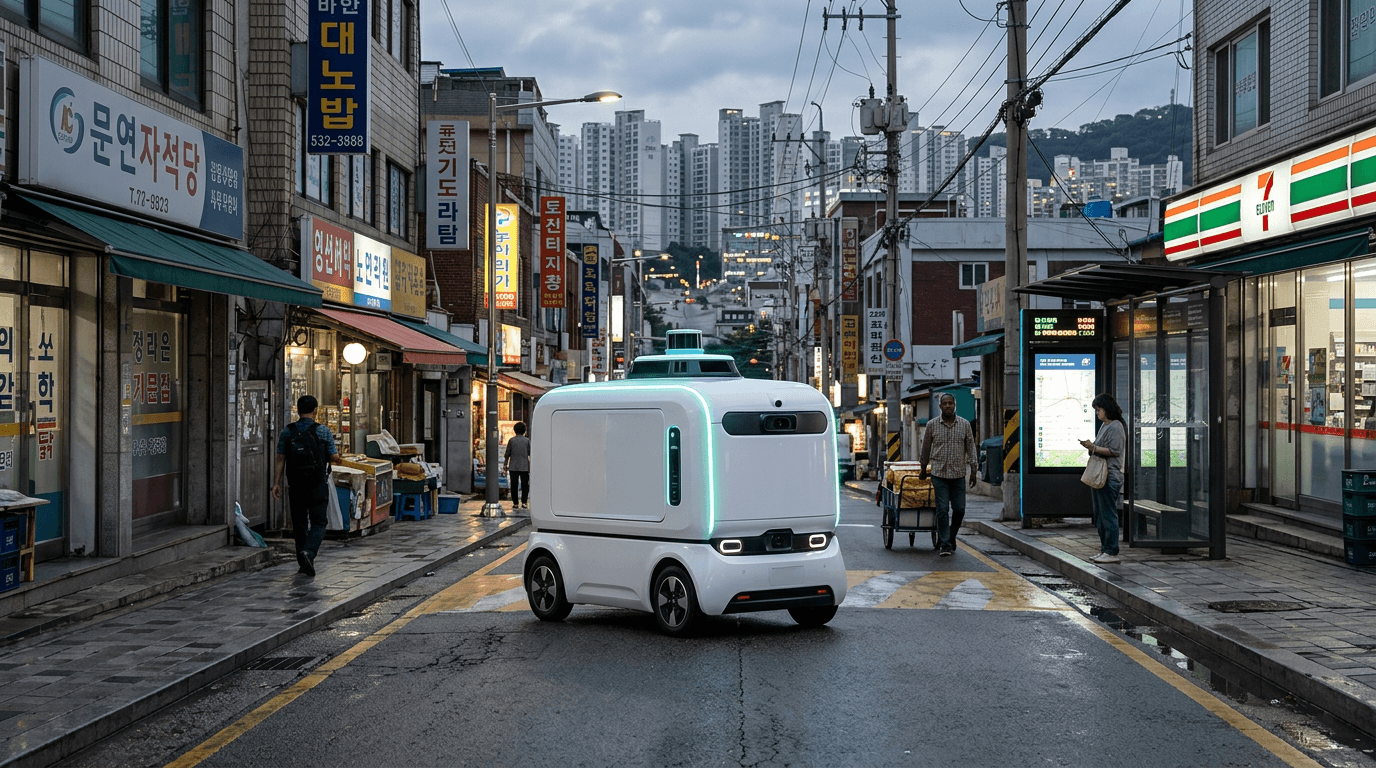
The Korean market presents unique challenges for autonomous driving: dense urban environments, aggressive driving behavior, narrow streets, and complex mixed-traffic scenarios involving pedestrians, scooters, and delivery robots. Companies that solve autonomy in Seoul's conditions develop robust systems transferable to other dense Asian and European cities.
42dot's acquisition by Hyundai is significant because it makes Hyundai one of the few automakers with in-house Level 4 autonomous driving software development. Combined with Motional's robotaxi operations and Boston Dynamics' perception technology, Hyundai is assembling an autonomous driving stack that spans sensors, perception, planning, and vehicle control — a breadth of capability that only Waymo/Google and Tesla rival globally.
Research this in Signals
Signals turns a topic into a sourced research record you can inspect and rerun. Your first scan is free, and this one starts with Autonomous Driving Startup Ecosystem already loaded, so edit it or scan as is.