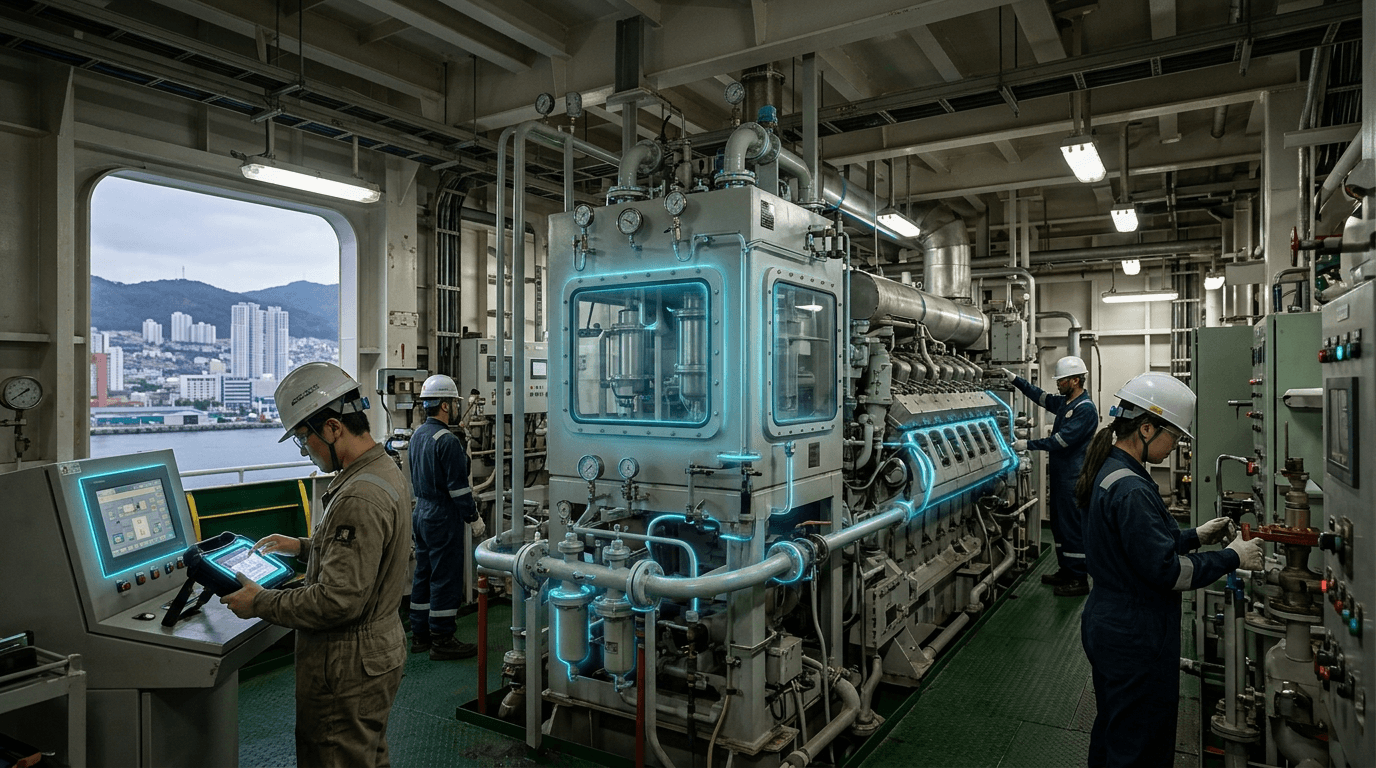
Ammonia-Fueled Ship Propulsion
Geography: Asia Pacific · East Asia · South Korea
HD Korea Shipbuilding & Offshore Engineering (KSOE) secured the world's first order for a medium-sized ammonia-propelled vessel and developed the industry's first ammonia fuel supply system in 2021. The technology involves dual-fuel engines capable of burning ammonia alongside conventional fuels, with an unmanned engine room design incorporating AI safety systems for handling ammonia's toxicity. Hanwha Ocean is pursuing a parallel approach using ammonia fuel cells rather than direct combustion, partnering with US-based Amogy for ammonia-to-hydrogen cracking technology.
Maritime shipping accounts for roughly 3% of global CO2 emissions, and the International Maritime Organization mandates a 50% reduction by 2050. Ammonia is emerging as the leading zero-carbon marine fuel because it has higher energy density than hydrogen, doesn't require the extreme cryogenics of LNG, and can be produced from renewable electricity. Korean shipyards dominate high-value vessel construction and are racing to own the next propulsion standard before Chinese competitors catch up.
The Korean government allocated $534 million over five years for green shipping R&D, covering ammonia, methanol, and hydrogen propulsion systems. Korea's strategic bet on ammonia — while China focuses on methanol-fueled ships — represents a deliberate differentiation. If ammonia wins as the primary zero-carbon marine fuel, Korean yards' first-mover advantage in engine integration, fuel handling, and safety systems could replicate their dominance in LNG carrier technology for the next generation of shipping.
Research this in Signals
Signals turns a topic into a sourced research record you can inspect and rerun. Your first scan is free, and this one starts with Ammonia-Fueled Ship Propulsion already loaded, so edit it or scan as is.