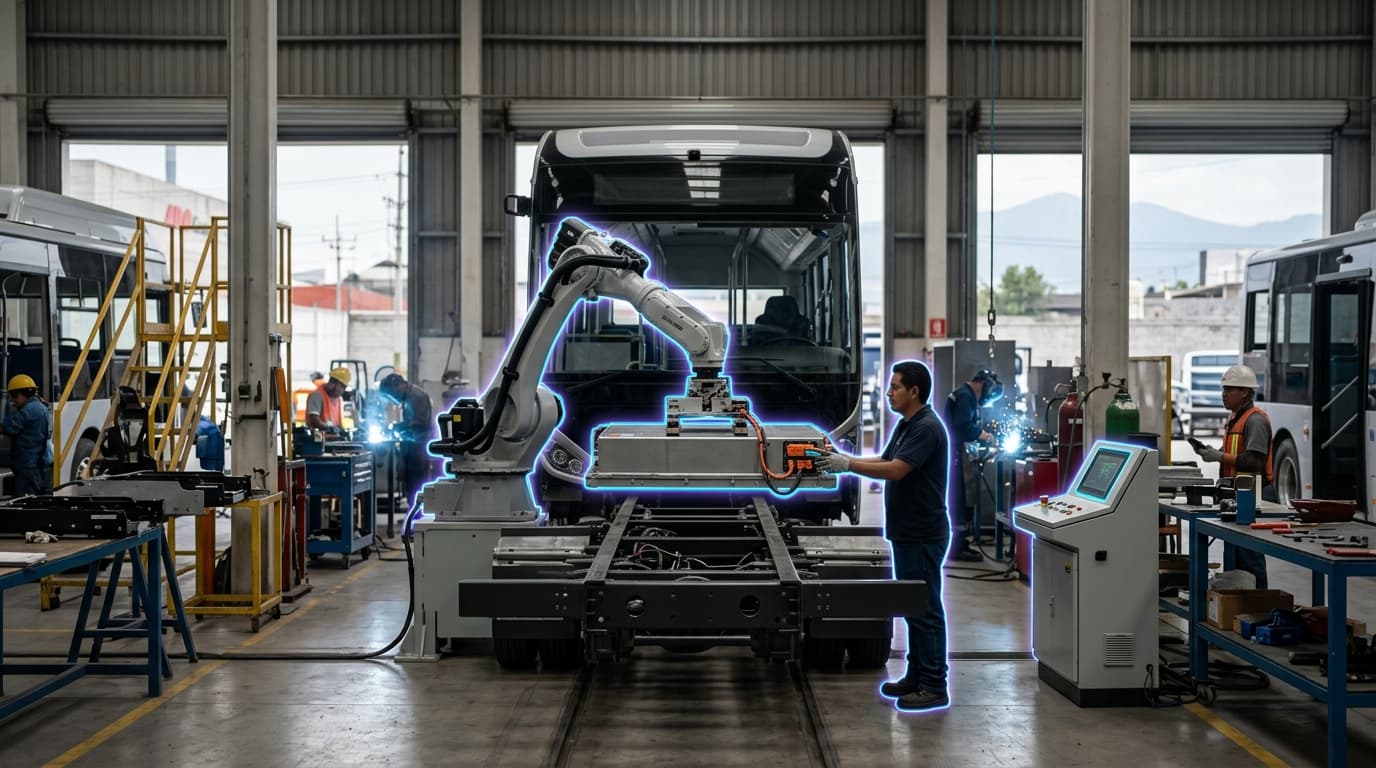
Mexico Electric Bus Manufacturing
Geography: Americas · South America · Latin America
Mexico is positioning itself as Latin America's electric bus manufacturing hub, leveraging its existing automotive supply chain — the world's 7th largest vehicle producer — to capture the region's growing transit electrification market. Mobility ADO, an arm of Mexico's largest bus operator (ADO Group), has partnered with Chinese manufacturer Yutong to assemble electric buses domestically, initially targeting Mexico City's vast transit network. Mexico City already operates over 100 electric buses on the Metrobús BRT system, with plans to scale to 1,000+ units as part of the city's commitment to zero-emission public transport by 2035. Additional manufacturers including BYD and Zhongtong have explored Mexican assembly operations to serve the NAFTA/USMCA market.
The manufacturing play makes economic sense given Mexico's USMCA tariff advantages, established automotive component ecosystem (wiring harnesses, power electronics, battery pack assembly), and geographic proximity to both the U.S. market and Central American/Caribbean buyers. Domestic assembly reduces the landed cost of Chinese-designed electric buses by 15–25% compared to direct imports, while meeting local content requirements that unlock development bank financing. The Mexican government's plan to build a network of electric trolleybus and BRT corridors across secondary cities — Guadalajara, Monterrey, Puebla, León — provides a guaranteed domestic demand pipeline that de-risks manufacturing investment.
Strategically, electric bus manufacturing represents Mexico's opportunity to climb the automotive value chain during the EV transition rather than remaining trapped in low-value assembly. The skills acquired in EV bus production — battery pack integration, power electronics, thermal management, charging infrastructure — are directly transferable to passenger EV manufacturing. As Latin American cities collectively need to replace tens of thousands of aging diesel buses over the next decade (driven by air quality crises in Bogotá, Lima, Santiago, and São Paulo), Mexico could become the regional supply hub. The risk is over-dependence on Chinese platform technology without developing indigenous design capability.
Research this in Signals
Signals turns a topic into a sourced research record you can inspect and rerun. Your first scan is free, and this one starts with Mexico Electric Bus Manufacturing already loaded, so edit it or scan as is.