Superconducting Maglev (Chuo Shinkansen)
Geography: Asia Pacific · East Asia · Japan
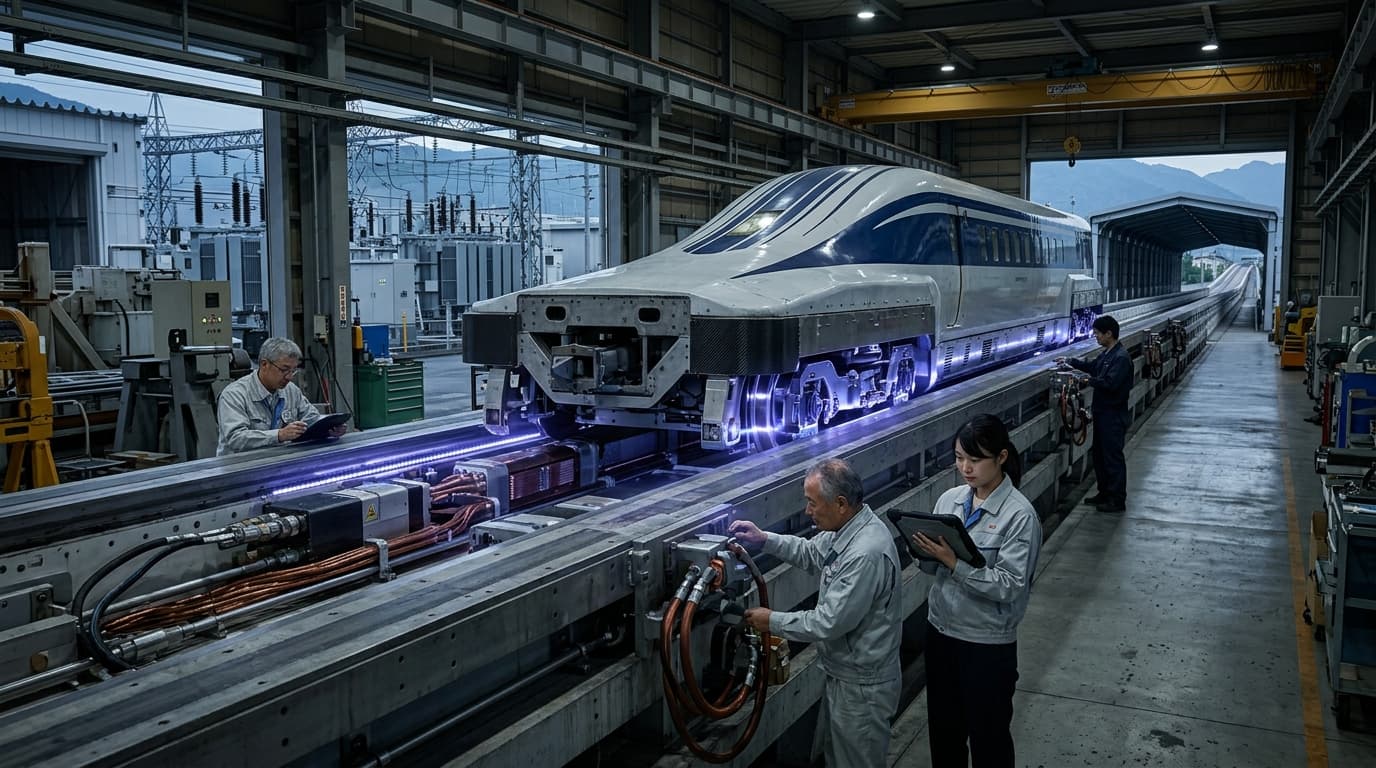
JR Central's L0 series superconducting maglev holds the world land speed record at 603 km/h, set in 2015. The Chuo Shinkansen line is designed to connect Tokyo and Nagoya in 40 minutes (286 km) and eventually Tokyo-Osaka in 67 minutes (438 km). The project uses helium-cooled superconducting magnets that levitate the train 10cm above the guideway, eliminating friction and enabling speeds impossible for conventional rail.
The project faces significant delays and cost overruns. The Tokyo-Nagoya segment, originally planned for 2027 opening, has been pushed to at least 2034 due to construction disputes in Shizuoka Prefecture over groundwater impacts from the Southern Alps tunnel. Total project cost has escalated to approximately ¥9 trillion ($60 billion). JR Central is financing the project privately — an unusual arrangement for infrastructure of this scale.
Despite delays, the technology itself is proven and represents the world's most advanced ground transportation. The superconducting maglev system has completed over 4,000 km of test runs carrying passengers. If completed, it would demonstrate that 600+ km/h ground transport is viable, potentially creating an export technology for routes where aircraft are impractical and conventional high-speed rail too slow.
Research this in Signals
Signals turns a topic into a sourced research record you can inspect and rerun. Your first scan is free, and this one starts with Superconducting Maglev (Chuo Shinkansen) already loaded, so edit it or scan as is.