Next-Generation EV Platforms
Geography: Asia Pacific · East Asia · Japan
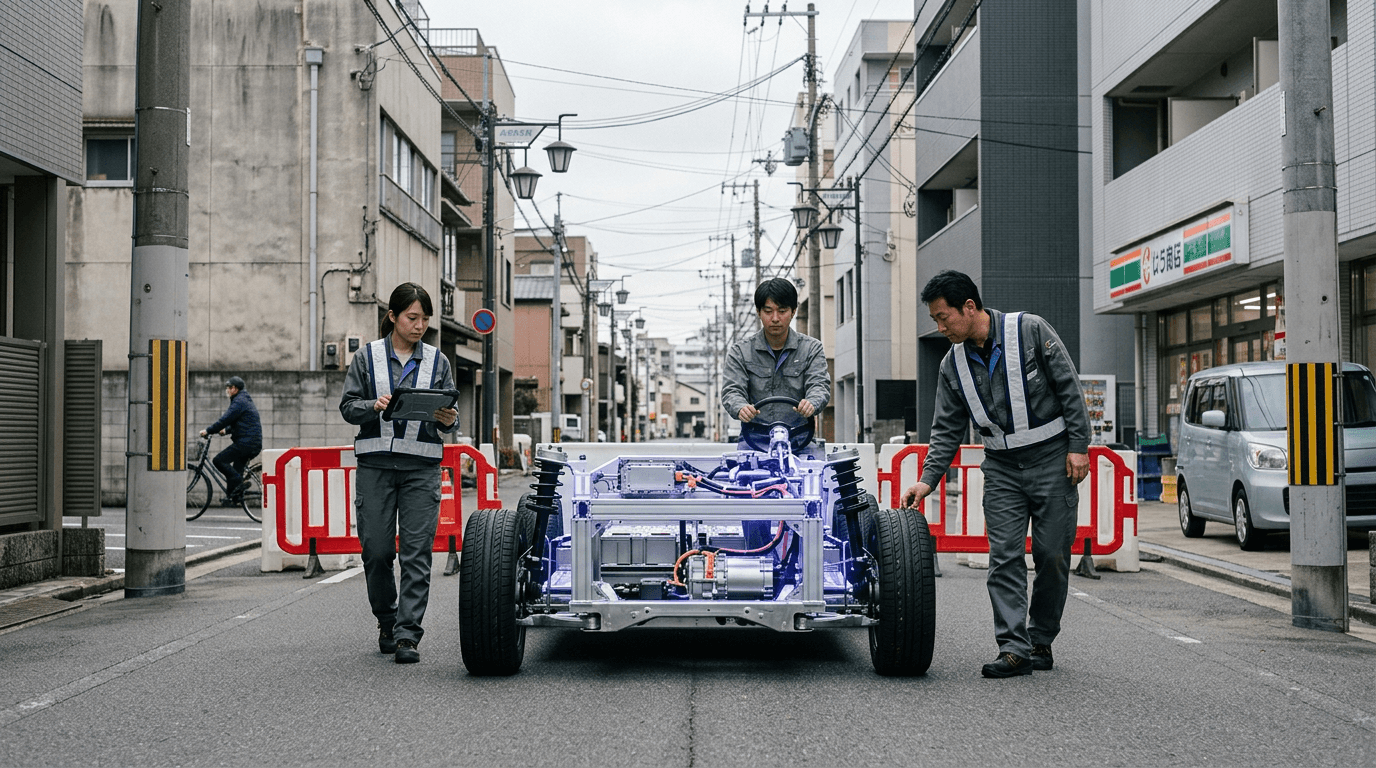
Japan's automakers are belatedly but aggressively launching dedicated EV platforms. Toyota's next-generation BEV platform promises 1,000km range with new lithium-ion batteries by 2026 and solid-state batteries by 2027-28. Honda's 0 Series debuts in 2026 with a clean-sheet EV architecture. Nissan — the EV pioneer with the Leaf — is investing in new platforms after its proposed merger with Honda. Honda-Nissan-Mitsubishi alliance discussions signal potential platform consolidation.
The Japanese auto industry's initial EV hesitancy reflected genuine strategic calculations — hydrogen and hybrid approaches, concerns about battery supply chain vulnerability, and profitable ICE/hybrid business models. However, China's rapid EV market capture and EU regulatory timelines have forced acceleration. METI's Green Innovation Fund provides substantial subsidies for next-generation battery and EV component development.
Japan's EV competitive advantage lies in manufacturing quality, safety engineering, and the global dealer/service network that Chinese competitors lack. The integration of solid-state batteries (if Toyota delivers) would leap-frog Chinese lithium-ion technology. The risk is timing — every year of delay allows BYD and Chinese competitors to build brand loyalty and scale advantages in the world's largest EV markets.
Research this in Signals
Signals turns a topic into a sourced research record you can inspect and rerun. Your first scan is free, and this one starts with Next-Generation EV Platforms already loaded, so edit it or scan as is.