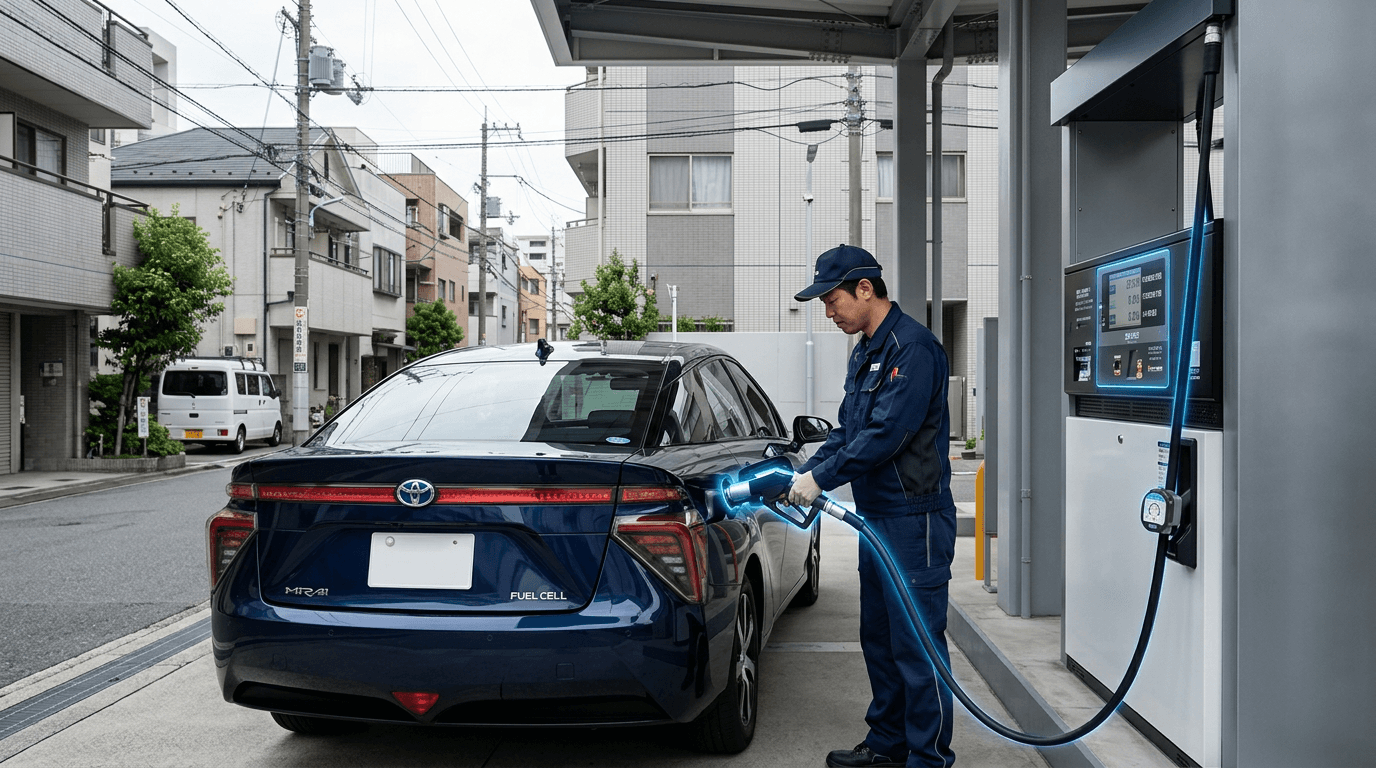
Hydrogen Fuel Cell Vehicles and Infrastructure
Geography: Asia Pacific · East Asia · Japan
Japan has the world's most developed hydrogen mobility infrastructure, with approximately 160 hydrogen refueling stations operational and a government target of 1,000 by 2030. Toyota's Mirai (second generation) and Honda's CR-V Fuel Cell lead the passenger segment, while Toyota has expanded hydrogen fuel cells into heavy trucks, buses, forklifts, and marine applications. Toyota established a dedicated Hydrogen Headquarters in 2024 to accelerate fuel cell technology across sectors.
The hydrogen vehicle ecosystem extends beyond automotive: Toyota's fuel cells power stationary generators, JR East is testing hydrogen-powered trains, and Kawasaki Heavy Industries is developing hydrogen-fueled maritime vessels. Japan's comprehensive approach — simultaneously building supply (green hydrogen production), infrastructure (refueling networks), and demand (vehicles and industrial applications) — is more integrated than any competing hydrogen strategy.
However, the commercial viability of hydrogen vehicles remains uncertain. Battery electric vehicles have achieved cost and performance parity faster than expected, narrowing hydrogen's addressable market primarily to heavy-duty transport and industrial applications. Japan's strategic bet on hydrogen is a hedge against battery supply chain concentration in China — if lithium supply tightens or battery costs plateau, hydrogen infrastructure already in place becomes a decisive advantage.
Research this in Signals
Signals turns a topic into a sourced research record you can inspect and rerun. Your first scan is free, and this one starts with Hydrogen Fuel Cell Vehicles and Infrastructure already loaded, so edit it or scan as is.