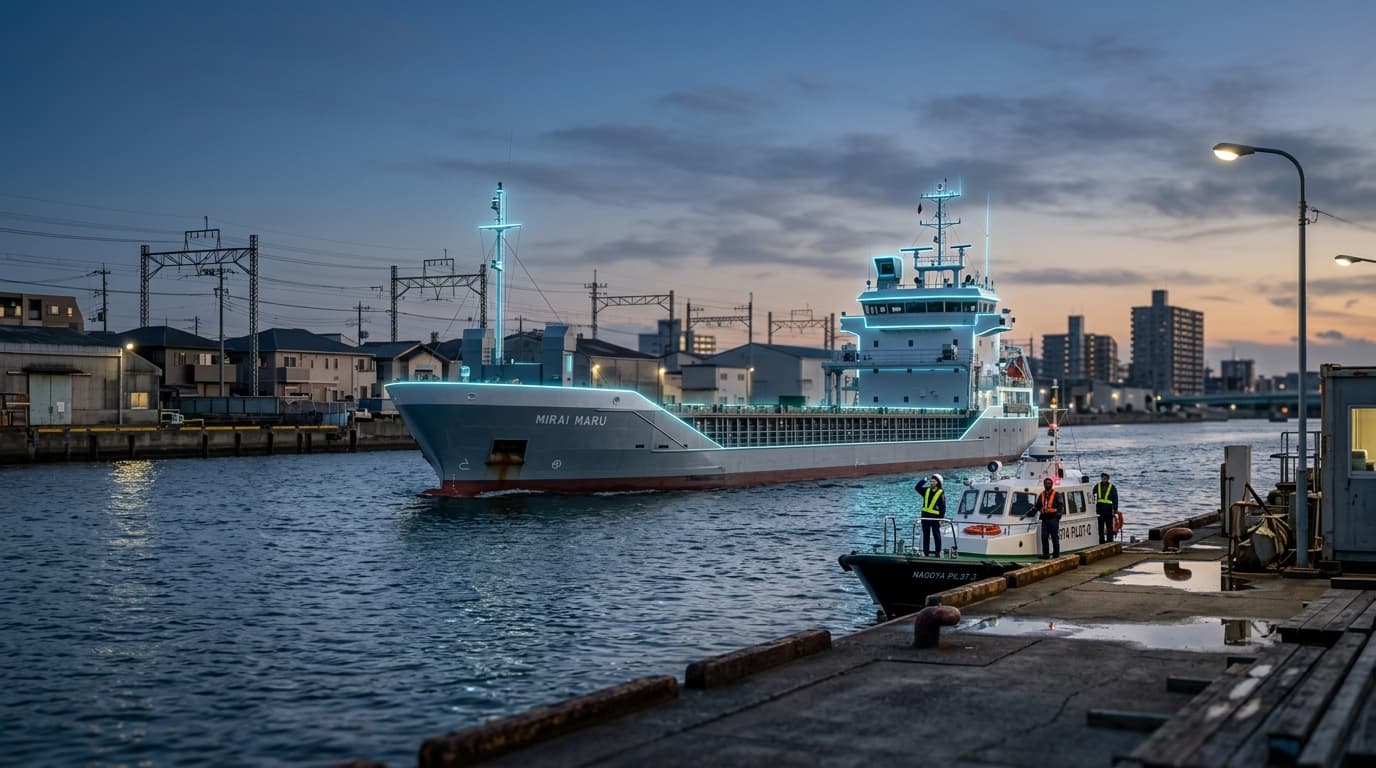
Autonomous Maritime Shipping
Geography: Asia Pacific · East Asia · Japan
Japan's maritime industry completed the MEGURI2040 project in 2022, achieving the world's first fully autonomous cargo ship voyages across busy shipping lanes. Nippon Yusen (NYK Line), Mitsui O.S.K. Lines, and other major shipping companies are commercializing autonomous coastal vessel operations, with full-scale deployment targeted by 2025-2030. Japan's ClassNK has developed certification standards for autonomous ships that are influencing International Maritime Organization (IMO) regulations.
The driver is labor crisis: Japan faces a projected 50% shortage of coastal seafarers by 2030, threatening domestic logistics for an island nation dependent on maritime transport. Autonomous shipping technology — combining AI perception, satellite navigation, radar/lidar fusion, and remote monitoring — enables one ship operator to manage multiple vessels from shore.
Japan's shipbuilding and maritime expertise (the country was the world's largest shipbuilder until overtaken by South Korea and China) provides deep domain knowledge for autonomous vessel development. The technology stack — collision avoidance AI, weather routing optimization, and remote control systems — has applications across military vessels, research ships, and offshore energy platforms. As the IMO develops international autonomous shipping regulations, Japan's early operational experience gives it significant influence over global standards.
Research this in Signals
Signals turns a topic into a sourced research record you can inspect and rerun. Your first scan is free, and this one starts with Autonomous Maritime Shipping already loaded, so edit it or scan as is.