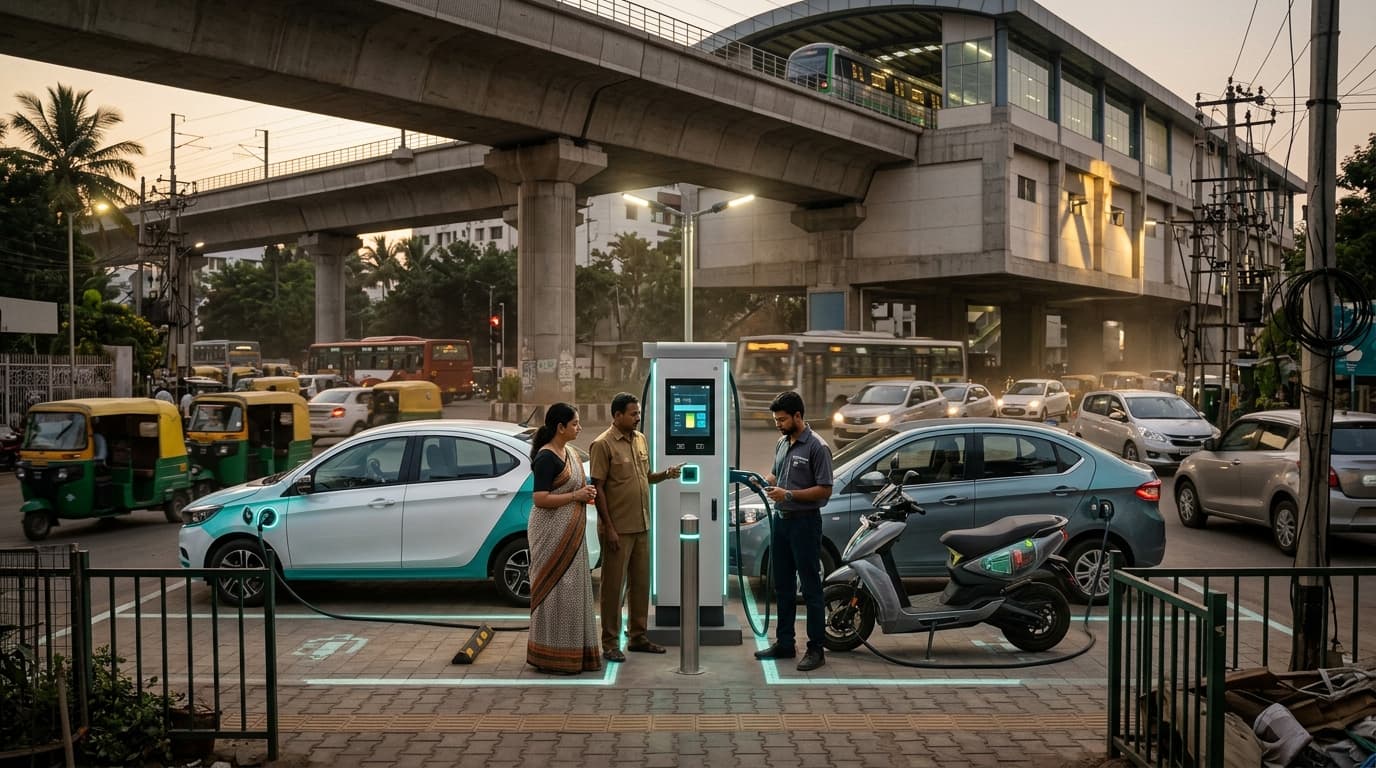
Indian Electric Vehicle Ecosystem
Geography: Asia Pacific · South Asia · India
India's electric vehicle ecosystem is developing across all segments: two-wheelers (Ola Electric, Ather Energy, TVS, Bajaj, Hero), three-wheelers (the fastest-electrifying segment globally), cars (Tata Motors leading with Nexon EV and Punch EV), and commercial vehicles (Switch Mobility, Olectra). Tata Motors dominates the electric car segment with 60%+ market share, having sold over 100,000 EVs. Ather Energy occupies the premium e-scooter niche with a focus on connected, smart vehicles.
India's EV transition is shaped by its unique mobility structure. Two-wheelers and three-wheelers vastly outnumber cars, and the typical Indian vehicle is much smaller and cheaper than Western equivalents. This means India's EV revolution looks fundamentally different from the US or Europe: it's about $1,500 electric scooters and $15,000 electric cars, not $50,000 Teslas. The government's FAME II subsidy scheme and state-level incentives have catalyzed adoption.
The ecosystem includes battery manufacturing (Amara Raja, Exide), charging infrastructure (Tata Power, Ather Grid, Statiq), and component manufacturing. India is positioning itself as a global manufacturing hub for affordable EVs — Tata Motors is exploring exports of its electric cars, and Indian two-wheeler manufacturers are eyeing Southeast Asian and African markets where their price-engineered EVs could have strong appeal.
Research this in Signals
Signals turns a topic into a sourced research record you can inspect and rerun. Your first scan is free, and this one starts with Indian Electric Vehicle Ecosystem already loaded, so edit it or scan as is.