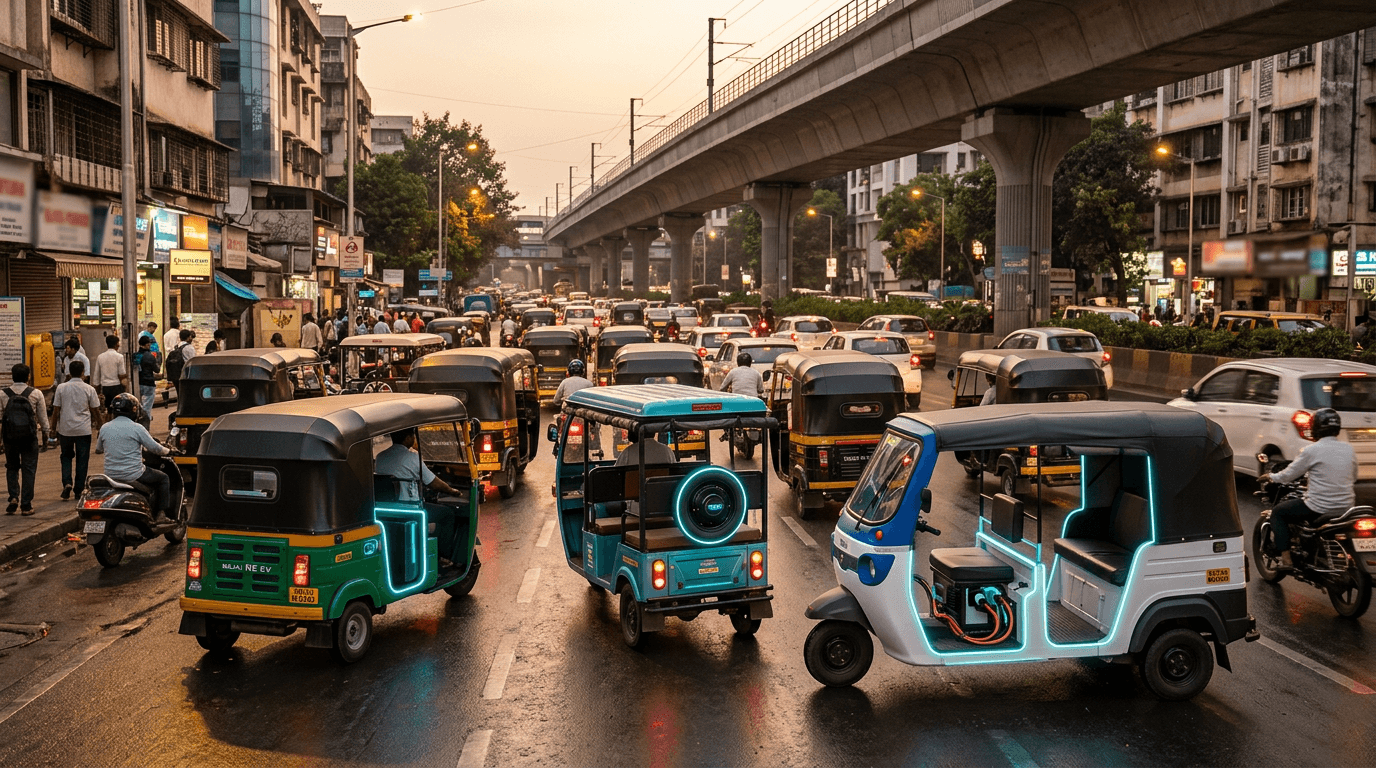
Electric Three-Wheeler Mass Electrification
Geography: Asia Pacific · South Asia · India
India's electric vehicle revolution is happening not in cars but in three-wheelers — the ubiquitous auto-rickshaws and e-rickshaws that serve as the primary mode of urban transport for hundreds of millions of Indians. By 2025, electric three-wheelers achieved the highest EV adoption rate among any passenger vehicle segment globally, with over 1.73 million units sold in the past decade. The segment ranges from formal OEM products (Bajaj RE Electric, Mahindra Treo, Piaggio Ape E-City) to grassroots-manufactured e-rickshaws costing as little as $1,500 that have organically electrified last-mile transport in cities across North India.
The e-rickshaw phenomenon is uniquely Indian. These vehicles emerged bottom-up — small manufacturers in states like Uttar Pradesh and West Bengal began assembling simple electric three-wheelers using imported Chinese motors and lead-acid batteries, often without formal regulatory approval. The government eventually regularized the sector, and now both established automakers and startups are competing. Battery-as-a-Service models (like Vidyut, which raised $2.5 million in 2025) address the upfront cost barrier by separating vehicle purchase from battery ownership. Even Hyundai unveiled electric rickshaw concepts at the 2025 Bharat Mobility Expo.
The global significance is in the model, not just the vehicle. India is demonstrating that mass electrification of transport can start from the bottom — with the cheapest, most-used vehicles — rather than from the top (luxury EVs). Electric three-wheelers reduce urban air pollution, eliminate fuel costs for drivers earning $5-10/day, and create distributed charging infrastructure. This bottom-up electrification pattern is being watched by Southeast Asian and African countries with similar transport structures. The segment could electrify faster than any other vehicle category in any country, precisely because the vehicles are simple, cheap, and locally manufactured.
Research this in Signals
Signals turns a topic into a sourced research record you can inspect and rerun. Your first scan is free, and this one starts with Electric Three-Wheeler Mass Electrification already loaded, so edit it or scan as is.