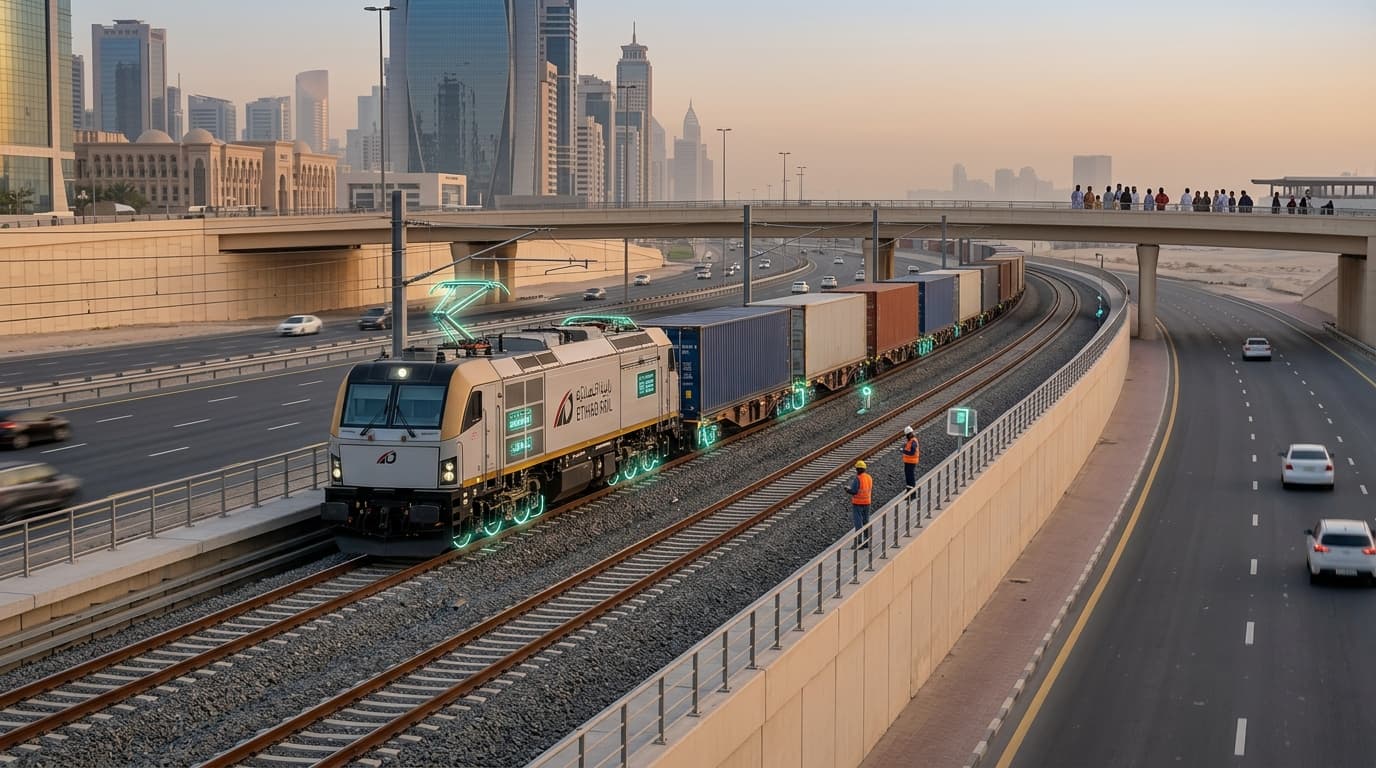
Etihad Rail National Railway
Geography: Emea · Middle East · Gulf States
Etihad Rail is the UAE's first national railway network, a $11 billion project spanning 1,200 kilometers across all seven emirates. Stage Two construction is underway, connecting Abu Dhabi to Dubai, Sharjah, and the northern emirates. The network will carry both freight (initially serving industrial cargo and sulfur transport from Shah and Habshan gas fields) and passenger services.
For a country historically dependent on road transport, Etihad Rail represents a fundamental shift in logistics infrastructure. The railway connects industrial zones, ports, and population centers, reducing trucking costs and emissions. Integration with the broader GCC railway network (connecting to Saudi Arabia and eventually Oman) will create a regional logistics corridor.
The strategic significance is connectivity-driven economic integration across the emirates and eventually across the GCC. Rail infrastructure enables industrial development in less-developed emirates by reducing transport costs, supports the logistics hub strategy (connecting Jebel Ali port to Abu Dhabi's industrial zones), and provides the physical infrastructure for a more integrated Gulf economic bloc.
Research this in Signals
Signals turns a topic into a sourced research record you can inspect and rerun. Your first scan is free, and this one starts with Etihad Rail National Railway already loaded, so edit it or scan as is.