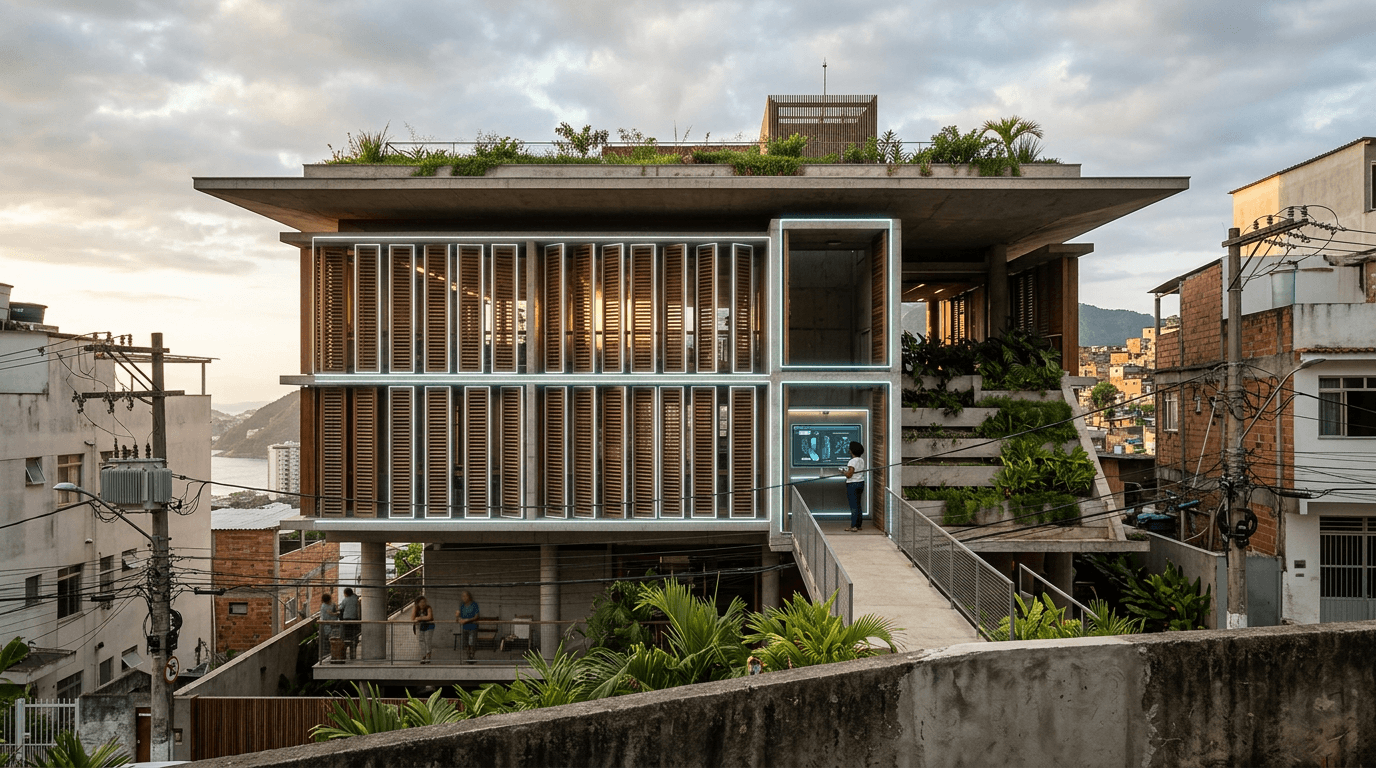
Tropical Climate-Adapted Architecture
Geography: Americas · South America · Brazil
Brazil has a long tradition of climate-adapted architecture — from Lúcio Costa and Oscar Niemeyer's brise-soleil designs in Brasília to contemporary bioclimatic buildings that minimize mechanical cooling. With air conditioning the fastest-growing electricity load in tropical developing countries, these design principles have global relevance.
Techniques include cross-ventilation optimization, thermal mass management, green roofs and walls (effective in tropical climates year-round), evaporative cooling, and strategic orientation to minimize solar gain. The Procel Edifica program certifies energy-efficient buildings, and NBR 15575 sets thermal performance standards specifically calibrated for Brazil's climate zones.
The technology is in the integration: combining passive strategies with efficient mechanical systems to achieve comfortable indoor temperatures at a fraction of the energy cost of conventional fully air-conditioned buildings. As tropical urbanization accelerates across Africa and Southeast Asia, Brazilian bioclimatic design expertise is increasingly exportable — offering alternatives to the energy-intensive sealed-building model imported from temperate climates.
Research this in Signals
Signals turns a topic into a sourced research record you can inspect and rerun. Your first scan is free, and this one starts with Tropical Climate-Adapted Architecture already loaded, so edit it or scan as is.