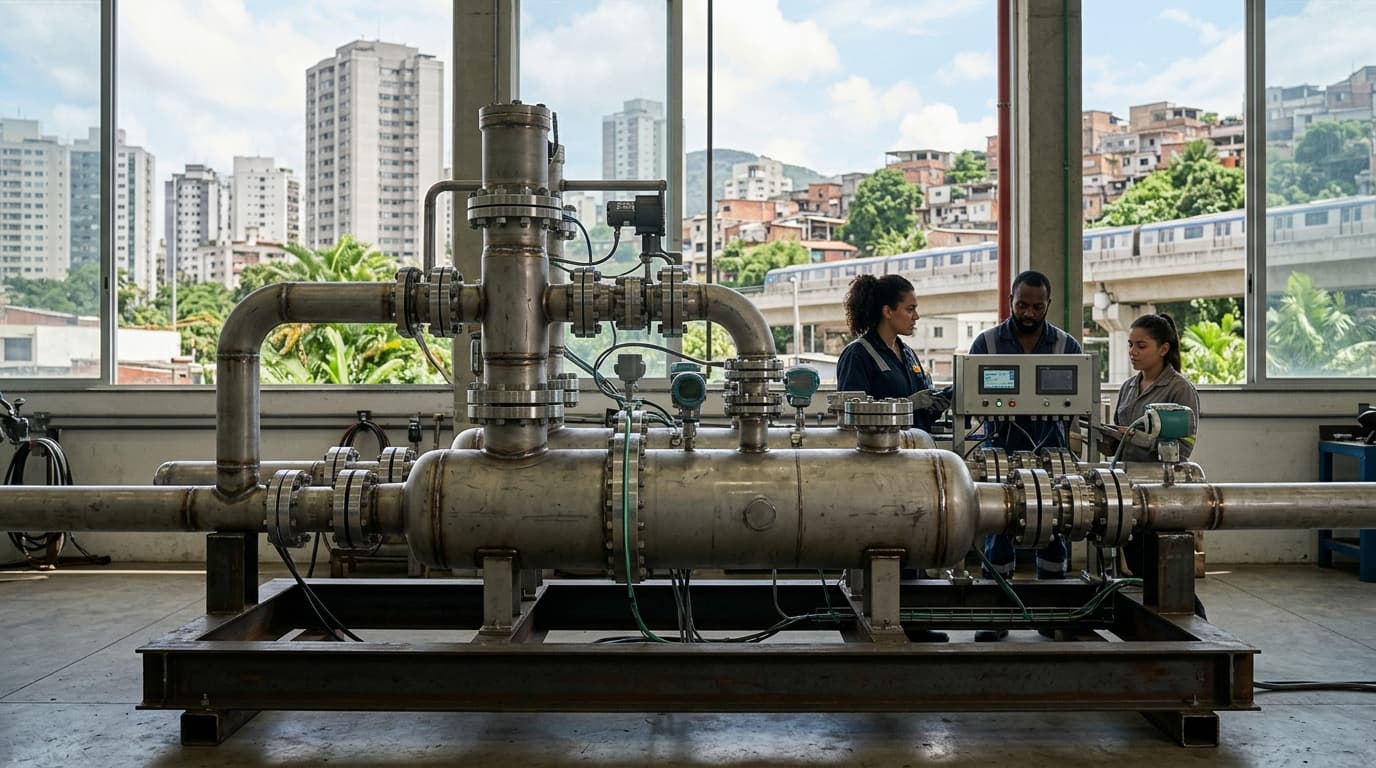
Subsea Processing Systems
Geography: Americas · South America · Brazil
Subsea processing moves equipment traditionally located on surface platforms — separators, pumps, compressors, boosters — to the ocean floor near the wellhead. Petrobras has deployed subsea boosting, gas-liquid separation, and water removal systems at depths exceeding 2,000 meters in the Santos Basin pre-salt fields. These systems reduce the volume and back-pressure of fluid sent to FPSOs, enabling longer tie-back distances and increasing field recovery rates.
The technology is critical because pre-salt fluid contains high CO2 content (up to 20%) and significant water production as fields mature. Processing this on the seabed reduces the load on surface platforms, extends platform capacity to connect additional wells, and enables fields that are too far from existing FPSOs to be developed. Petrobras's subsea processing roadmap includes autonomous subsea factories — robotic systems that operate on the ocean floor with minimal human intervention.
Brazil's subsea processing capability was developed out of necessity: no other country operates at pre-salt depths and distances with comparable scale. The technology is now being licensed and exported to other deepwater provinces — Gulf of Mexico, West Africa, and Norway. This positions Brazil as the world leader in a technology domain that will become increasingly important as easy-to-access oil depletes and production moves to more challenging environments.
Research this in Signals
Signals turns a topic into a sourced research record you can inspect and rerun. Your first scan is free, and this one starts with Subsea Processing Systems already loaded, so edit it or scan as is.