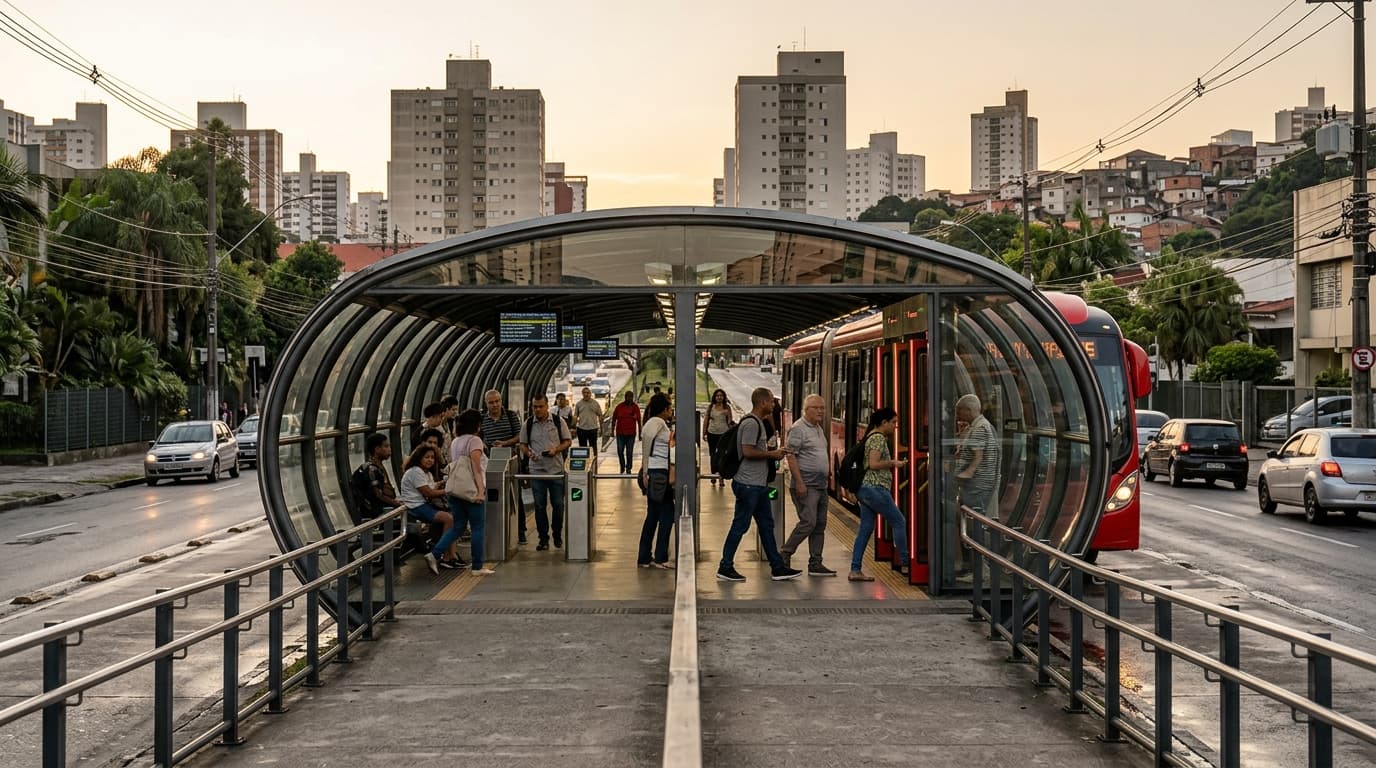
Bus Rapid Transit (BRT) — Curitiba Model
Geography: Americas · South America · Brazil
Curitiba's BRT uses dedicated bus lanes, pre-paid boarding at tube-shaped stations, and articulated buses running at metro-like frequencies. The system moves passengers as efficiently as light rail at roughly 1/10th the capital cost, making high-quality public transit accessible to cities that can't afford rail.
The model has been replicated in approximately 200 cities globally, including Bogotá (TransMilenio), Jakarta, Istanbul, and Guangzhou. Each adaptation learns from Curitiba's 50 years of operational refinement — lessons in route design, station placement, fare integration, and land use planning.
Curitiba's contribution isn't just the bus system — it's the integrated approach to urban planning. BRT corridors were designed alongside zoning laws that concentrated high-density development along transit routes, creating a feedback loop between transport investment and urban form. This planning integration is what makes the model work, and what most imitators struggle to replicate.
Research this in Signals
Signals turns a topic into a sourced research record you can inspect and rerun. Your first scan is free, and this one starts with Bus Rapid Transit (BRT) — Curitiba Model already loaded, so edit it or scan as is.