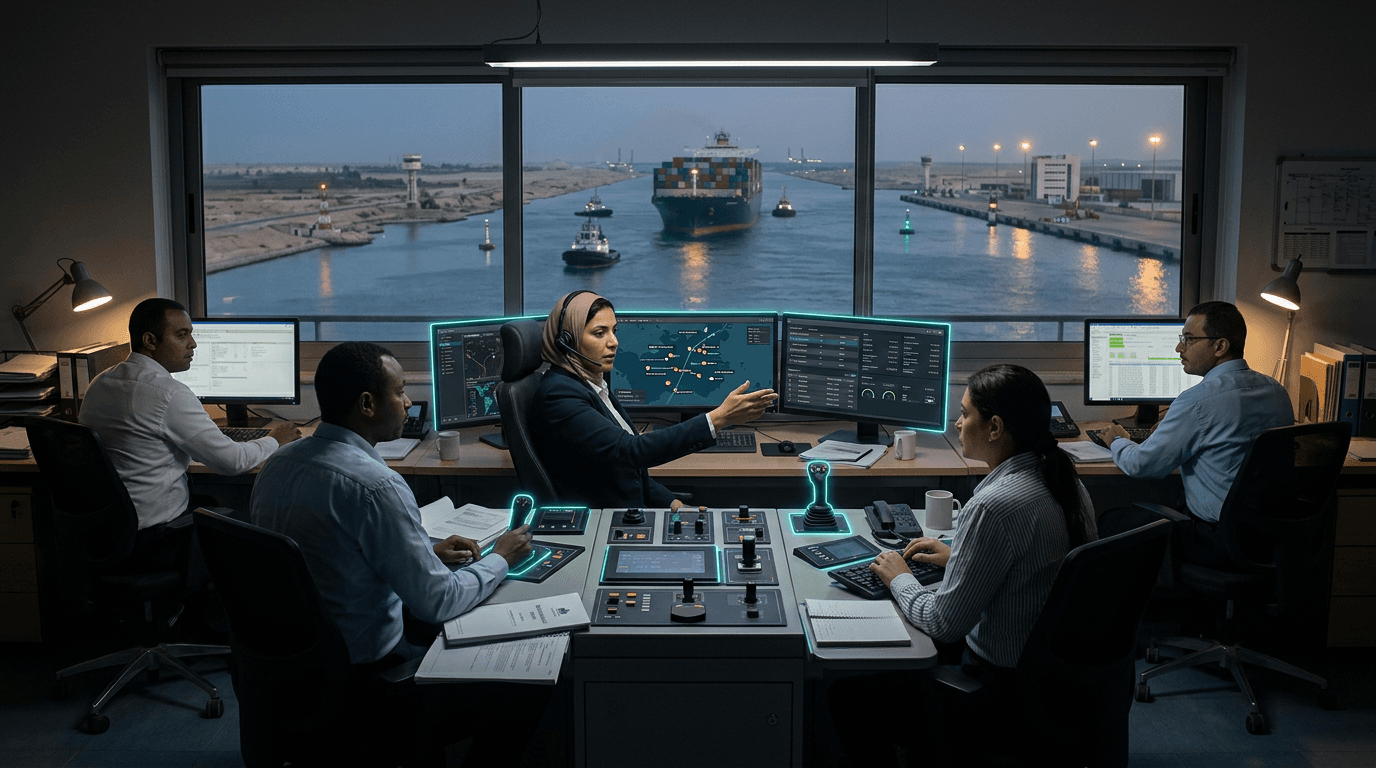
Suez Canal Smart Navigation and Traffic Management
Geography: Emea · Africa · Africa
The Suez Canal, handling approximately 12-15% of global trade, underwent a major expansion completed in 2015 (New Suez Canal) and has been continuously upgraded with smart navigation technology. The canal authority deploys vessel traffic management systems (VTMS) using radar, AIS (Automatic Identification System), and AI-assisted traffic scheduling to manage the transit of 50+ vessels daily through the 193 km waterway. Electronic navigation aids, real-time current and tide monitoring, and advanced pilotage systems ensure safe passage.
The 2015 expansion added a 35 km parallel channel allowing two-way traffic, reducing transit time from 18 to 11 hours and increasing daily capacity. The smart navigation systems coordinate complex traffic flows — convoys moving in opposite directions, speed management through narrow sections, and emergency response coordination. Egypt has invested in training indigenous maritime technology specialists and developing local capabilities in maritime electronics.
The canal's technology is strategically critical: disruptions (as demonstrated by the Ever Given blockage in 2021) cost global trade an estimated $10 billion per day. Egypt's ongoing investment in canal technology reflects both economic incentive (the canal generates $9+ billion annually in tolls) and geopolitical leverage. The smart navigation systems represent indigenous Egyptian capability in managing one of the world's most complex maritime traffic environments.
Research this in Signals
Signals turns a topic into a sourced research record you can inspect and rerun. Your first scan is free, and this one starts with Suez Canal Smart Navigation and Traffic Management already loaded, so edit it or scan as is.