Electric Bus Rapid Transit Systems
Geography: Emea · Africa · Africa
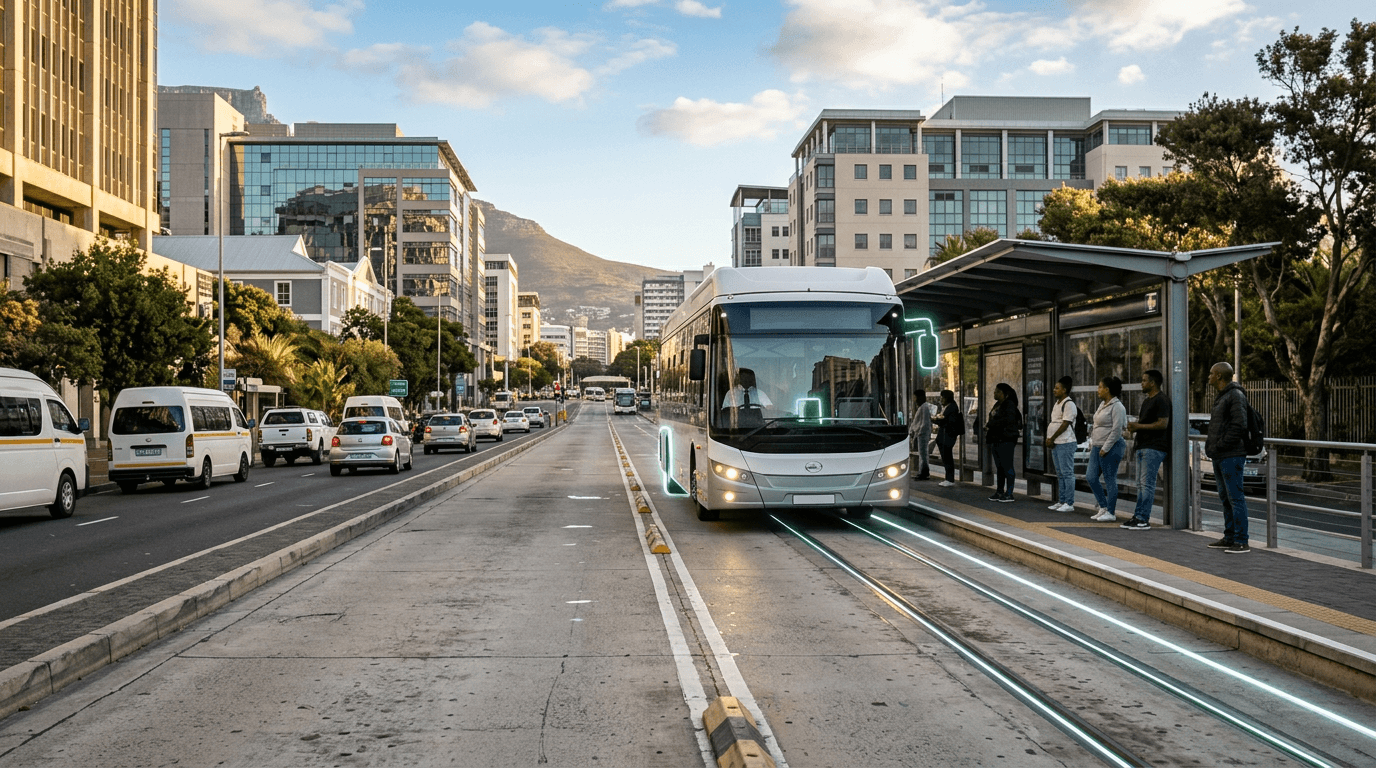
South Africa's major cities are pioneering electric bus rapid transit (BRT) in Africa. The MyCiTi system in Cape Town and Rea Vaya in Johannesburg are transitioning from diesel to battery-electric buses on their dedicated busway networks. South African company Busmark is developing locally assembled electric bus bodies, while partnerships with BYD and others provide drivetrain technology. The goal is to electrify urban public transit while maintaining the BRT model's cost-effectiveness.
African cities face an urban transport crisis: rapid urbanization is outpacing infrastructure, traffic congestion costs African economies an estimated $19 billion annually, and transport-related air pollution is a growing health emergency. Electric BRT addresses multiple problems simultaneously — dedicated lanes bypass congestion, electric drivetrains eliminate tailpipe emissions, and BRT costs one-tenth of metro rail per kilometer.
The challenge and opportunity is manufacturing localization. South Africa has an automotive manufacturing ecosystem (BMW, Toyota, and VW all have plants) that could be repurposed for electric bus production. If African countries can assemble and eventually manufacture electric buses locally rather than importing them, urban electrification becomes an industrial development opportunity rather than just a procurement exercise.
Research this in Signals
Signals turns a topic into a sourced research record you can inspect and rerun. Your first scan is free, and this one starts with Electric Bus Rapid Transit Systems already loaded, so edit it or scan as is.