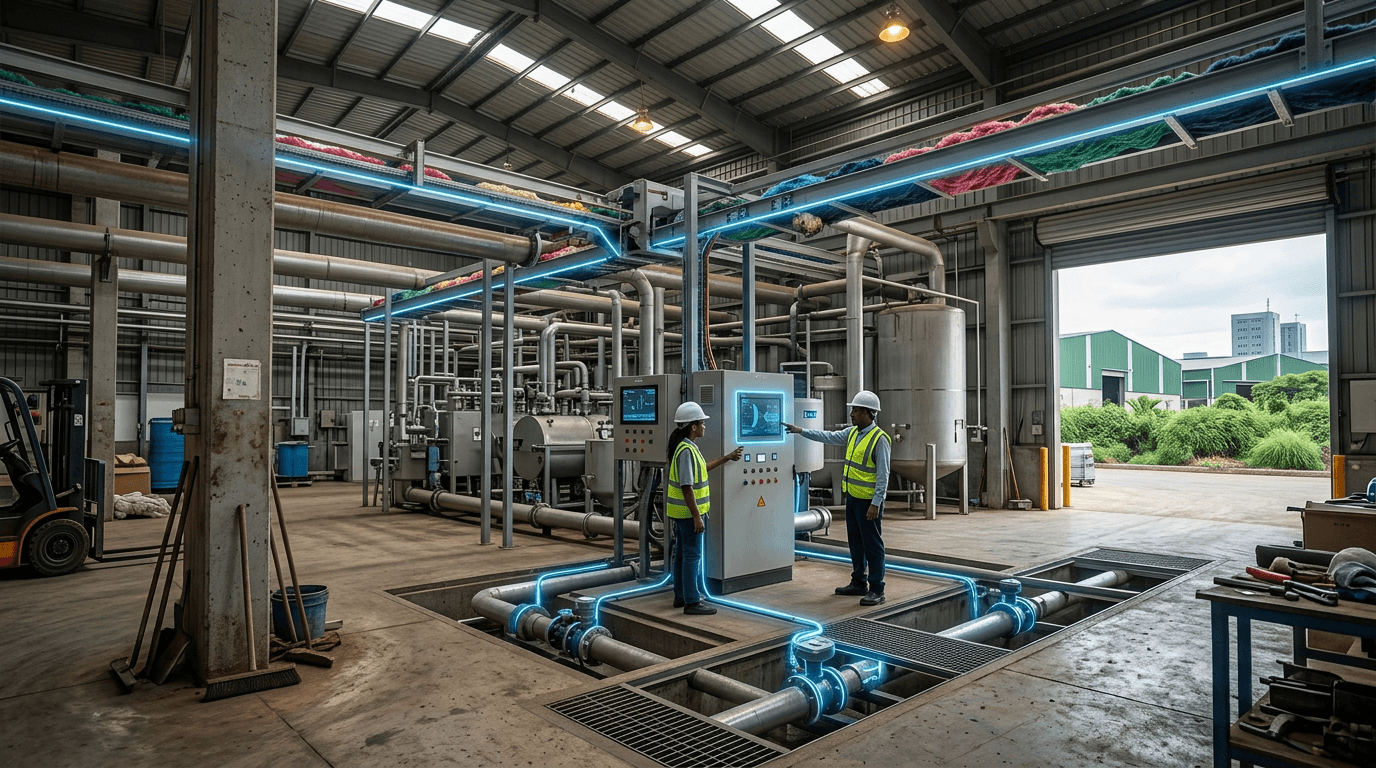
Integrated Eco-Industrial Park Manufacturing Technology
Geography: Emea · Africa · Africa
Ethiopia's Hawassa Industrial Park (HIP), inaugurated in 2016, is Africa's most technologically integrated industrial manufacturing facility. The 1.378 million square meter park hosts 37 factories producing garments and textiles for global brands, but its innovation is the eco-industrial design: a zero-liquid-discharge water treatment plant that recycles all industrial wastewater, 50km of underground piping connecting factories to centralized services, on-site effluent treatment that meets international discharge standards, and energy-efficient factory shells designed to minimize cooling requirements in Ethiopia's highland climate.
The technology integration solves a problem that has plagued African industrialization: factories that pollute local water sources, consume excessive energy, and generate waste that damages surrounding communities. HIP's closed-loop water system — treating and recycling textile dyeing effluent that would devastate Lake Hawassa — demonstrates that African manufacturing can meet the environmental standards demanded by global brands. The park was designed by Chinese industrial park developer CCECC and built in under a year, incorporating lessons from Asian manufacturing zones.
The strategic significance is Ethiopia's bid to become Africa's manufacturing hub — competing with Bangladesh, Vietnam, and Cambodia for global garment production. The eco-industrial park model addresses the growing ESG requirements of international buyers who increasingly audit supply chain environmental compliance. With 13 industrial parks planned or operational across Ethiopia, the Hawassa template is being replicated. The technology question is whether Ethiopia can move beyond assembling imported fabric to producing its own textiles from locally grown cotton — the full vertical integration that would capture maximum value.
Research this in Signals
Signals turns a topic into a sourced research record you can inspect and rerun. Your first scan is free, and this one starts with Integrated Eco-Industrial Park Manufacturing Technology already loaded, so edit it or scan as is.