Digital Matatu Transit Mapping and Payment
Geography: Emea · Africa · Africa
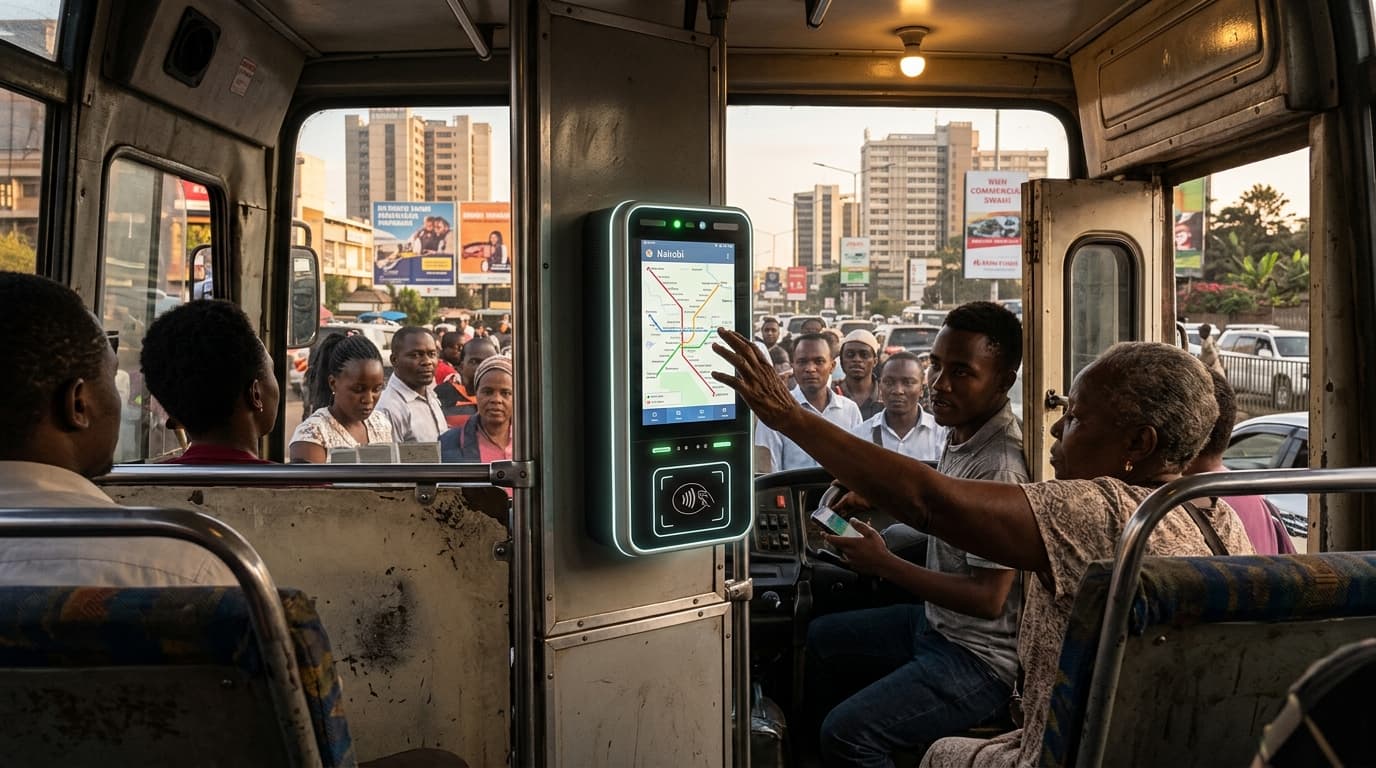
Nairobi's matatu system — privately operated minibuses that carry over 3 million passengers daily — was digitally mapped by the Digital Matatus project, creating the first comprehensive public transit map of an informal transport system. The open-source GTFS (General Transit Feed Specification) data has been integrated into Google Maps, enabling route planning for a system that has no official schedules, fixed stops, or central coordination. Cashless payment systems using NFC cards and mobile money are being deployed across the fleet.
The significance is methodological: Nairobi proved that informal transit systems — which carry the majority of urban passengers in African, Asian, and Latin American cities — can be digitized and optimized without formalization. The mapping technology used GPS-equipped smartphones carried by riders and crowdsourced data collection, producing transit data at a fraction of the cost of traditional transit surveys.
This approach has been replicated in Kampala, Dhaka, Manila, and Mexico City. The cashless payment integration goes further — by replacing cash transactions between passengers and drivers, it reduces robbery (a major problem), creates ridership data for route optimization, and enables transit subsidies to be targeted precisely. It's a template for bringing the 500+ million daily users of informal transit worldwide into the digital economy.
Research this in Signals
Signals turns a topic into a sourced research record you can inspect and rerun. Your first scan is free, and this one starts with Digital Matatu Transit Mapping and Payment already loaded, so edit it or scan as is.