Quantum Workforce Optimizers
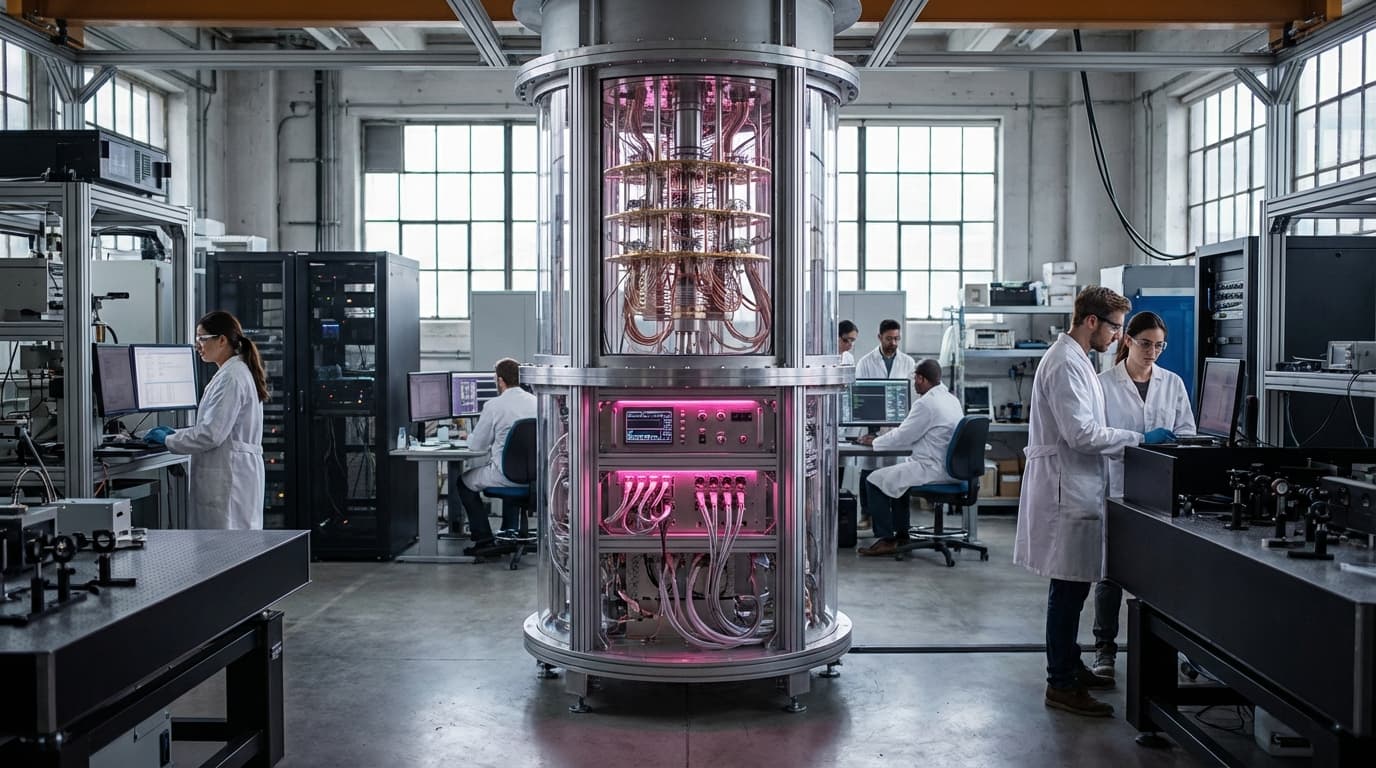
Quantum Workforce Optimizers represent a new class of computational systems that leverage quantum mechanical properties to solve complex organizational challenges that have long exceeded the practical limits of classical computing. Unlike traditional optimization algorithms that must evaluate possibilities sequentially or through approximation, quantum processors exploit superposition and entanglement to explore vast solution spaces simultaneously. These systems excel at combinatorial optimization problems—scenarios where the number of possible configurations grows exponentially with each additional variable. In workforce management, this means considering not just employee availability and shift requirements, but also skill matching, regulatory constraints, geographic distribution, individual preferences, training requirements, and dynamic business demands all at once. The quantum approach encodes these variables into quantum states, allowing the system to navigate toward optimal or near-optimal solutions through quantum annealing or gate-based quantum algorithms.
The fundamental challenge these systems address is the computational intractability of large-scale coordination problems that organizations face daily. Traditional scheduling software often relies on heuristics or simplified models that produce workable but suboptimal results, leaving significant efficiency gains unrealized. For enterprises managing thousands of employees across multiple locations and time zones, the difference between an adequate schedule and an optimal one can translate to substantial cost savings, improved employee satisfaction, and better service delivery. Research suggests that quantum approaches may also enable entirely new organizational structures by making previously impossible coordination patterns computationally feasible—such as dynamically reconfiguring project teams based on real-time skill requirements and availability, or optimizing gig economy platforms to match workers with opportunities across complex preference landscapes. Beyond scheduling, these systems show promise for supply chain optimization, resource allocation in healthcare systems, and strategic workforce planning that accounts for future skill development pathways.
Current implementations typically employ hybrid architectures that combine classical preprocessing with quantum processing cores, as fully quantum solutions remain constrained by hardware limitations such as qubit count and error rates. Early pilot programs in logistics and manufacturing sectors indicate that even near-term quantum devices can provide measurable advantages for specific problem classes, though widespread commercial deployment awaits further hardware maturation. Industry analysts note growing interest from enterprise software providers in developing quantum-ready optimization platforms that can scale as quantum hardware improves. As quantum computing technology advances and becomes more accessible through cloud-based services, Quantum Workforce Optimizers are positioned to become integral components of enterprise resource planning systems, fundamentally transforming how organizations approach coordination challenges and potentially enabling new forms of distributed, adaptive organizational structures that were previously computationally prohibitive.
Related Organizations

A pioneer in quantum annealing hardware and software, offering the Ocean SDK for solving optimization problems on their annealing processors.
Focuses on quantum optimization software tools, specifically for fault-tolerant quantum computing.

Develops 'Singularity', a software platform containing tensor network and quantum machine learning algorithms for finance.


Offers the Digital Annealer, a quantum-inspired architecture specifically built to solve large-scale combinatorial optimization problems.

Develops neutral atom quantum processors and associated software for Quantum Evolution Kernel methods.
Swiss quantum technology company offering 'Quantum as a Service'.

Provides a platform that automates the synthesis of quantum circuits from high-level functional models.
Zapata AI
United States · Company
Industrial generative AI and quantum software company offering the Orquestra platform for computational workflows.

Has actively researched and piloted quantum annealing for traffic flow optimization and paint shop scheduling.
Supporting Evidence
Research this in Signals
Signals turns a topic into a sourced research record you can inspect and rerun. Your first scan is free, and this one starts with Quantum Workforce Optimizers already loaded, so edit it or scan as is.