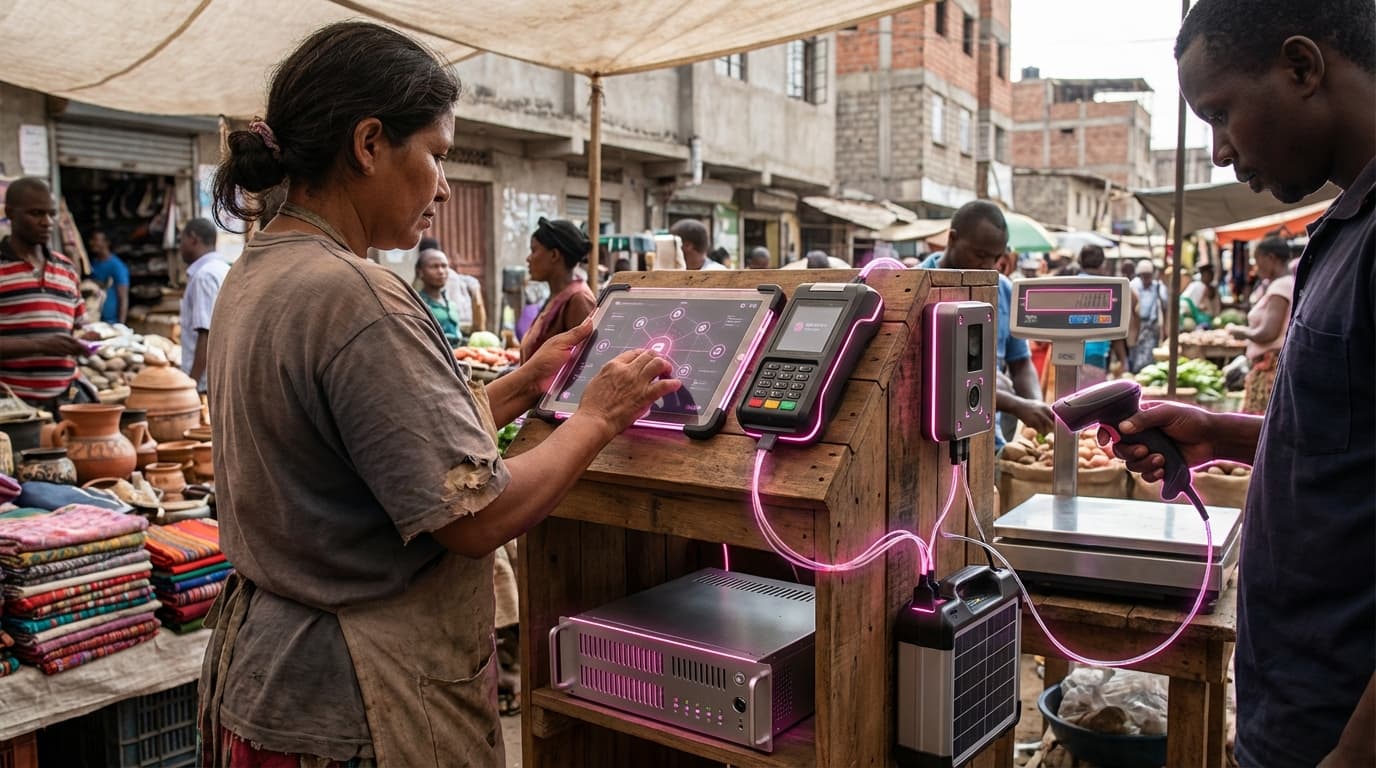
Informal Economy Platforms
The informal economy encompasses a vast spectrum of workers—from street vendors and domestic workers to gig laborers and small-scale artisans—who operate outside traditional employment frameworks and regulatory systems. These workers, estimated to represent over 60% of the global workforce in developing economies, face persistent challenges including lack of access to credit, absence of social protections, vulnerability to exploitation, and limited pathways to scale their enterprises. Traditional financial and organizational systems have largely excluded these workers due to their inability to provide conventional documentation, collateral, or employment verification. Informal Economy Platforms address this fundamental gap by creating digital infrastructure that extends formal-sector capabilities—such as verifiable work histories, micro-insurance, dispute resolution mechanisms, and collective negotiation power—to workers who have historically been invisible to institutional systems.
These platforms operate through mobile-first architectures that leverage smartphone penetration in emerging markets, often requiring minimal data connectivity and working across multiple languages and literacy levels. At their core, they create portable digital identities that aggregate work histories, peer reviews, and transaction records, effectively building creditworthiness and reputation capital for workers who lack traditional credentials. Many systems incorporate blockchain or distributed ledger technologies to create tamper-proof records of contracts and payments, reducing the power asymmetries that leave informal workers vulnerable to wage theft and arbitrary treatment. Some platforms facilitate collective action by connecting workers across geographic boundaries, enabling them to pool resources for bulk purchasing, negotiate better rates with suppliers or clients, and access group insurance products previously available only through formal employment. By digitizing these relationships and transactions, the platforms generate data that can unlock microfinance opportunities, as lenders gain visibility into cash flows and repayment capacity that were previously opaque.
Early deployments across Latin America, Southeast Asia, and Sub-Saharan Africa indicate growing adoption among domestic workers, waste pickers, and transportation providers, with platforms reporting improved income stability and access to emergency credit for participating workers. These systems are increasingly integrating with government social protection programs, allowing informal workers to access subsidies, healthcare enrollment, and pension contributions through the same digital channels they use for work coordination. The technology aligns with broader trends toward financial inclusion and the formalization of previously invisible economic activity, though challenges remain around data privacy, platform governance, and ensuring that digitization genuinely empowers workers rather than creating new forms of algorithmic control. As urbanization accelerates and traditional employment models continue to fragment globally, these platforms represent a critical infrastructure for ensuring that economic development reaches the majority of workers who operate outside conventional institutional frameworks.
Related Organizations

A 'Super App' that began as a call center for informal motorcycle taxis (Ojek) and now provides payments, food delivery, and logistics to millions of informal workers and micro-merchants in Southeast Asia.
Women in Informal Employment: Globalizing and Organizing is a global network focused on securing livelihoods for the working poor, especially women, in the informal economy through research, policy analysis, and digital inclusion advocacy.

A UN agency that sets international labor standards and produces the 'Guidelines for a just transition towards environmentally sustainable economies'.

A digital ledger app for small and medium-sized businesses in India, enabling informal merchants to record transactions digitally and collect payments, effectively formalizing their credit history.
Udaan
India · Startup
A B2B trade platform designed specifically for small and medium businesses in India, connecting manufacturers directly with retailers and providing credit to informal shops.

A B2B platform transforming the informal retail supply chain in Africa by allowing small shopkeepers to order stock via SMS or app with free delivery and access to credit.

A bookkeeping app for MSMEs in Indonesia that helps small merchants digitize their financial records and payments.
Jobcase
United States · Company
A social media platform and job board specifically designed for the 'non-degree' workforce, helping blue-collar and gig workers build community, share advice, and find employment.

An African technology company that builds tools and financial services for small businesses, primarily mobile card readers that allow informal street vendors to accept digital payments.

A financial technology company that builds software to enable free and instant cross-border payments in Africa.
Supporting Evidence
Research this in Signals
Signals turns a topic into a sourced research record you can inspect and rerun. Your first scan is free, and this one starts with Informal Economy Platforms already loaded, so edit it or scan as is.