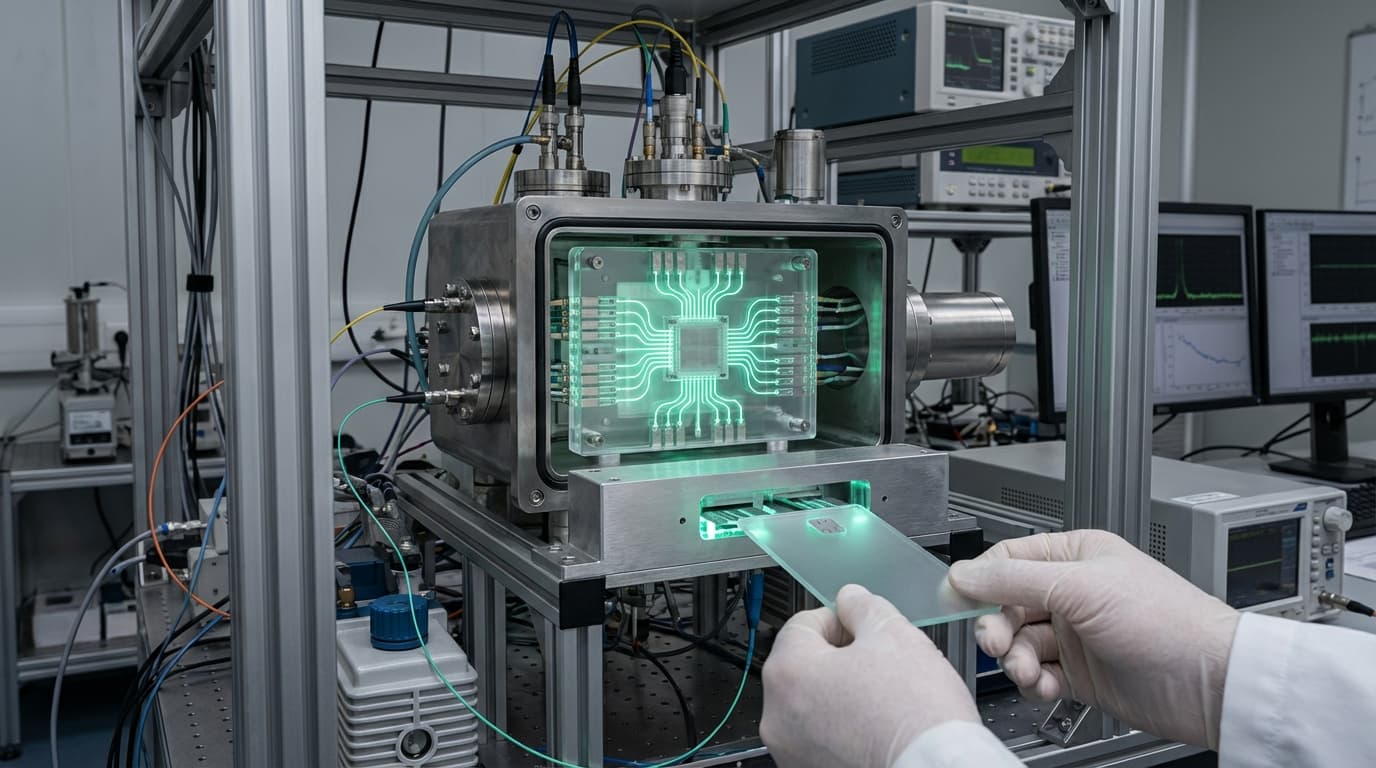
Quantum Money
Quantum money is a theoretical form of unforgeable digital tokens secured by the No-Cloning Theorem (a fundamental law of quantum mechanics that prevents perfect copying of unknown quantum states), where quantum money schemes use quantum states (quantum mechanical properties) that cannot be copied (cloned) by physics (the laws of physics prevent perfect copying), serving as cash that is impossible to counterfeit (cannot be forged). While currently theoretical (not yet practical) or requiring quantum memory to store (needing devices that can preserve quantum states), it represents the ultimate physical security for digital value (the most secure possible form of digital money) without needing a distributed ledger (blockchain or similar system), making quantum money a potential form of digital currency that is secured by the laws of physics rather than cryptography or consensus mechanisms, though it remains largely theoretical due to the challenges of storing and handling quantum states.
This innovation addresses the challenge of creating unforgeable digital money, where quantum money could provide ultimate security. By using quantum mechanics, these systems could prevent counterfeiting. Research institutions are studying these schemes.
The technology is particularly interesting for its theoretical security guarantees, where quantum money could be impossible to counterfeit. However, practical implementation faces significant challenges. However, storing quantum states, managing complexity, and achieving practical use remain major challenges. The technology represents an interesting theoretical concept, but requires significant advances to become practical. Success could enable the most secure form of digital money, but the technology faces substantial practical challenges. Quantum money remains largely theoretical, with practical implementation being extremely challenging.
Research this in Signals
Signals turns a topic into a sourced research record you can inspect and rerun. Your first scan is free, and this one starts with Quantum Money already loaded, so edit it or scan as is.