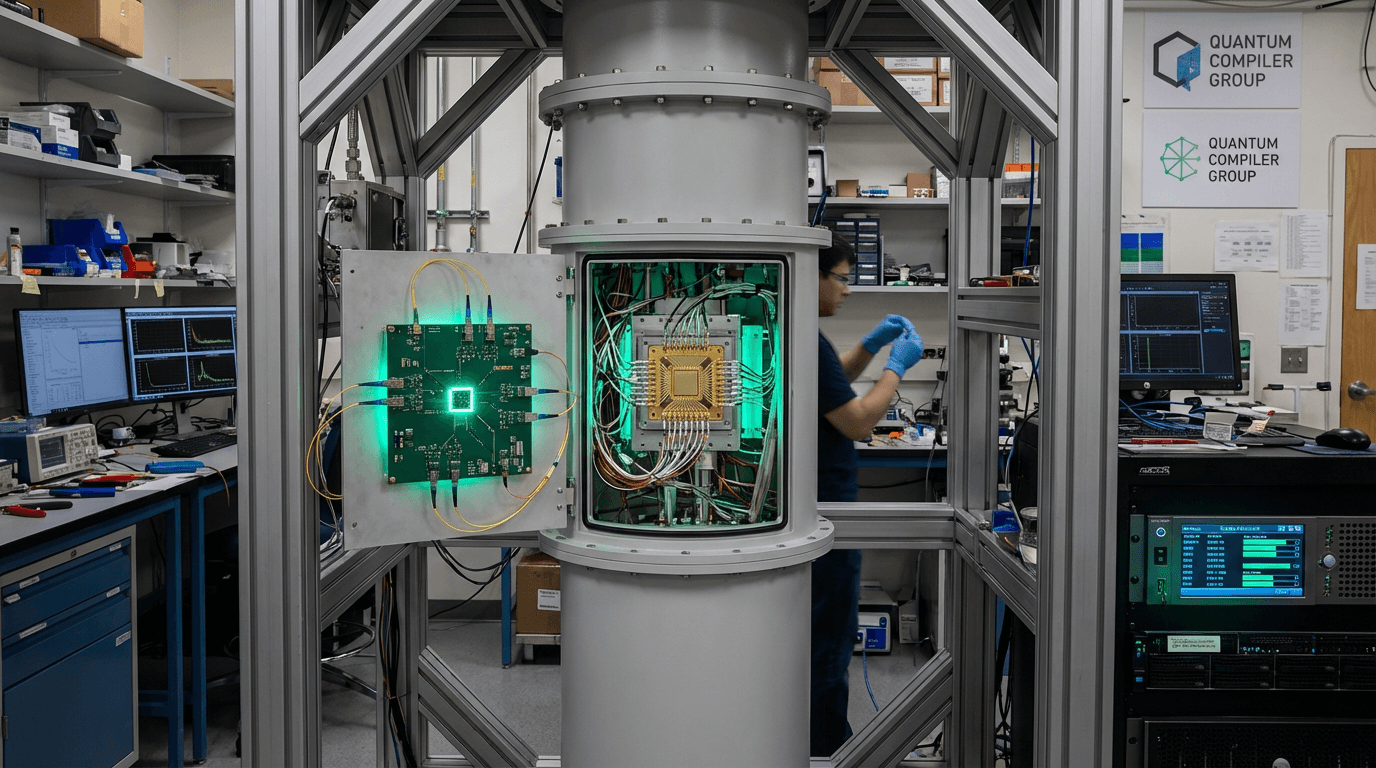
Quantum Intermediate Representation (QIR)
Quantum Intermediate Representation (QIR) is a standardized low-level representation (a common format for quantum programs) that allows interoperability between different quantum programming languages and hardware backends, serving as the 'LLVM' for quantum computing (similar to how LLVM is a common intermediate representation for classical programming languages). It provides a common layer that allows code written in high-level frameworks (like Q# or Python-based quantum frameworks) to be compiled efficiently for any backend hardware (different types of quantum computers), enabling quantum programs to run on different quantum hardware without rewriting code. This infrastructure is invisible to most users (they don't need to know about it) but critical for a mature, interoperable quantum software ecosystem, where different tools and hardware can work together seamlessly, making quantum computing more practical and accessible.
This innovation addresses the fragmentation in quantum software, where different languages and hardware don't work together. By providing a common representation, QIR enables interoperability. Standards organizations, companies, and research institutions are developing QIR.
The technology is essential for a mature quantum software ecosystem, where interoperability is necessary for practical use. As quantum computing expands, standards like QIR become increasingly important. However, ensuring adoption, managing complexity, and supporting diverse hardware remain challenges. The technology represents an important infrastructure for quantum computing, but requires widespread adoption to be effective. Success could enable a more interoperable quantum ecosystem, but the technology must be widely adopted. QIR is an active area of standardization with several organizations working on it.
Related Organizations

Nonprofit consortium fostering open source innovation.

Through Copilot and the 'Recall' feature in Windows, Microsoft is integrating persistent memory and agentic capabilities directly into the operating system.
Developing foundation models for robotics (Project GR00T) and vision-language models like VILA.

Integrated quantum computing company formed by Honeywell and CQC.

US Department of Energy multiprogram science and technology national laboratory.

Full-stack superconducting quantum computing company.

The first pure-play public quantum computing company, developing trapped-ion systems using Ytterbium ions.
United States · Startup
Yale spin-out developing superconducting quantum computers.
United States · Government Agency
US Department of Energy national laboratory.
Supporting Evidence
Research this in Signals
Signals turns a topic into a sourced research record you can inspect and rerun. Your first scan is free, and this one starts with Quantum Intermediate Representation (QIR) already loaded, so edit it or scan as is.