Trapped-Ion Quantum Computing
Geography: Americas · North America · United States
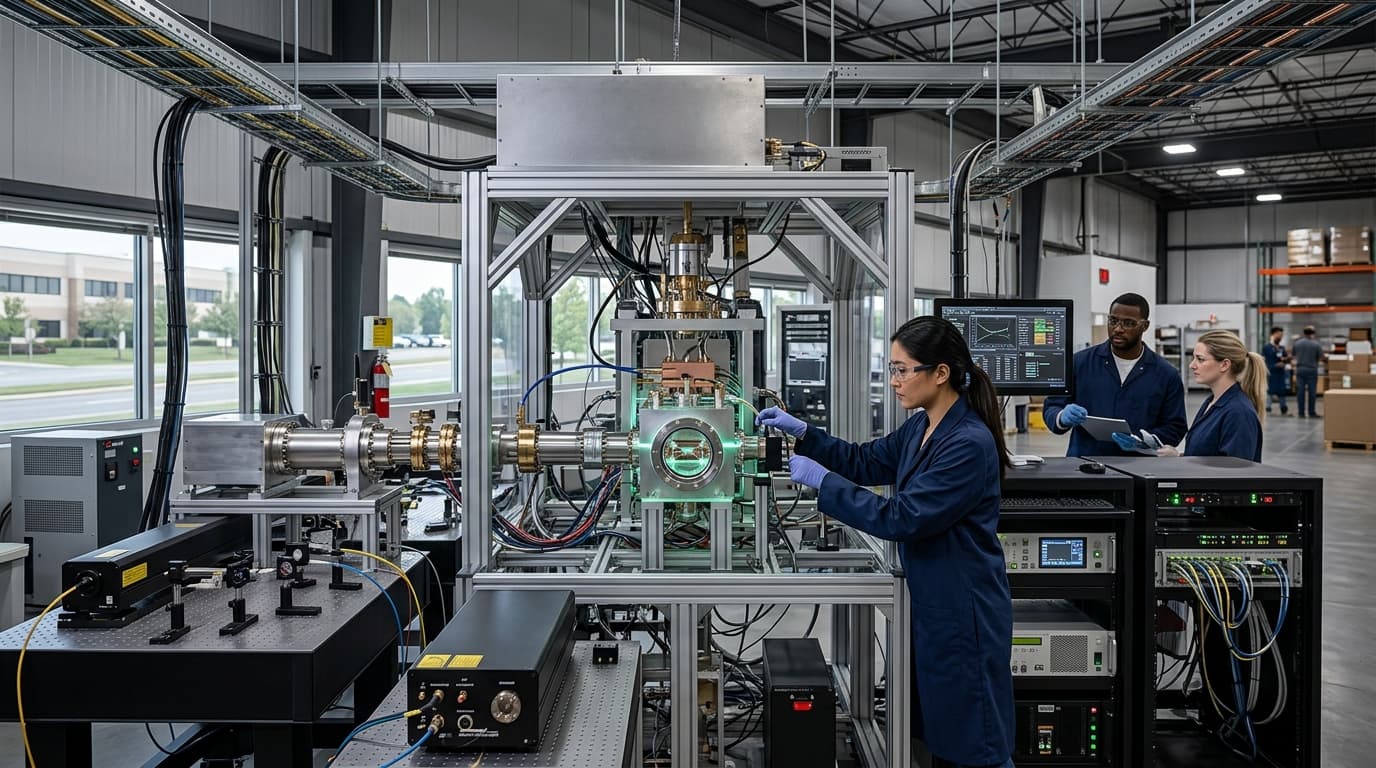
Trapped-ion quantum computers use individual atoms suspended in electromagnetic fields as qubits. Quantinuum (Honeywell spin-off, valued at $10 billion) and IonQ (publicly traded) lead this approach, achieving the highest gate fidelities and longest coherence times of any quantum computing architecture. IonQ is selling systems internationally, including a 100-qubit system deployed in South Korea.
Trapped ions offer long coherence times and all-to-all qubit connectivity, enabling complex quantum algorithms with fewer physical qubits than competing architectures. Quantinuum demonstrated breakthrough quantum error correction in 2025, and IonQ's acquisition of Oxford Ionics brought microwave-controlled ion trap technology that could simplify scaling.
The trapped-ion approach faces scaling challenges — moving from hundreds to thousands of qubits requires innovations in ion shuttling, modular architectures, and photonic interconnects between quantum processing units. Both companies are racing superconducting rivals (Google, IBM) and the neutral-atom approach (QuEra, Atom Computing) to demonstrate practical quantum advantage for commercially relevant problems.
Research this in Signals
Signals turns a topic into a sourced research record you can inspect and rerun. Your first scan is free, and this one starts with Trapped-Ion Quantum Computing already loaded, so edit it or scan as is.