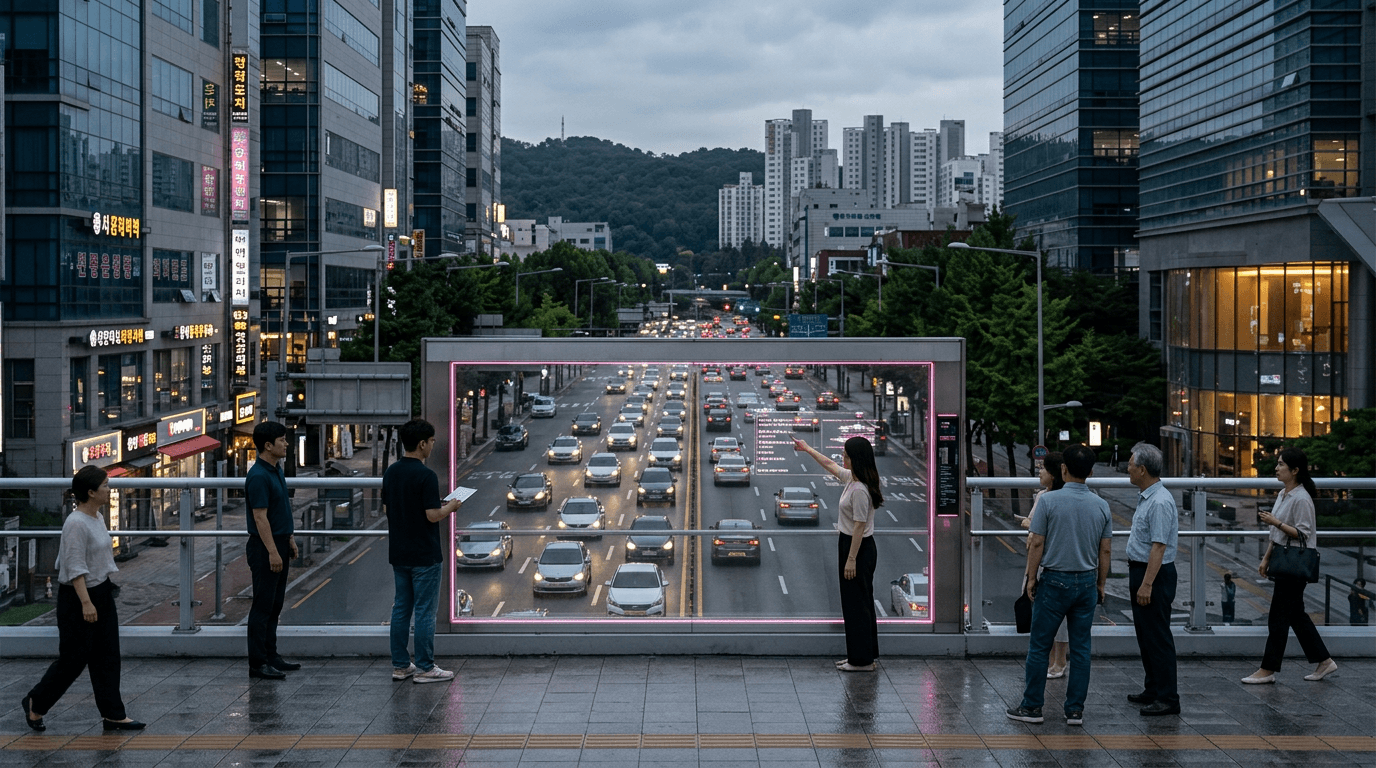
Transparent Micro-LED Display Technology
Geography: Asia Pacific · East Asia · South Korea
Samsung showcased transparent Micro-LED display technology at CES 2026, building on two years of development to move from concept prototype to near-commercial product. The technology uses arrays of microscopic inorganic LED chips mounted on transparent substrates, allowing viewers to see both the displayed content and the physical objects behind the screen simultaneously. Unlike transparent OLED (which LG has commercialized for limited applications), transparent Micro-LED offers higher brightness (visible in direct sunlight), no burn-in, and theoretically unlimited lifespan — critical advantages for architectural and retail glazing applications.
The manufacturing challenge for transparent Micro-LED is even more demanding than standard Micro-LED: the LED chips and their driving circuits must be small enough to be invisible between pixels, the interconnect wiring must be transparent or sub-pixel-width, and the entire assembly must maintain optical clarity. Samsung's approach leverages its expertise in both Micro-LED mass transfer (from 'The Wall' commercial displays) and transparent display materials (from its flexible OLED programs), combining two streams of display R&D into a new product category.
Transparent displays represent a potential multi-billion-dollar market for applications where screens currently cannot exist: retail storefront windows that double as interactive displays, car windshields with heads-up information, architectural glass walls in offices and airports, and museum cases that overlay digital information on physical artifacts. Samsung's vertical integration in both the LED chips and the display assembly positions it to commercialize transparent Micro-LED ahead of competitors who must source components from multiple suppliers.
Research this in Signals
Signals turns a topic into a sourced research record you can inspect and rerun. Your first scan is free, and this one starts with Transparent Micro-LED Display Technology already loaded, so edit it or scan as is.