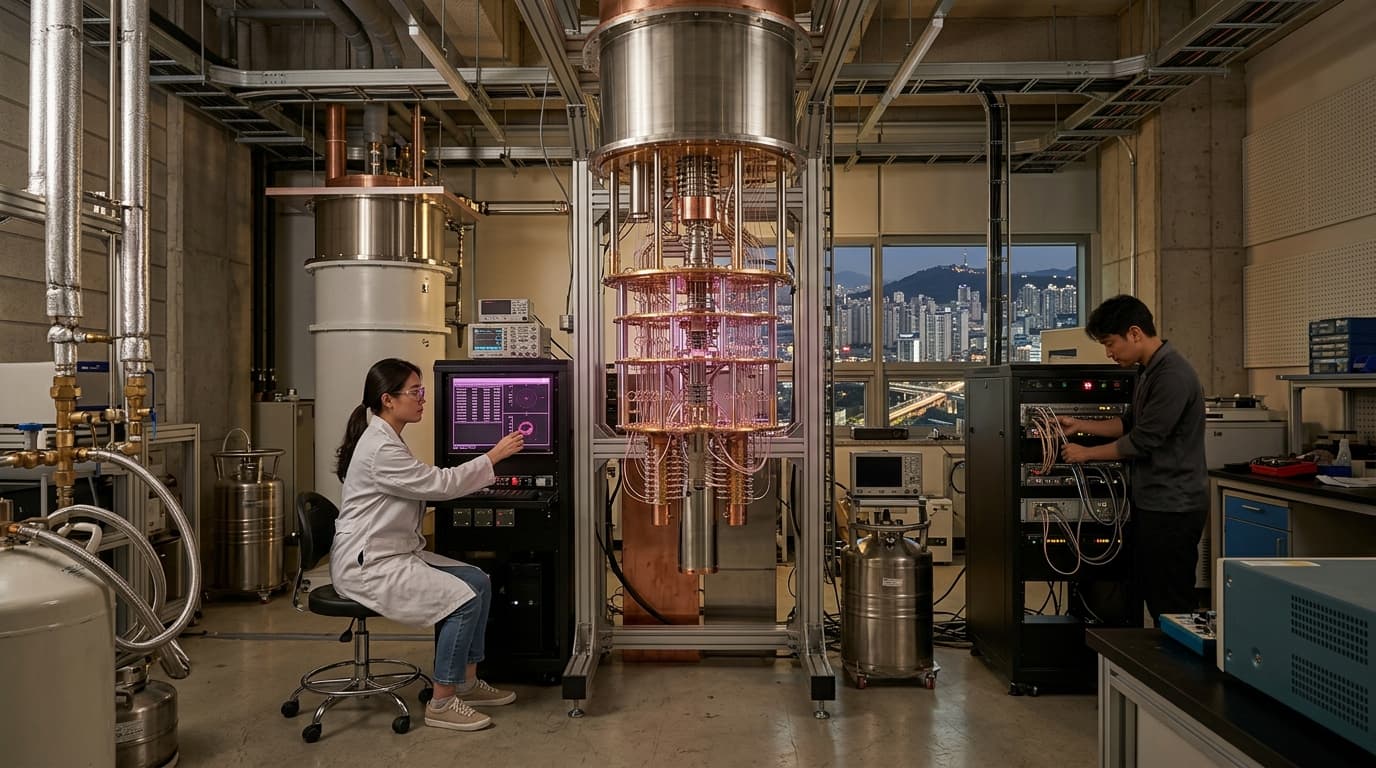
Quantum Computing Research
Geography: Asia Pacific · East Asia · South Korea
South Korea launched a national quantum computing initiative with $2B in committed R&D funding through 2030. Samsung Electronics is developing superconducting quantum processors, SK Telecom is building quantum-safe cryptography and quantum key distribution networks, and KIST (Korea Institute of Science and Technology) operates ion-trap quantum computing research labs. The goal is to build a 1,000+ qubit quantum computer by 2035.
Korea enters quantum computing later than the US, China, and Europe, but brings manufacturing advantages — Samsung's semiconductor fabrication expertise is directly relevant to producing quantum processor chips, which require precision similar to advanced logic chips. SK Telecom has already deployed quantum key distribution on sections of Korea's commercial telecom network, making it one of the first commercial quantum cryptography deployments worldwide.
The strategic rationale is defensive as much as offensive — a country that controls 70% of global memory chips cannot afford to be caught unprepared if quantum computing disrupts current cryptography and computing paradigms. Korea's quantum investments are calibrated to maintain a capable domestic research base and industry, not to lead the global quantum race.
Research this in Signals
Signals turns a topic into a sourced research record you can inspect and rerun. Your first scan is free, and this one starts with Quantum Computing Research already loaded, so edit it or scan as is.