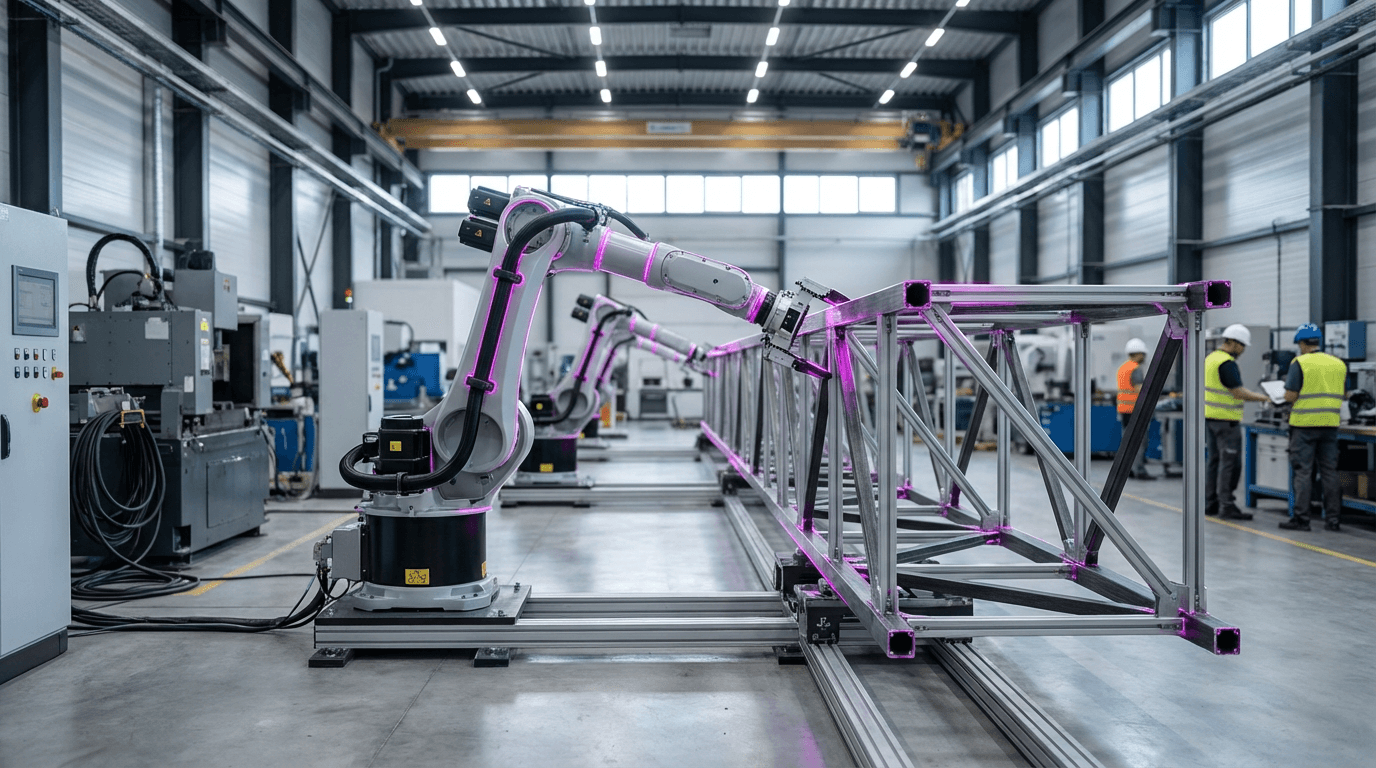
In-Orbit Servicing & Manufacturing (OSAM)
In-Orbit Servicing and Manufacturing (OSAM) represents a paradigm shift in how humanity approaches space infrastructure, moving beyond the traditional model of launching complete, disposable satellites toward a sustainable ecosystem of repairable and upgradable orbital assets. At its technical core, OSAM encompasses robotic systems capable of performing complex tasks in the harsh environment of space, including satellite refueling, component replacement, orbital debris removal, and on-orbit assembly of large structures. These systems typically employ advanced robotics with dexterous manipulators, autonomous rendezvous and proximity operations capabilities, and sophisticated computer vision systems that enable precise maneuvering around target spacecraft. The technology relies on standardized interfaces and modular satellite designs that facilitate servicing operations, though legacy satellites not designed for servicing present additional challenges requiring adaptive grasping mechanisms and non-cooperative rendezvous techniques. Manufacturing capabilities extend this further, utilizing techniques such as additive manufacturing adapted for microgravity environments and robotic assembly of components launched separately, enabling the construction of structures far larger than any single launch vehicle could accommodate.
The space industry faces mounting economic and operational pressures that OSAM directly addresses. Traditional satellite operations involve significant capital locked into assets with finite lifespans, typically 10-15 years, after which entire multi-million or billion-dollar spacecraft become orbital debris due to fuel depletion or single-point component failures. This creates enormous waste and necessitates costly replacement launches. OSAM fundamentally disrupts this model by enabling satellite operators to extend mission lifetimes through refueling, upgrade outdated technology without full replacement, and recover from anomalies that would otherwise end missions prematurely. For telecommunications, Earth observation, and navigation satellite constellations, this translates into dramatically improved return on investment and operational flexibility. The manufacturing dimension solves critical constraints imposed by launch vehicle fairing dimensions—currently limiting antenna sizes, solar array areas, and telescope apertures. By assembling large structures in orbit from smaller components, OSAM enables capabilities previously impossible, such as massive power-generation arrays, enormous communication antennas, and space-based observatories with collecting areas orders of magnitude larger than ground-launched alternatives.
Early demonstrations have validated core OSAM concepts, with robotic servicing missions successfully performing rendezvous operations and grappling maneuvers with both cooperative and non-cooperative targets. Research organizations and commercial ventures are actively developing servicing vehicles designed to extend satellite lifetimes through refueling and relocation services, with some targeting operational deployment within the current decade. The technology's maturation coincides with growing recognition of space sustainability challenges, as orbital debris proliferation threatens long-term access to critical orbital regimes. OSAM offers pathways to debris remediation through active removal capabilities and reduces future debris generation by extending satellite operational lives. Looking forward, the convergence of OSAM with emerging space manufacturing techniques suggests a future where complex structures—from space stations to solar power satellites to deep-space exploration vehicles—are routinely assembled in orbit rather than launched whole. This capability becomes increasingly critical as humanity's space-based infrastructure expands, supporting everything from global communications networks to Earth observation systems essential for climate monitoring and disaster response. The transition toward serviceable, upgradable, and manufacturable space infrastructure represents not merely an incremental improvement but a foundational shift toward truly sustainable space operations.
Related Organizations

Market leader in satellite servicing and long-term orbital sustainability, known for the ELSA-d demonstration mission.

Major defense contractor developing Reciprocal Quantum Logic (RQL) for cryogenic computing.

Developing the 'Gas Stations in Space' architecture, including the RAFTI fueling port standard and fuel depots.

Provides in-space 3D printing and bioprinting capabilities, having acquired Made In Space and Techshot.

Swiss startup selected by ESA for the ClearSpace-1 mission to remove a Vega payload adapter from orbit.

Developing the Otter servicing vehicle for satellite life extension and transport.

Space logistics company offering decommissioning services and developing technology to remove satellites at end-of-life.

Building 'Orbots' equipped with AI to inspect, characterize, and eventually service or remove space assets.

Developing large, scalable space infrastructure using in-space welding.
Supporting Evidence
Research this in Signals
Signals turns a topic into a sourced research record you can inspect and rerun. Your first scan is free, and this one starts with In-Orbit Servicing & Manufacturing (OSAM) already loaded, so edit it or scan as is.