Superconducting Quantum Computing
Geography: Asia Pacific · East Asia · Japan
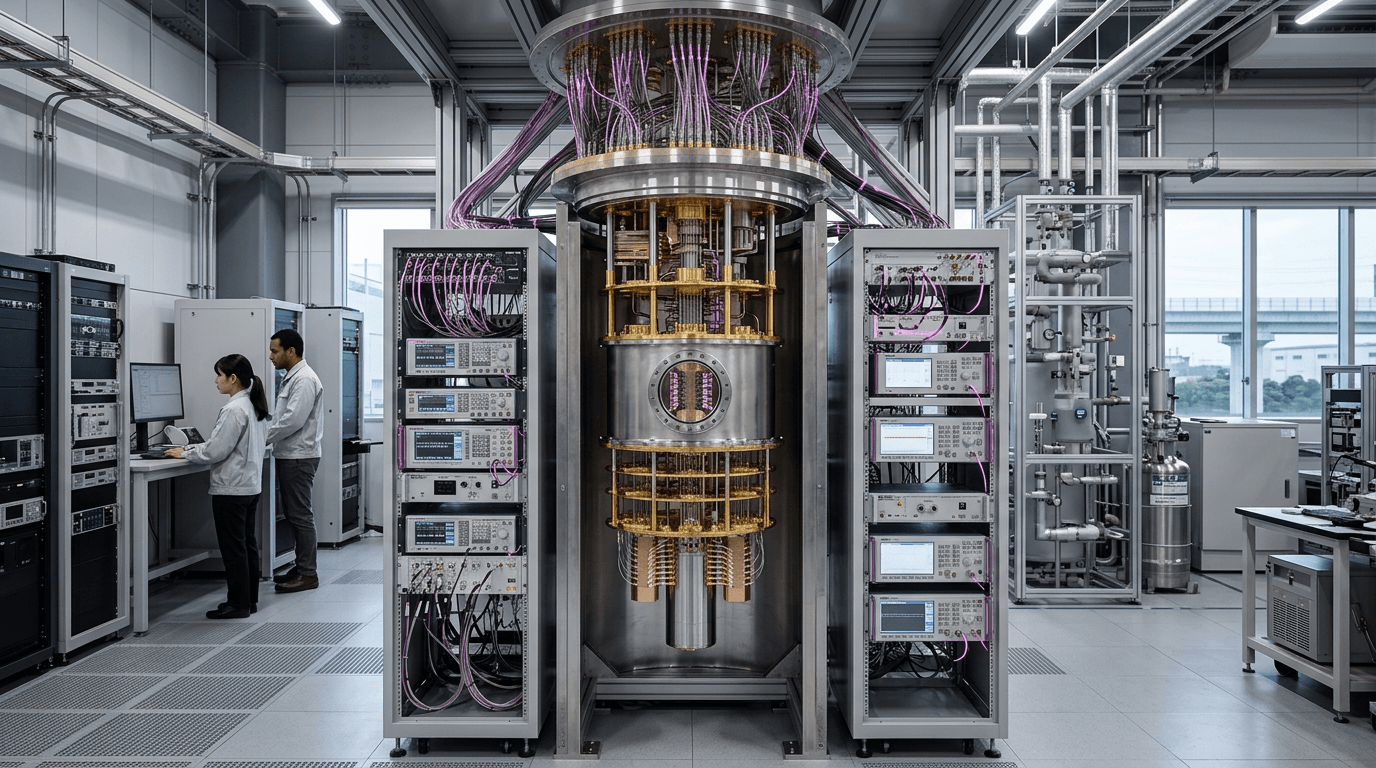
In April 2025, Fujitsu and RIKEN jointly developed a 256-qubit superconducting quantum computer — quadrupling the capacity of their previous 64-qubit system and ranking among the world's highest-performance quantum computers available to external users. The system uses a novel 3D scalable architecture enabling systematic expansion to larger qubit counts. It has been integrated into Fujitsu's hybrid quantum computing platform and offered to companies and research institutions worldwide since Q1 FY2025.
The roadmap is aggressive: a 1,000-qubit system is planned for installation at Fujitsu Technology Park in 2026, and in August 2025, Fujitsu announced official development of a 10,000+ qubit superconducting quantum computer targeting completion by 2030. The collaboration agreement between RIKEN and Fujitsu has been extended through March 2029. The approach combines superconducting qubits with quantum error correction and hybrid quantum-classical algorithms.
Japan's quantum computing program benefits from RIKEN's deep physics expertise and Fujitsu's computing platform engineering. While IBM, Google, and Chinese competitors have larger qubit counts, Japan's focus on error-corrected, commercially usable quantum computing — rather than raw qubit numbers — reflects a quality-over-quantity approach. The ¥135 billion AI infrastructure investment announced in 2025 includes quantum computing as a pillar, signaling sustained government commitment.
Research this in Signals
Signals turns a topic into a sourced research record you can inspect and rerun. Your first scan is free, and this one starts with Superconducting Quantum Computing already loaded, so edit it or scan as is.