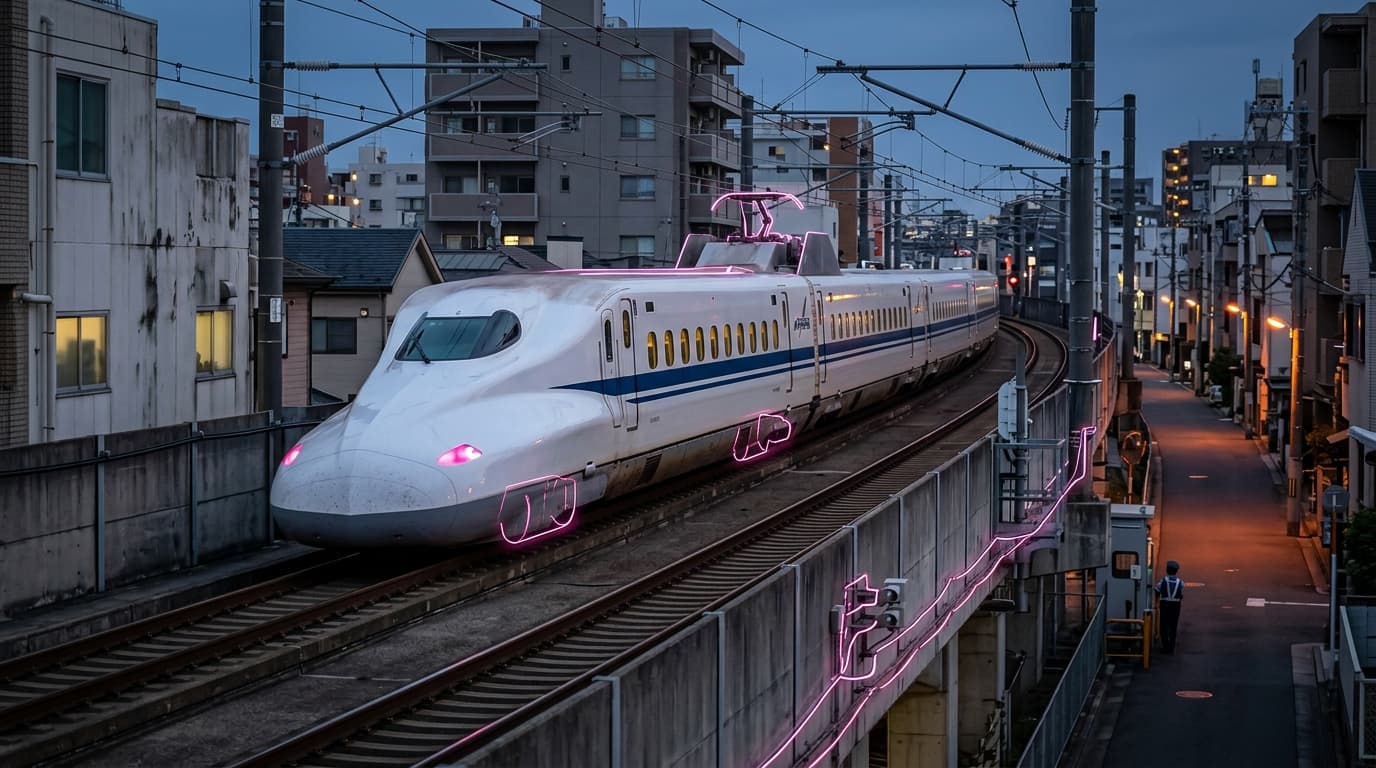
Shinkansen Systems Engineering
Geography: Asia Pacific · East Asia · Japan
The Shinkansen bullet train network has carried over 10 billion passengers since 1964 with zero fatalities from derailments or collisions — a safety record unmatched by any transportation system at any speed. This is achieved through integrated systems engineering: dedicated tracks with no grade crossings, earthquake early warning braking (UREDAS/TERRA-S systems that apply emergency brakes before seismic waves arrive), Automatic Train Control that maintains safe distances, and continuous track monitoring using 'Doctor Yellow' diagnostic trains that measure track geometry at full speed.
The engineering goes deeper than safety. Shinkansen trains operate in conditions that would disable other rail systems: heavy snowfall (Joetsu Shinkansen uses sprinkler de-icing), typhoons (wind speed sensors trigger speed restrictions automatically), and frequent earthquakes (trains can stop from 270 km/h within 800 meters when seismic alerts trigger). Average delay across the entire network is under one minute per train per year. The N700S (Supreme) trains feature lithium-ion battery backup enabling self-evacuation from tunnels during power outages — a post-Fukushima innovation.
The Shinkansen's global influence extends beyond Japan's network: the technology has been exported to Taiwan (THSR), is being proposed for Texas and India (Mumbai-Ahmedabad line), and its operational methodology influences high-speed rail planning worldwide. But the deeper lesson is systemic — the Shinkansen demonstrates that extreme reliability at extreme speed requires treating the entire railway as a single integrated system, not as separate components. This systems engineering philosophy is Japan's true export, applicable far beyond trains.
Research this in Signals
Signals turns a topic into a sourced research record you can inspect and rerun. Your first scan is free, and this one starts with Shinkansen Systems Engineering already loaded, so edit it or scan as is.