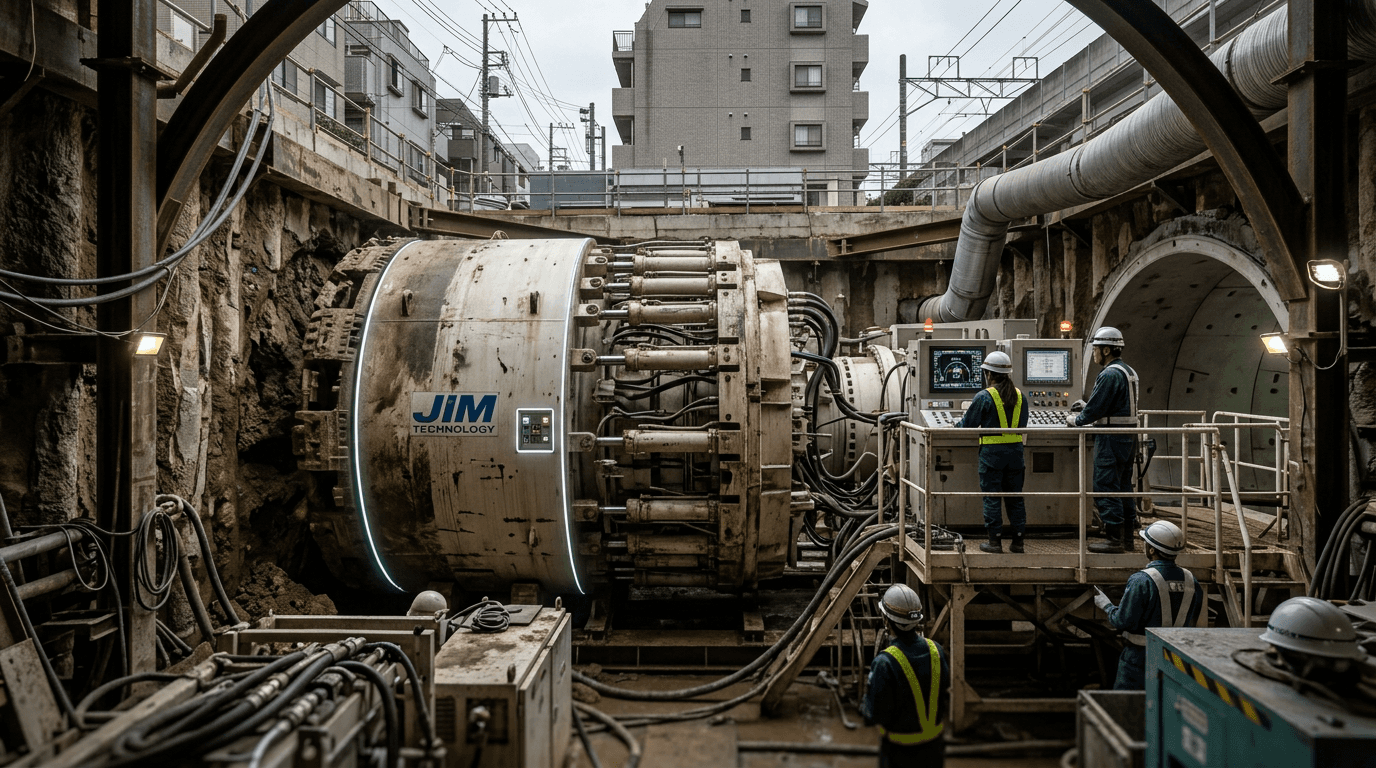
Advanced Shield Tunnel Boring Machines
Geography: Asia Pacific · East Asia · Japan
Japan possesses the world's most advanced shield tunnel boring machine (TBM) technology, consolidated in JIM Technology Corporation — a joint venture of IHI, JFE Engineering, and Mitsubishi Heavy Industries that holds the top share of Japan's shield tunneling machinery market. Japanese TBMs have evolved far beyond circular boring: IHI developed the Double-O Shield (excavating two overlapping tunnels simultaneously), rectangular and horseshoe-profile machines for subway stations, and upward-boring systems. These non-circular cross-section TBMs are unique Japanese innovations that no other country manufactures at production scale.
Japan's underground infrastructure expertise was born of necessity: dense urban environments where surface disruption is unacceptable, complex geology (volcanic soil, groundwater, earthquake zones), and the need to build extensive subway, utility, and flood control tunnels beneath cities. The Tokyo Bay Aqualine — a 9.6 km underwater tunnel connecting Kawasaki to Kisarazu — was bored using IHI shield machines with 14.14-meter diameter, among the largest ever built. Kawasaki Heavy Industries delivered its first tunnel boring roof shield for post-war subway construction and has since manufactured hundreds of specialized machines.
The strategic value extends beyond construction: as global urbanization accelerates, underground infrastructure becomes essential for flood control, transportation, utilities, and data center cooling. Japan's rectangular and multi-face TBMs enable efficient underground construction that circular machines cannot achieve — subway stations, highway passages, and utility corridors that match the shape of their intended use rather than forcing all underground spaces into circular cross-sections. This engineering flexibility represents decades of accumulated know-how that emerging infrastructure markets in Asia and the Middle East increasingly require.
Research this in Signals
Signals turns a topic into a sourced research record you can inspect and rerun. Your first scan is free, and this one starts with Advanced Shield Tunnel Boring Machines already loaded, so edit it or scan as is.