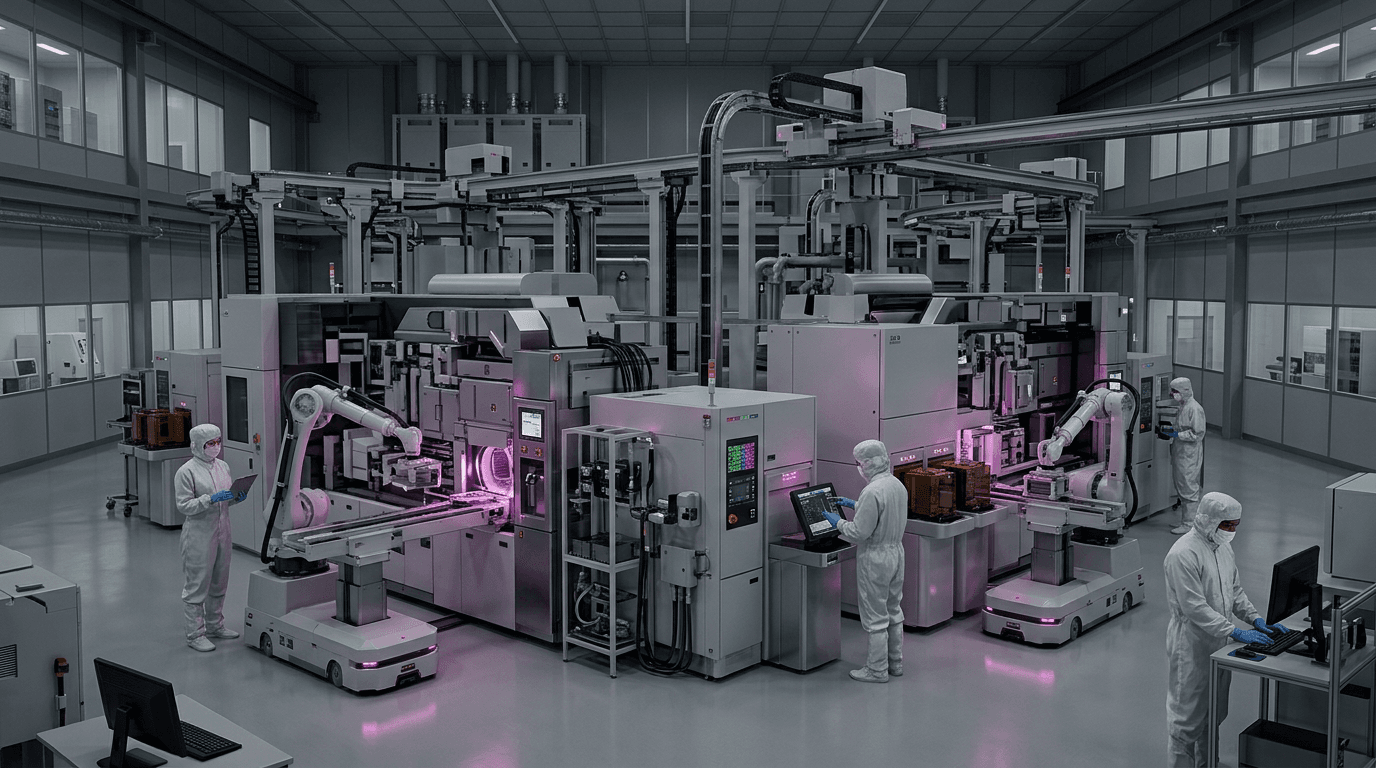
Rapidus 2nm Chip Manufacturing
Geography: Asia Pacific · East Asia · Japan
Rapidus Corporation, founded in 2022 with backing from Toyota, Sony, NTT, NEC, SoftBank, MUFG, Kioxia, and Denso, is Japan's bid to return to cutting-edge semiconductor manufacturing after a two-decade absence. In collaboration with IBM and imec, Rapidus produced working 2nm chip prototypes in 2025 at unprecedented speed — showcased to customers in July 2025. In February 2026, the company secured ¥267.6 billion ($1.7 billion) in combined government and private sector funding.
The Rapidus fab, IIM-1 (Innovative Integration for Manufacturing), is under construction in Chitose, Hokkaido. The company is pursuing a gate-all-around (GAA) nanosheet architecture for its 2nm process, using IBM's technology transfer. The target is pilot production by late 2025 and mass production by 2027 — an extremely ambitious timeline that would make Rapidus roughly concurrent with TSMC and Samsung at the 2nm node.
The strategic significance is immense: Japan has not manufactured leading-edge logic chips since the 1990s. Rapidus represents a national project to regain sovereignty over advanced chip production, driven by geopolitical concerns about Taiwan dependence and the AI computing boom. Skeptics question whether Rapidus can close a 20-year gap in manufacturing experience, but the IBM partnership provides process technology, and Japan's existing materials and equipment ecosystem provides the surrounding supply chain. Success would be transformative; failure would be an extremely expensive lesson.
Research this in Signals
Signals turns a topic into a sourced research record you can inspect and rerun. Your first scan is free, and this one starts with Rapidus 2nm Chip Manufacturing already loaded, so edit it or scan as is.