Multi-Nuclide Water Purification (ALPS)
Geography: Asia Pacific · East Asia · Japan
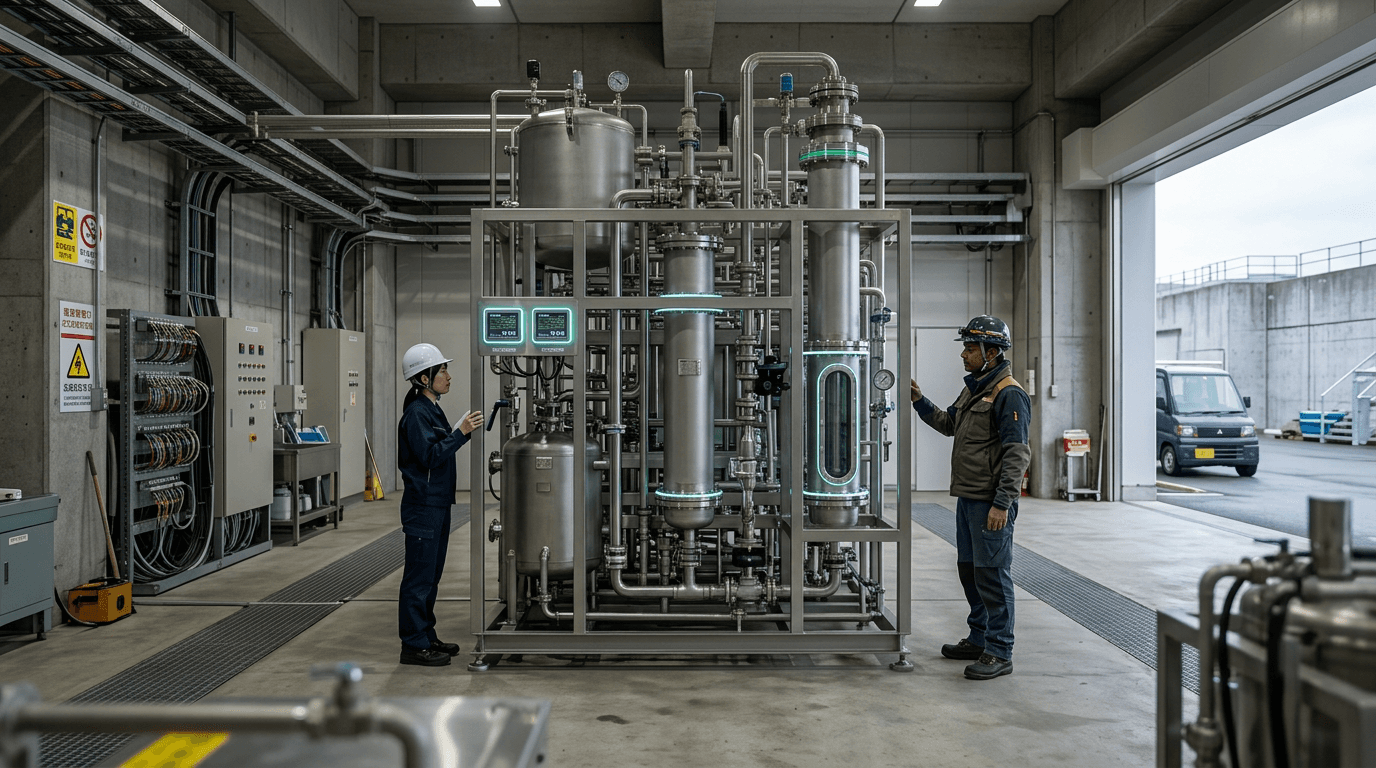
The Advanced Liquid Processing System (ALPS), developed by Toshiba and operated at Fukushima Daiichi, is the world's most sophisticated radioactive water purification technology. ALPS removes 62 different radionuclides from contaminated water to concentrations below Japan's regulatory limits, processing the 1.3+ million cubic meters of water that accumulated from cooling the damaged reactor cores. The system uses a sequence of chemical coprecipitation, absorption columns, and ion exchange processes, each targeting specific radioactive isotopes — from cesium and strontium to cobalt, ruthenium, and antimony. Only tritium (hydrogen-3), which is chemically identical to water, cannot be separated.
The engineering challenge was unprecedented: designing a system to treat water contaminated with dozens of different radioactive elements simultaneously, at concentrations varying by orders of magnitude, with absolute reliability. ALPS has been progressively upgraded since its 2013 deployment, with three main ALPS units and additional strontium-removal systems operating in parallel. The IAEA has conducted extensive monitoring of the treated water discharge that began in August 2023, consistently confirming tritium levels well below regulatory limits — validating the treatment technology's effectiveness.
While ALPS was born of crisis, the underlying multi-nuclide separation chemistry has broader applications: decommissioning of aging nuclear plants worldwide, treatment of legacy radioactive waste sites, and medical isotope purification. The technology demonstrates Japan's capability to develop world-leading environmental remediation systems under extreme pressure. As the global nuclear fleet ages and decommissioning accelerates, ALPS-derived water treatment technology represents an exportable Japanese capability — proven at the most demanding site on Earth.
Research this in Signals
Signals turns a topic into a sourced research record you can inspect and rerun. Your first scan is free, and this one starts with Multi-Nuclide Water Purification (ALPS) already loaded, so edit it or scan as is.