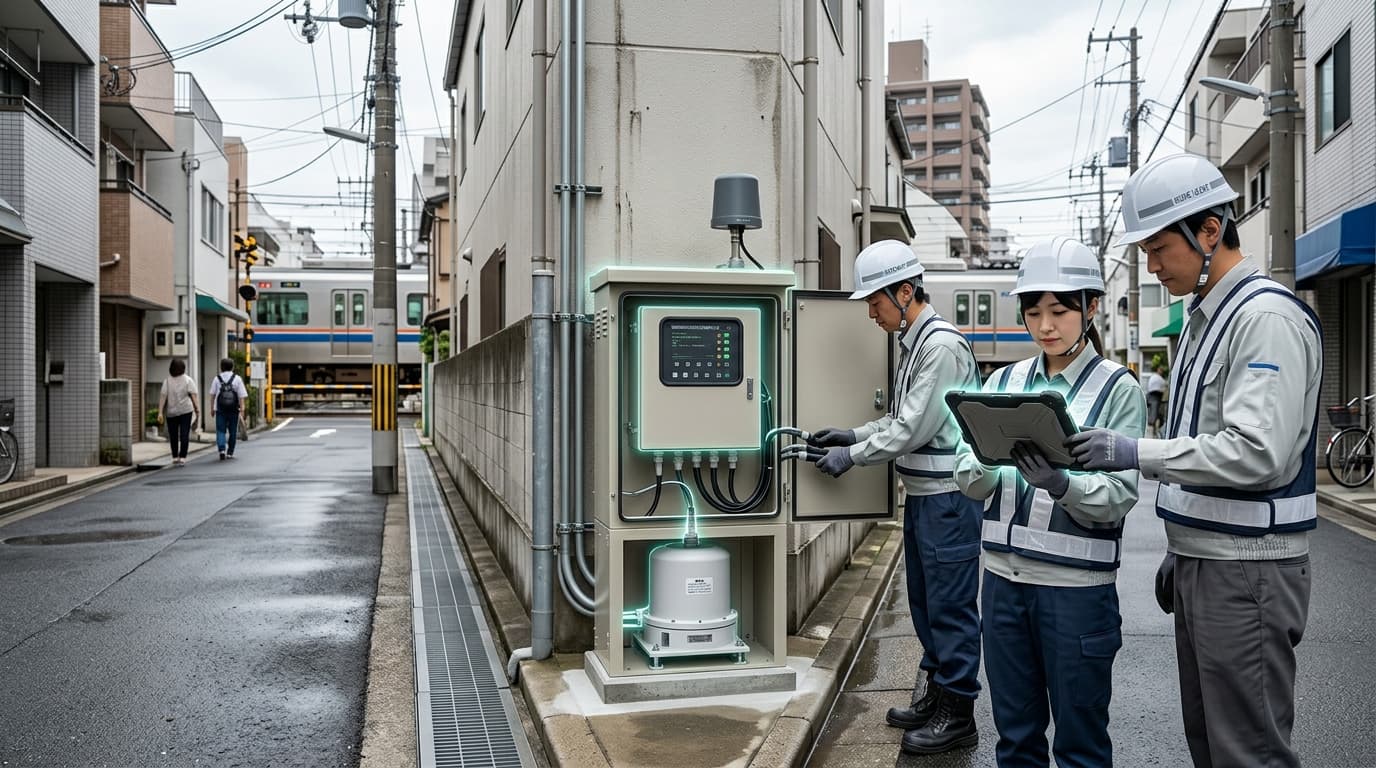
Earthquake Early Warning System (EEW/J-Alert)
Geography: Asia Pacific · East Asia · Japan
Japan Meteorological Agency operates the world's most sophisticated earthquake early warning system, using 4,235 seismometers and 1,100+ seismic intensity meters to detect P-waves and issue alerts before destructive S-waves arrive. When an earthquake strikes, the system analyzes the initial P-wave from two or more stations, predicts magnitude and location, and broadcasts warnings to 127 million people within seconds — via TV, radio, smartphones, and the J-Alert satellite network. The system activates automatic responses: Shinkansen trains brake, factory lines halt, elevator doors open, gas valves shut, and hospital operating rooms alert surgeons.
The system was born from tragedy and iteration. After the devastating 1995 Kobe earthquake killed 6,400 people, Japan invested billions in seismic infrastructure. The public EEW launched in 2007, and each subsequent earthquake — especially the 2011 Tohoku disaster — drove improvements. The system now integrates ocean-floor sensors (DONET and S-net cables along the Pacific seabed), AI-enhanced prediction algorithms, and real-time intensity estimation. During the 2024 Noto earthquake, warnings reached residents seconds before shaking, demonstrably saving lives.
The technology is being exported worldwide. Mexico, Turkey, Taiwan, and other earthquake-prone countries have adopted Japanese EEW methodology or components. The underlying engineering — real-time data fusion from thousands of sensors, sub-second decision algorithms, and mass notification infrastructure — represents a systems integration achievement that no other country has replicated at Japan's scale and reliability. In an era of climate-driven disaster intensification, Japan's 'bosai' (disaster prevention) technology is becoming an increasingly valuable export.
Research this in Signals
Signals turns a topic into a sourced research record you can inspect and rerun. Your first scan is free, and this one starts with Earthquake Early Warning System (EEW/J-Alert) already loaded, so edit it or scan as is.