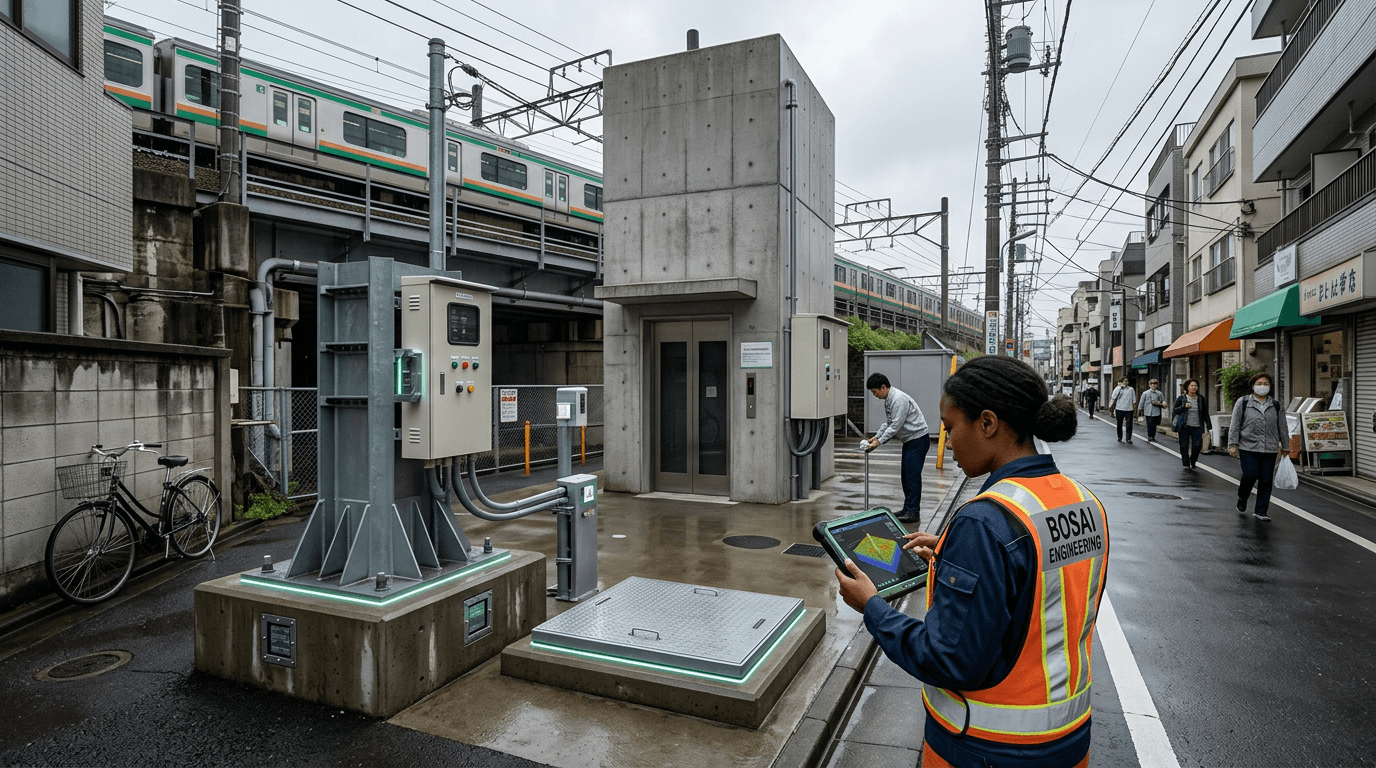
Disaster Resilience Engineering (Bosai Technology)
Geography: Asia Pacific · East Asia · Japan
Japan has developed the world's most comprehensive disaster resilience system through painful iteration over decades of earthquakes, tsunamis, typhoons, and volcanic eruptions. The system encompasses seismic building codes that are the world's strictest (updated after every major earthquake since 1924), base isolation and seismic damper technology deployed in over 9,000 buildings, tsunami early warning (as fast as 3 minutes after detection), 14-meter coastal barriers, and the J-Alert nationwide warning system that reaches every phone, TV, and radio simultaneously.
The technology layer is increasingly sophisticated: AI-powered disaster simulation software can predict earthquake damage and tsunami inundation patterns within minutes, drone swarms assess post-disaster damage autonomously, and satellite-based displacement monitoring detects ground movement before landslides occur. Japan's building inspection regime — where licensed 'kenchikushi' (architect-engineers) bear personal liability for building safety for a decade — creates accountability that most countries lack. After the 2024 Noto earthquake, Japanese buildings designed to current codes suffered minimal structural damage despite intense shaking.
Japan is now actively exporting bosai as a technology package. JICA (Japan International Cooperation Agency) operates disaster resilience programs in over 90 countries, transferring building codes, early warning systems, and community preparedness methodology. Countries like Turkey, Indonesia, Chile, and the Philippines have adopted Japanese seismic engineering standards. As climate change increases disaster frequency globally, Japan's integrated approach — not just individual technologies but the entire system of prediction, prevention, response, and recovery — represents one of the country's most valuable and distinctive technology exports.
Research this in Signals
Signals turns a topic into a sourced research record you can inspect and rerun. Your first scan is free, and this one starts with Disaster Resilience Engineering (Bosai Technology) already loaded, so edit it or scan as is.