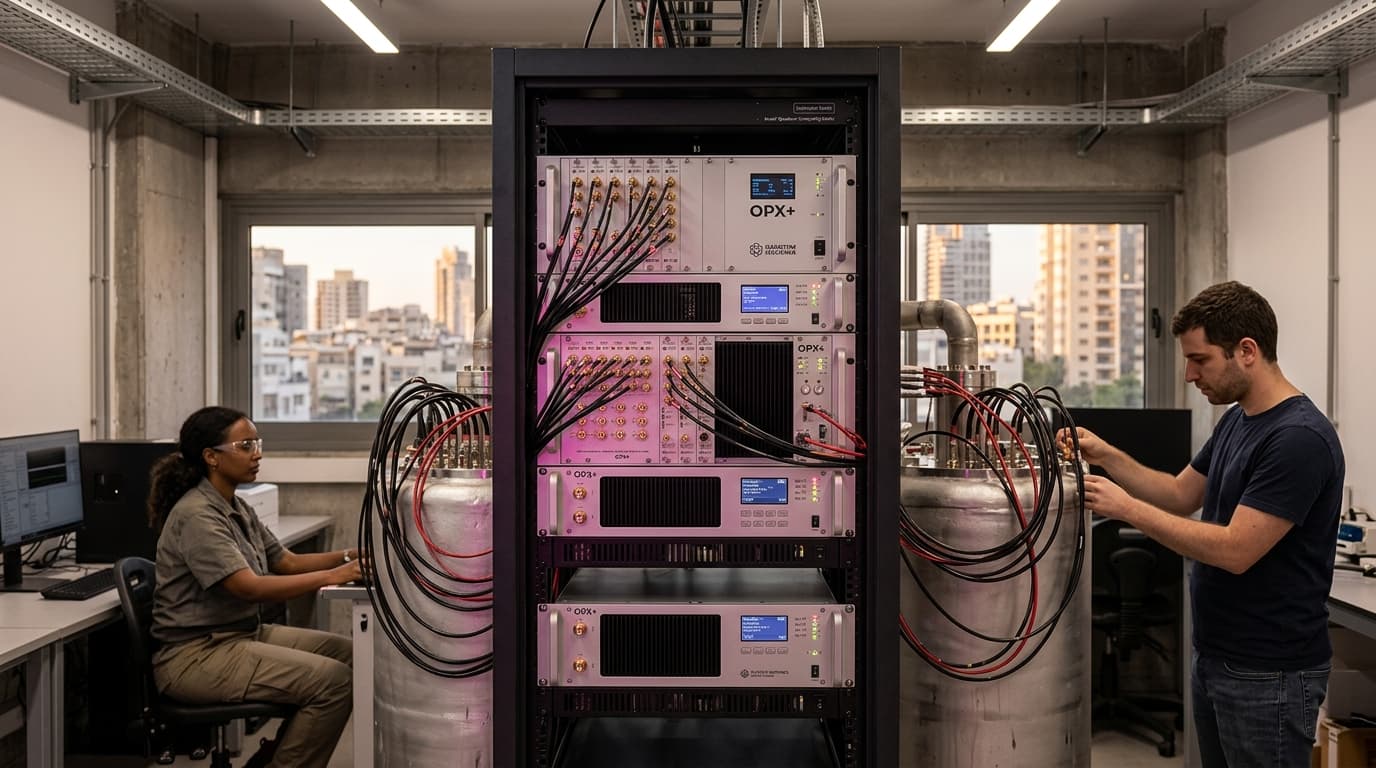
Quantum Computing Control and Orchestration Hardware
Geography: Emea · Middle East · Israel
Quantum Machines, founded in 2018 by three Hebrew University physicists, has developed the OPX+ quantum control hardware platform — effectively the operating system layer between quantum processors and classical computers. The system provides real-time pulse generation, feedback processing, and multi-qubit orchestration that quantum computers require to execute algorithms. In 2025, QM raised $170 million backed by Intel, and operates the Israeli Quantum Computing Center (IQCC).
Quantum Machines occupies a strategically brilliant niche: rather than competing to build qubits (where Google, IBM, and others invest billions), it provides the control infrastructure all quantum computers need regardless of qubit technology. The OPX+ works with superconducting, trapped-ion, photonic, and semiconductor qubits, making QM a platform-agnostic enabler. The IQCC became the world's first facility to deploy Qolab's superconducting qubit device in December 2025.
Israel's quantum ecosystem raised $500 million in 2025 across five companies, with QM leading at $170M. Other notable players include Classiq (quantum software, $110M raised), Quantum Art (trapped-ion hardware), and HEQA Security (post-quantum cryptography). Israel announced its first domestically built 20-qubit quantum computer in December 2024. The country's quantum strategy leverages its traditional strengths — physics talent, systems engineering, and startup speed — to carve defensible positions in quantum's emerging value chain.
Research this in Signals
Signals turns a topic into a sourced research record you can inspect and rerun. Your first scan is free, and this one starts with Quantum Computing Control and Orchestration Hardware already loaded, so edit it or scan as is.