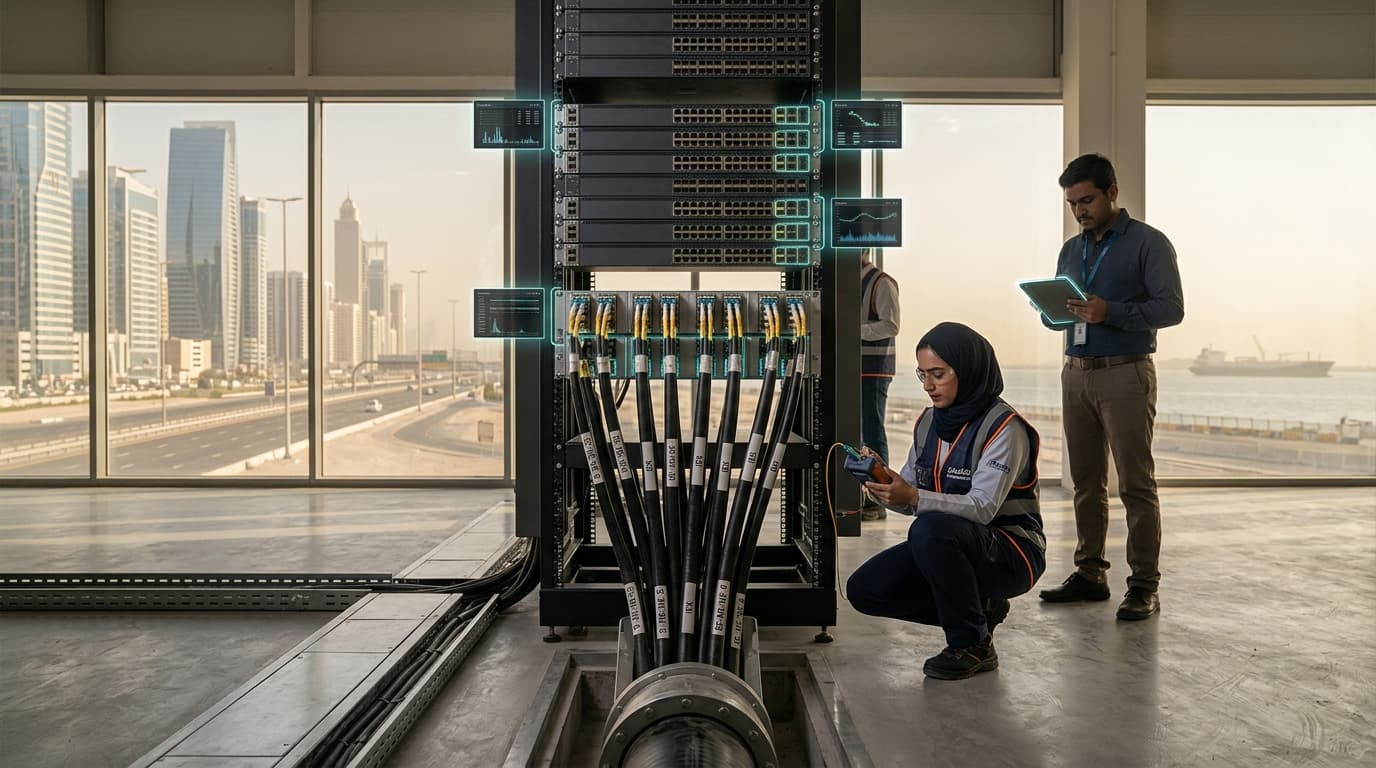
Gulf Submarine Cable & Connectivity Hub
Geography: Emea · Middle East · Gulf States
The Gulf's geographic position at the crossroads of Europe, Africa, and Asia makes it a natural hub for submarine telecommunications cables. Multiple new cable systems are being planned and constructed with Gulf landing stations, including routes that bypass traditional chokepoints like the Suez Canal by using overland connections through Saudi Arabia. UAE and Saudi telecom operators are investing in both submarine and terrestrial fiber networks.
This connectivity infrastructure serves the region's data center ambitions: hyperscale AI facilities require massive bandwidth to global networks. Gulf investment in submarine cables ensures low-latency connections to European and Asian markets, making the region competitive for cloud services, content delivery, and AI model serving.
Control of critical communications infrastructure provides strategic leverage. As the US-China technology competition intensifies, Gulf states positioning themselves as neutral connectivity hubs between the two spheres gain both economic and geopolitical advantages. The convergence of cheap energy for data centers, geographic centrality, and submarine cable infrastructure creates a compelling proposition for global cloud and AI companies.
Research this in Signals
Signals turns a topic into a sourced research record you can inspect and rerun. Your first scan is free, and this one starts with Gulf Submarine Cable & Connectivity Hub already loaded, so edit it or scan as is.