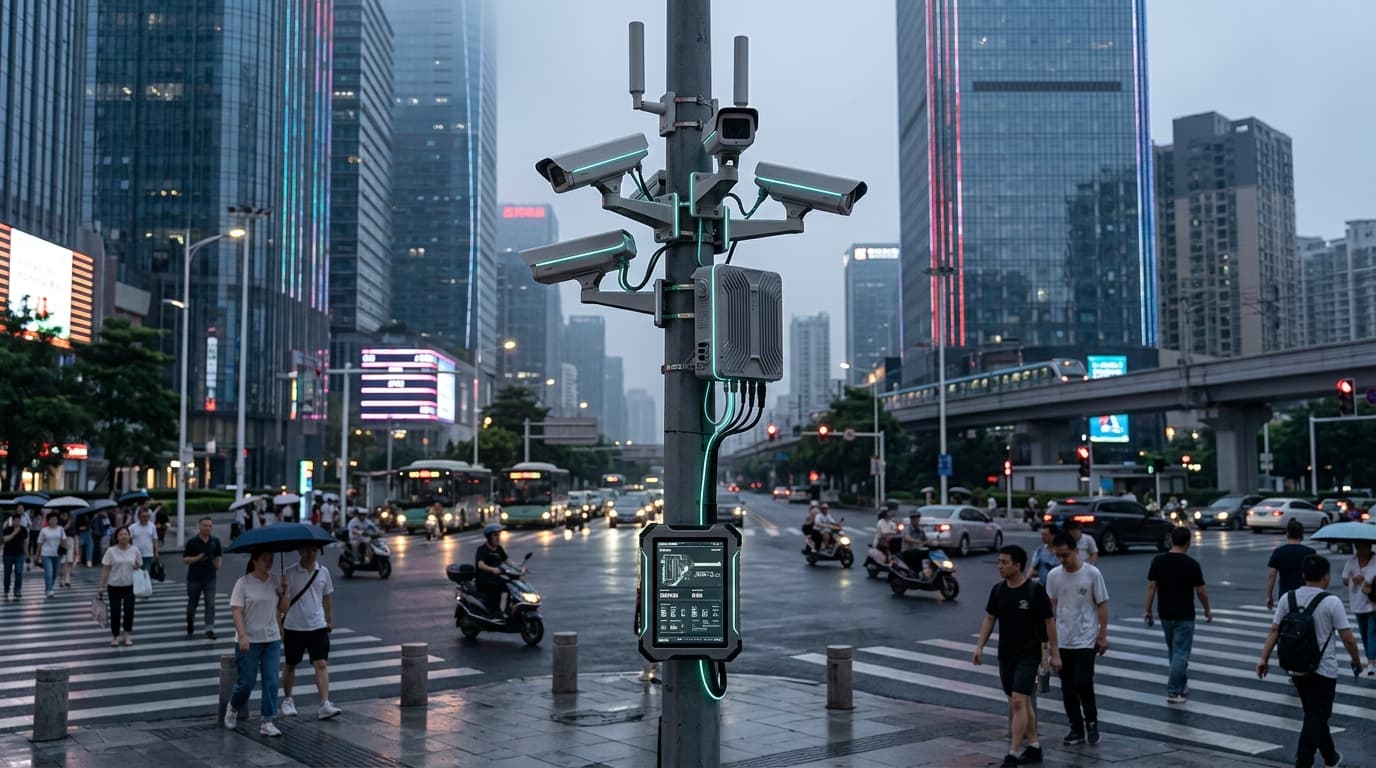
AI-Powered Urban Surveillance and Smart City Export
Geography: Asia Pacific · East Asia · China
Hikvision, Dahua, SenseTime, and Huawei have built the world's most comprehensive urban surveillance network. Systems combine facial recognition, gait analysis (identifying people by how they walk), license plate reading, and behavioral prediction. As of 2019, China had 200 million monitoring cameras; the number has grown substantially since.
The technology is exported globally as 'safe city' or 'smart city' infrastructure packages, bundled with financing through Belt and Road partnerships. Atlantic Council research documented Chinese surveillance technology deployments in dozens of countries across Africa, Southeast Asia, Latin America, and the Middle East.
The technology works — crime rates, traffic violations, and emergency response times all improve measurably. The question is the governance model that comes with it. Western democracies and rights organizations raise concerns that China is exporting authoritarian surveillance infrastructure. But for many governments facing real security challenges, the technology solves problems they can't address otherwise.
Research this in Signals
Signals turns a topic into a sourced research record you can inspect and rerun. Your first scan is free, and this one starts with AI-Powered Urban Surveillance and Smart City Export already loaded, so edit it or scan as is.