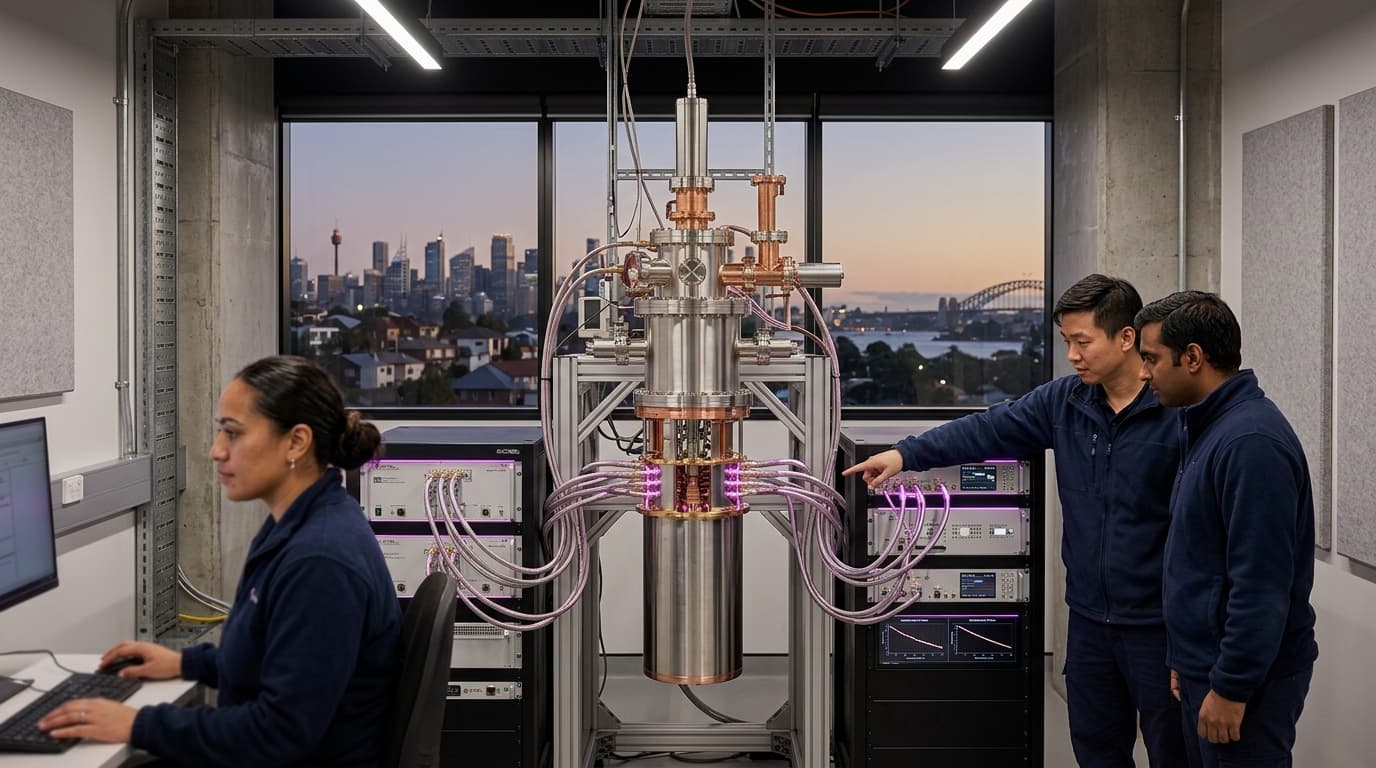
Quantum Control Firmware and Error Suppression
Geography: Asia Pacific · Oceania · Australia New Zealand
Sydney-based Q-CTRL has developed quantum control firmware — software that runs on classical computers and generates optimized control pulse sequences for quantum hardware. These pulses suppress noise and decoherence that would otherwise destroy quantum information, effectively making existing qubits perform as if they were 10-100x better. The company has raised over US$100M and works with every major quantum hardware platform (IBM, Google, IonQ, Quantinuum).
Quantum computers are extremely sensitive to environmental noise — vibrations, electromagnetic interference, temperature fluctuations — that cause qubits to lose their quantum state (decohere). Rather than waiting for perfect qubits (which may never arrive), Q-CTRL's approach uses control theory and machine learning to create pulse sequences that dynamically compensate for noise. This is analogous to noise-canceling headphones for quantum computers — the noise still exists, but the system actively counteracts it.
Q-CTRL's technology is platform-agnostic, meaning it improves performance across superconducting, trapped-ion, photonic, and silicon-based quantum computers. This positions Australia as a critical supplier to the entire quantum computing industry regardless of which hardware approach ultimately wins. The company's expansion into quantum sensing (for navigation and mining applications) creates additional revenue streams and defense applications aligned with AUKUS Pillar II priorities.
Research this in Signals
Signals turns a topic into a sourced research record you can inspect and rerun. Your first scan is free, and this one starts with Quantum Control Firmware and Error Suppression already loaded, so edit it or scan as is.