Photonic Quantum Computing
Geography: Asia Pacific · Oceania · Australia New Zealand
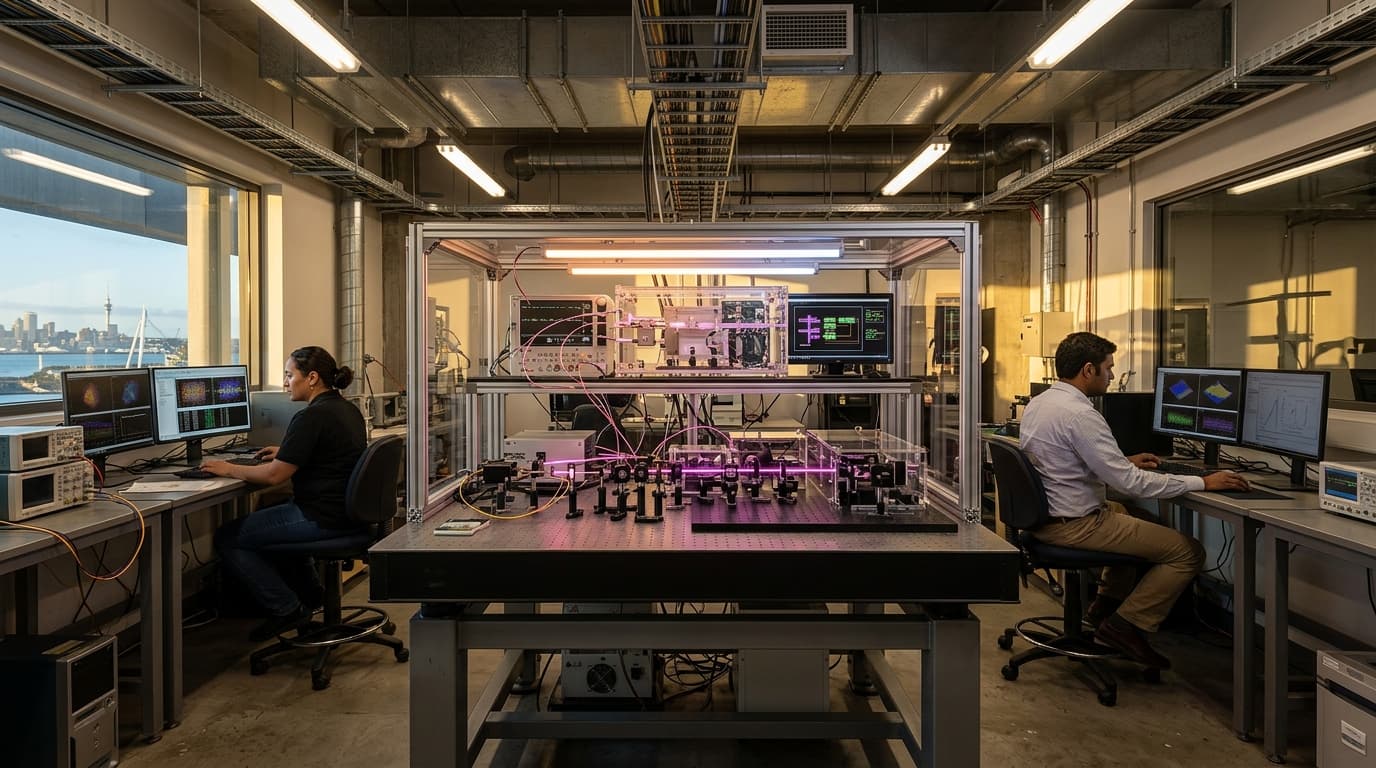
Australian researchers at universities including University of Sydney, RMIT, and Griffith University are pursuing photonic quantum computing — an approach that encodes quantum information in individual photons rather than superconducting circuits or trapped ions. Photonic quantum computers operate at room temperature, eliminating the need for expensive dilution refrigerators that cool conventional quantum processors to near absolute zero. Australian company Xanadu (which has Australian research connections) and university labs are developing integrated photonic circuits on silicon chips.
The room-temperature advantage of photonic quantum computing is transformational for practical deployment. Current quantum computers require cooling to 15 millikelvin — colder than outer space — using refrigerators costing millions of dollars and consuming enormous power. Photonic processors, operating at room temperature, could be deployed in data centers, on military platforms, or in remote locations where cryogenic infrastructure is impractical.
Australia's strengths in photonics research complement its silicon quantum computing program (SQC), creating a portfolio approach to quantum computing that hedges against the risk of any single hardware approach failing. While photonic quantum computing faces its own challenges (photon loss, deterministic photon sources), Australian research contributions to integrated photonic circuits and quantum error correction codes are internationally recognized.
Research this in Signals
Signals turns a topic into a sourced research record you can inspect and rerun. Your first scan is free, and this one starts with Photonic Quantum Computing already loaded, so edit it or scan as is.