Asteroid Mining & Resource Extraction
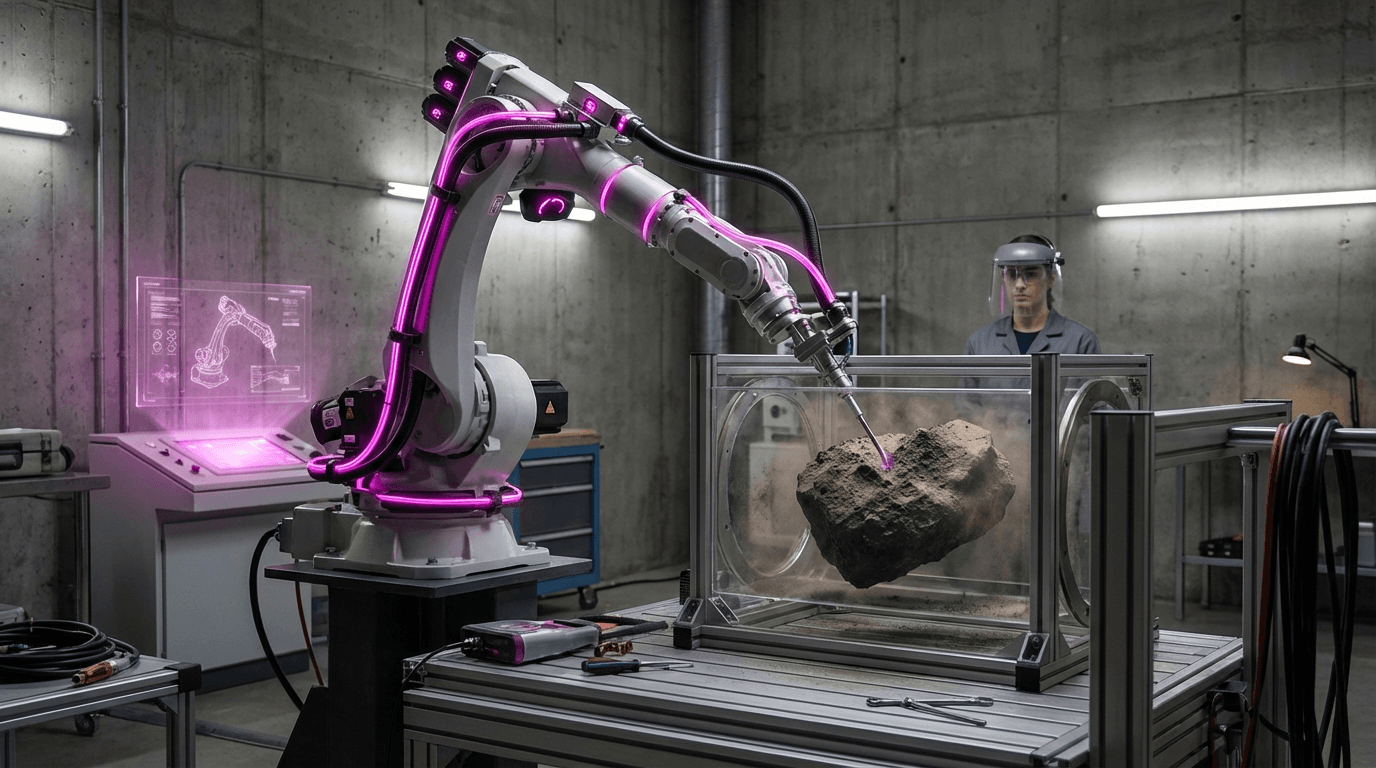
Asteroid mining represents a paradigm shift in how humanity accesses raw materials, extending resource extraction beyond Earth's boundaries to the vast reservoirs of minerals and volatiles locked within near-Earth asteroids. These celestial bodies, remnants from the solar system's formation, contain concentrations of platinum-group metals, rare earth elements, iron, nickel, and water ice that far exceed terrestrial deposits. The technical approach combines autonomous robotic prospecting systems with in-situ processing capabilities. Spacecraft equipped with spectroscopic sensors first identify promising targets by analysing surface composition from orbit, then deploy landers or capture mechanisms to secure the asteroid. Processing methods vary by target material: water ice can be extracted through thermal sublimation and electrolysis to produce rocket propellant, while metallic asteroids may be processed using techniques adapted from terrestrial mining, including magnetic separation, chemical leaching, or even concentrated solar furnaces that exploit the vacuum of space and abundant solar energy.
The economic and strategic imperatives driving asteroid mining stem from fundamental limitations of Earth-based space operations. Launching materials from Earth's gravity well remains prohibitively expensive, with costs measured in thousands of dollars per kilogram. By establishing resource depots in orbit or at strategic locations like lunar orbit, space agencies and commercial operators can dramatically reduce the mass that must be lifted from Earth's surface. Water extracted from asteroids becomes particularly valuable as a source of hydrogen and oxygen for rocket fuel, enabling spacecraft to refuel in space rather than carrying all propellant from launch. This capability transforms mission architectures for deep space exploration, making destinations like Mars or the outer solar system far more accessible. For commercial ventures, certain asteroids contain platinum-group metals in concentrations that could theoretically justify return missions to Earth, though the economics remain speculative. More immediately practical applications focus on supporting satellite servicing, orbital manufacturing, and construction of large space structures using materials that never need to overcome Earth's gravity.
Early prospecting missions and technology demonstrations have begun validating the technical feasibility of asteroid resource utilisation, though full-scale commercial operations remain years away. Research initiatives are developing autonomous excavation systems, zero-gravity processing techniques, and methods for capturing or anchoring to asteroids with minimal gravity. Industry analysts note that the first economically viable operations will likely focus on providing propellant and construction materials for the growing orbital economy rather than returning materials to Earth. As launch costs continue declining and the population of satellites, space stations, and lunar infrastructure expands, the business case for space-based resources strengthens. This technology represents a foundational element of sustainable space exploration, potentially enabling a future where spacecraft are built, fueled, and maintained using materials that never touch Earth's surface, fundamentally altering humanity's relationship with space from brief visits to permanent industrial presence.
Related Organizations

A startup actively launching missions (Brokkr-1, Brokkr-2) to prospect and refine platinum-group metals from asteroids.

National space agency of Luxembourg, specifically focused on the commercial exploration and utilization of space resources.
Hosts the Center for Space Resources, a leading academic hub for ISRU research and education.

Developing 'capture bag' technology originally for asteroid mining, now applied to capturing orbital debris.

Developing spacecraft to mine Near-Earth Asteroids for water and minerals to support sustainable space exploration.

Honeybee Robotics
United States · Company
Develops advanced robotic systems for planetary exploration, specifically drilling and sampling tools essential for extracting subsurface ice and regolith.

Developing a swarm of AI-powered industrial robots for mining on Earth, with the explicit goal of expanding to the Moon and Mars.

Private lunar exploration company focusing on transportation and resource exploration to establish a lunar economy.
Supporting Evidence
Research this in Signals
Signals turns a topic into a sourced research record you can inspect and rerun. Your first scan is free, and this one starts with Asteroid Mining & Resource Extraction already loaded, so edit it or scan as is.