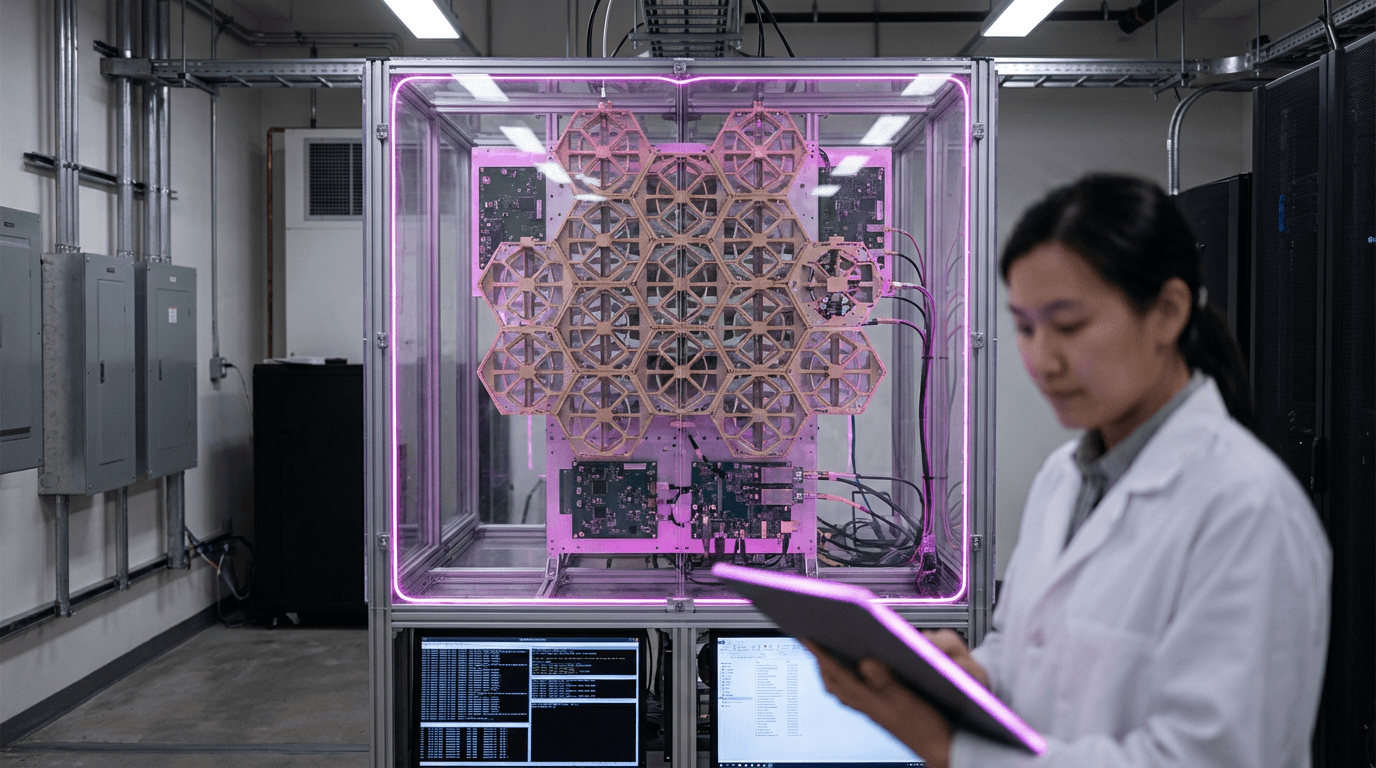
6G Terahertz Communication
The evolution of wireless communication has consistently pushed toward higher frequencies to unlock greater bandwidth and faster data transmission. 6G terahertz communication represents the next frontier in this progression, operating in the largely unexplored terahertz spectrum between 0.1 and 10 THz—frequencies that sit between microwave and infrared radiation on the electromagnetic spectrum. Unlike previous generations that relied on lower frequency bands, terahertz waves offer unprecedented bandwidth availability, theoretically enabling data transmission speeds measured in terabits per second rather than gigabits. However, these extremely high frequencies present significant technical challenges. Terahertz waves experience severe propagation loss, particularly when traveling through atmospheric moisture, and struggle to penetrate solid objects. To overcome these limitations, researchers are developing advanced beamforming techniques that can precisely direct narrow signal beams, along with novel materials such as graphene-based antennas and metamaterials that can efficiently generate, modulate, and detect terahertz radiation. The technology also requires sophisticated signal processing algorithms and new semiconductor components capable of operating at these extreme frequencies.
For telecommunications infrastructure and urban connectivity, 6G terahertz communication addresses the growing demand for bandwidth that current networks cannot sustainably meet. As cities become increasingly dense with connected devices—from autonomous vehicles requiring real-time coordination to augmented reality systems overlaying digital information onto physical spaces—existing spectrum allocations face congestion. The terahertz range offers a solution by providing vast swaths of unused spectrum capable of supporting these bandwidth-intensive applications. This technology enables new paradigms in urban communication, such as holographic telepresence where three-dimensional representations of people can be transmitted in real-time, or tactile internet applications where remote physical sensations can be conveyed with imperceptible latency. For critical infrastructure, the microsecond-level latency achievable with terahertz communication could support ultra-responsive systems for industrial automation, emergency response coordination, and distributed sensing networks that monitor everything from structural integrity to environmental conditions across entire metropolitan areas.
Early research into terahertz communication is progressing through laboratory demonstrations and small-scale trials, though widespread deployment remains years away. Pilot programs are exploring short-range applications such as wireless backhaul connections between network nodes, indoor hotspot coverage in high-density environments like stadiums or transit hubs, and specialized industrial settings where extreme data rates justify the infrastructure investment. The technology aligns with broader trends toward network densification and heterogeneous network architectures, where different frequency bands serve complementary roles. As urban environments continue their digital transformation, terahertz communication is positioned to become a critical component of future infrastructure, particularly for applications requiring both massive bandwidth and ultra-low latency. The development trajectory suggests that initial commercial deployments may emerge in the early 2030s, beginning with fixed wireless applications before expanding to mobile use cases as the technology matures and becomes more cost-effective.
Related Organizations
The world's first major 6G research program, based at the University of Oulu.

Industrial research lab with a history of fundamental research in condensed matter physics relevant to topological phases.

Manufacturer of millimeter-wave and terahertz test and measurement equipment.

German research institute developing advanced algorithms for 3D Human Body Reconstruction and volumetric video coding.

Offers the Quantum Engineering Toolkit (QET) and Labber software for instrument control and pulse generation.

International electronics group specializing in test equipment, broadcast & media, and cybersecurity.

Samsung Research
South Korea · Research Lab
Advanced R&D arm of Samsung Electronics, heavily invested in 6G spectrum and THz communications.

An initiative by ATIS to advance North American mobile technology leadership in 6G.

Supporting Evidence
Research this in Signals
Signals turns a topic into a sourced research record you can inspect and rerun. Your first scan is free, and this one starts with 6G Terahertz Communication already loaded, so edit it or scan as is.