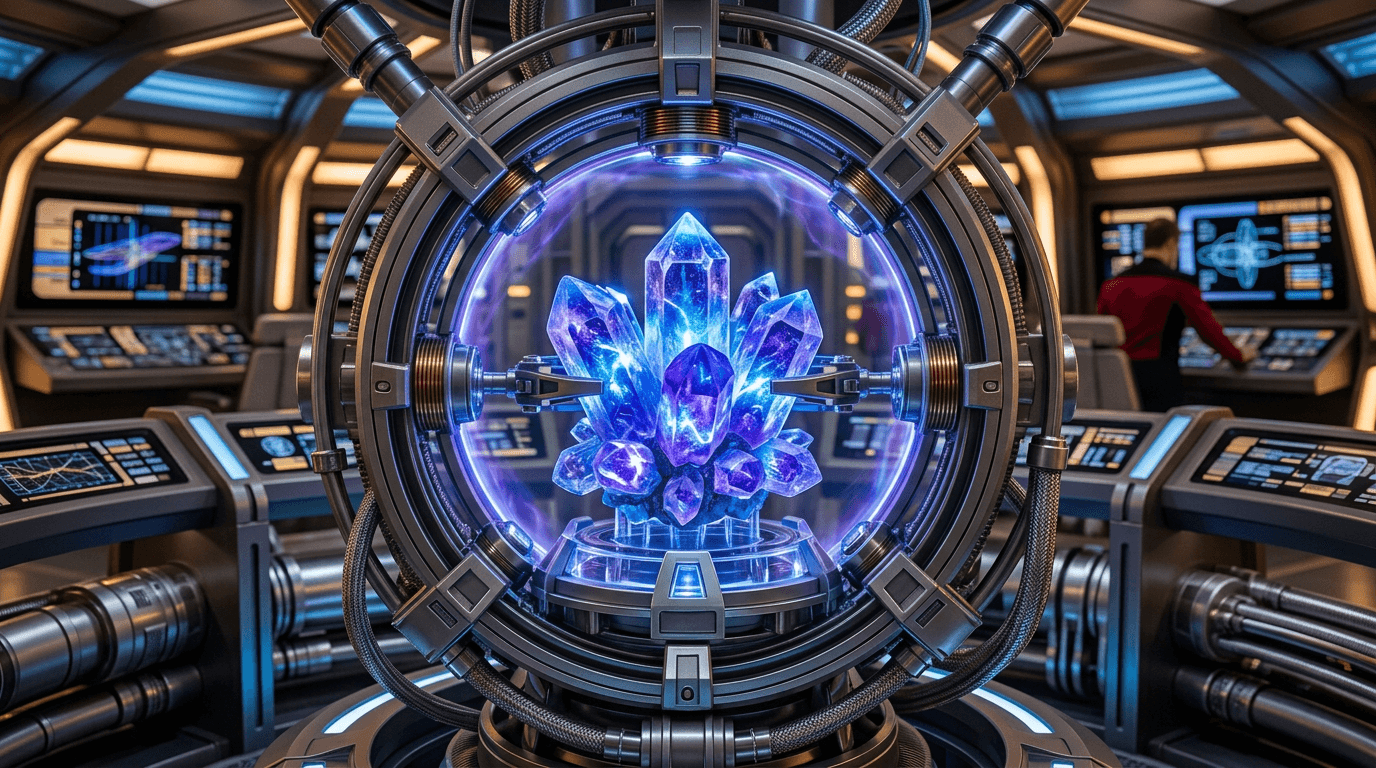
Dilithium Crystals
Dilithium crystals represent one of the most iconic speculative materials in science fiction, conceived as a crystalline matrix capable of mediating the controlled annihilation of matter and antimatter. In fictional frameworks where faster-than-light travel depends on harnessing the immense energy released from matter-antimatter reactions, dilithium serves as the critical regulatory element that prevents catastrophic uncontrolled explosions. The imagined mechanism relies on the crystal's unique atomic lattice structure, which theoretically channels and focuses the energy release from particle annihilation while remaining structurally intact during the process. This non-consumptive property distinguishes dilithium from conventional fuel sources, positioning it instead as a reusable catalyst or mediator. The concept draws loose inspiration from real crystalline materials that exhibit unusual electromagnetic or quantum properties, though no known substance possesses the capabilities attributed to dilithium in speculative narratives.
Within science fiction worldbuilding, dilithium crystals serve multiple narrative functions beyond their technical role in propulsion systems. Their scarcity creates economic and political tensions that drive storylines, establishing them as strategic resources analogous to petroleum, rare earth elements, or uranium in contemporary geopolitics. The need to locate, mine, and control dilithium deposits provides motivation for exploration, territorial disputes, and interstellar commerce. This narrative device reflects real-world concerns about resource dependency and supply chain vulnerabilities, particularly as space agencies and private ventures begin contemplating asteroid mining and extraterrestrial resource extraction. The concept also introduces maintenance and logistics challenges—crystal fracturing, matrix depletion, and the need for specialized recrystallization facilities—that ground otherwise fantastical technologies in operational realities familiar to engineers and military planners.
From a scientific plausibility standpoint, dilithium crystals remain firmly in the realm of speculation, as matter-antimatter reactions present fundamental challenges that no known material could address in the manner described. Real antimatter research focuses on magnetic confinement and particle traps rather than crystalline mediation, and the energy densities involved would likely vaporize any conventional material instantly. The concept assumes breakthroughs in materials science, quantum field manipulation, and high-energy physics that remain theoretical at best. However, the underlying premise—that exotic materials might enable revolutionary energy systems—resonates with ongoing research into metamaterials, topological insulators, and quantum materials with counterintuitive properties. While dilithium itself will likely remain fictional, the narrative framework it provides helps futurists and strategists explore questions about resource scarcity, energy infrastructure dependencies, and the geopolitical implications of breakthrough propulsion technologies, should they ever emerge.
Research this in Signals
Signals turns a topic into a sourced research record you can inspect and rerun. Your first scan is free, and this one starts with Dilithium Crystals already loaded, so edit it or scan as is.