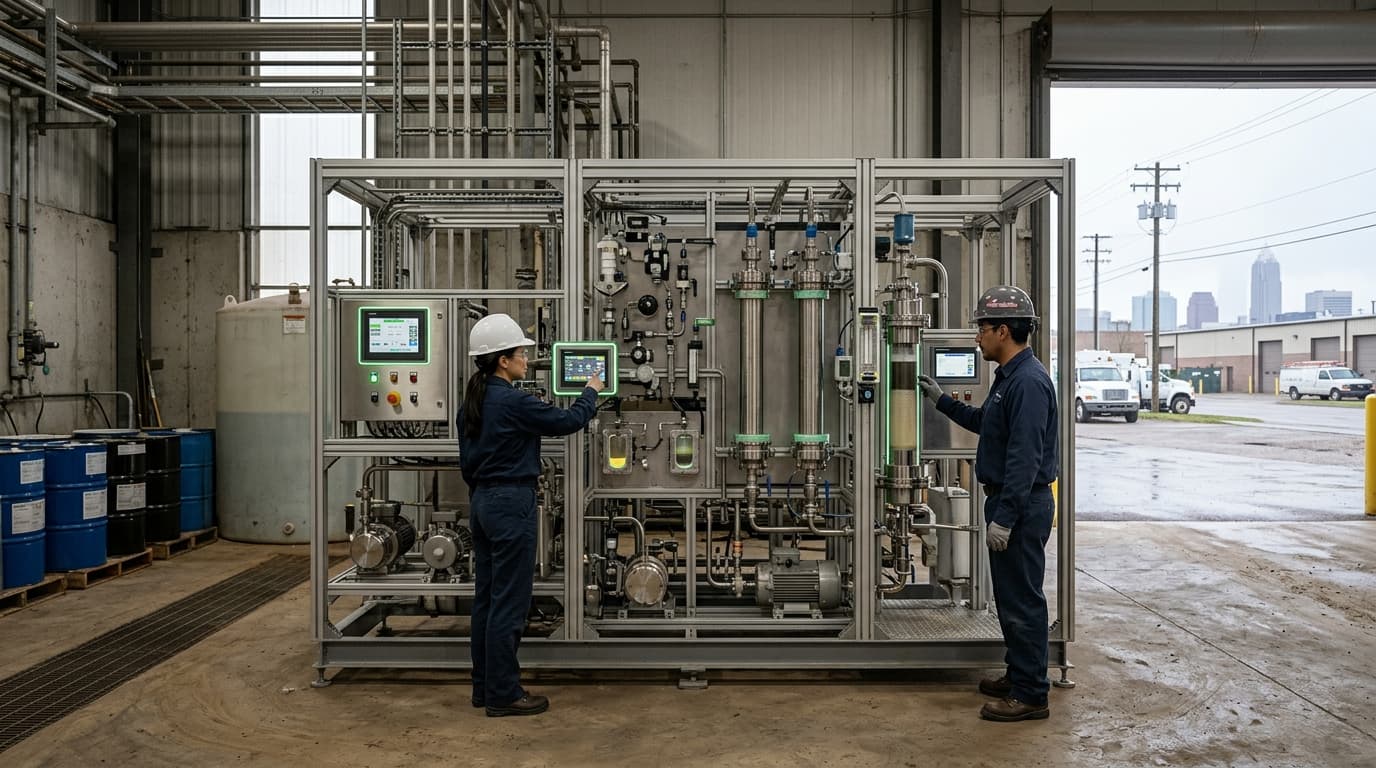
Continuous Rare Earth Element Separation Technology
Geography: Americas · North America · United States
US national laboratories — particularly Oak Ridge (ORNL), Ames Lab's Critical Materials Institute, and Idaho National Lab — have pioneered novel rare earth separation technologies that dramatically improve on the conventional solvent extraction process China has dominated for decades. ORNL's game-changing continuous ligand-assisted displacement chromatography can separate all 16 rare earth elements in a single pass, compared to the hundreds of mixer-settler stages required in Chinese processing plants. Ames Lab developed task-specific ionic liquids that dissolve rare earth minerals without strong acids, reducing environmental impact and processing cost.
Rare earth separation is the technological bottleneck in the supply chain — mining the ore is relatively straightforward, but separating chemically similar elements like neodymium, praseodymium, and dysprosium from each other requires extraordinary precision. China's dominance stems not from mineral abundance but from decades of optimizing this separation chemistry. The new US approaches — continuous chromatography, ligand-based extraction, ionic liquid processing — offer fundamentally different process chemistry that can achieve higher purity with less waste. Cyanex 572, developed partly through DOE-funded research, reduces acid consumption by 30% in heavy rare earth separation.
These separation technologies are being licensed to US companies including MP Materials (Texas) and Lynas Rare Earths (DOD-funded facility) to enable domestic processing of the full rare earth value chain. The strategic significance is that separation technology is the key that unlocks rare earth independence — without it, even domestically mined ore must be shipped to China for processing. Closing this gap transforms the US from a raw material exporter to a finished magnet producer, securing supply chains for EVs, wind turbines, and defense systems.
Research this in Signals
Signals turns a topic into a sourced research record you can inspect and rerun. Your first scan is free, and this one starts with Continuous Rare Earth Element Separation Technology already loaded, so edit it or scan as is.