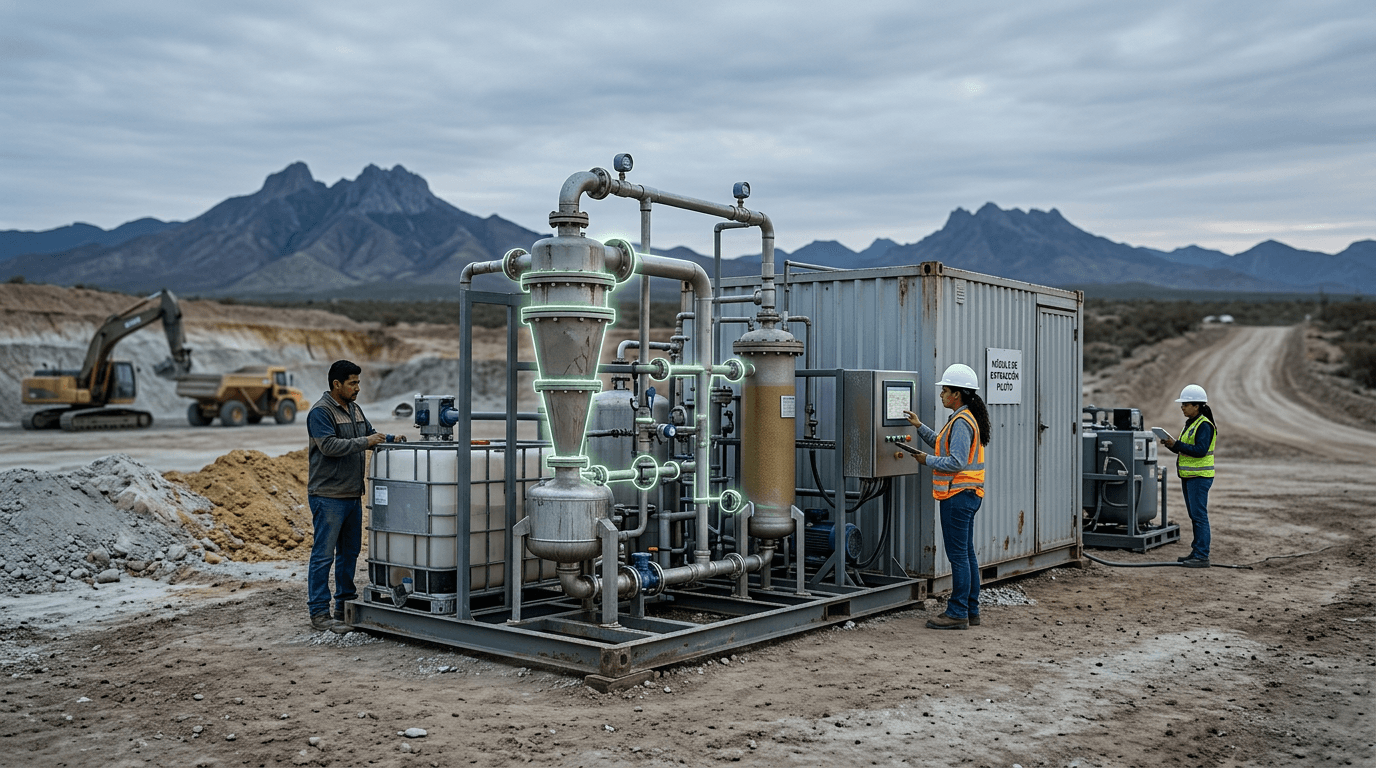
Clay-Based Lithium Extraction Technology
Geography: Americas · South America · Latin America
Mexico holds significant lithium reserves across 82 known deposits in 18 states, with the Sonora deposit being the largest clay-based lithium source in the Americas. Unlike the brine deposits of Chile and Argentina, Mexico's lithium is trapped in clay minerals — a geological form that nowhere in the world was commercially producing lithium as of September 2025. The Sheinbaum government has tasked PEMEX with evaluating direct lithium extraction (DLE) technologies to process lithium from both clay deposits and oilfield brines into battery-grade carbonate or hydroxide.
The technical challenge is immense. Clay-based extraction requires either traditional open-pit mining with heavy acid leaching, or novel DLE approaches using advanced filtering membranes or sorbent materials. PEMEX faces steep hurdles: no experience in non-energy mining, unproven extraction technology at commercial scale, and the need to meet sustainability standards. Academic research at Mexican institutions is exploring supply chain models and economic feasibility, but the gap between laboratory proof-of-concept and industrial production remains wide.
The geopolitical stakes are high. Mexico nationalized lithium in 2022, declaring it a strategic mineral under state control. If DLE technology can be made viable for clay deposits — a breakthrough that would have global implications beyond Mexico — the country could become a significant player in battery supply chains. The proximity to US EV manufacturing makes Mexican lithium strategically valuable for North American energy security, but the technology risk is real and timelines uncertain.
Research this in Signals
Signals turns a topic into a sourced research record you can inspect and rerun. Your first scan is free, and this one starts with Clay-Based Lithium Extraction Technology already loaded, so edit it or scan as is.