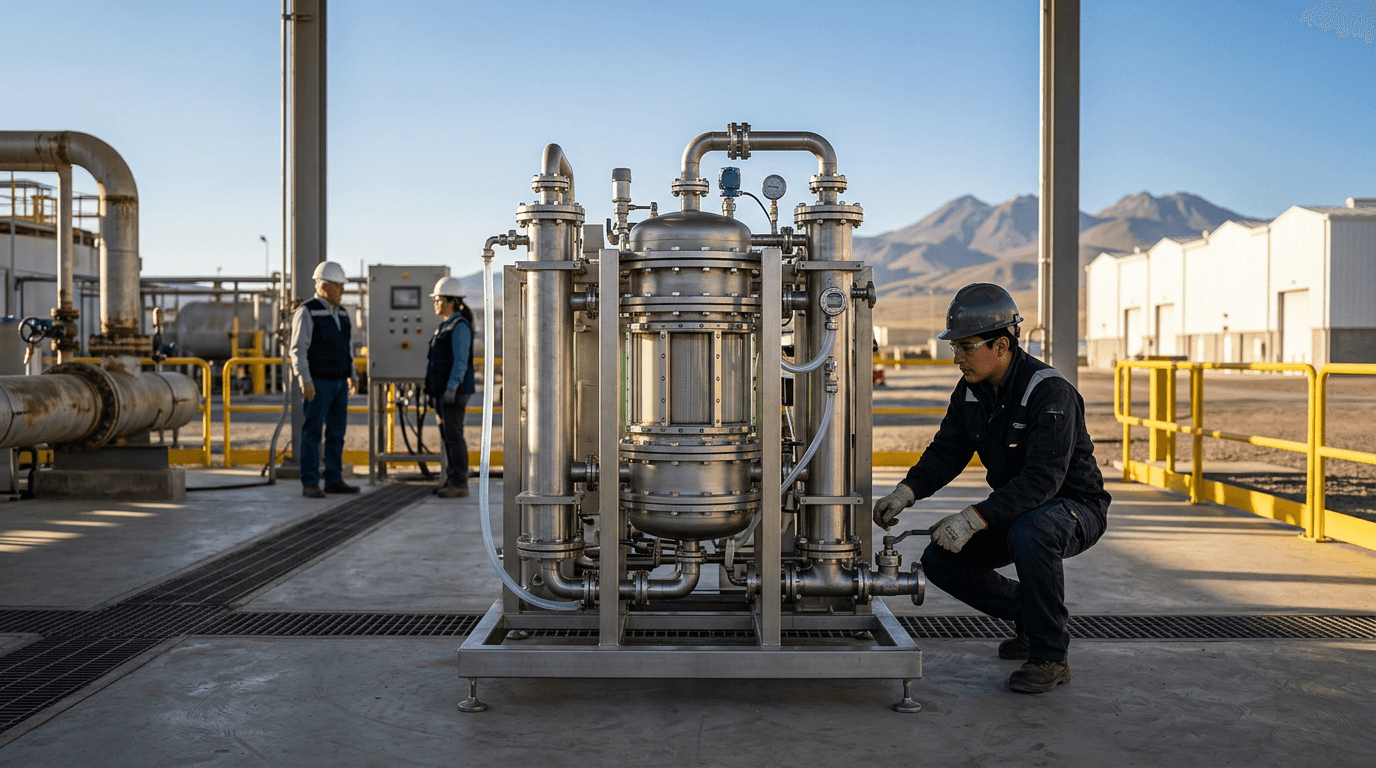
Direct Lithium Extraction from Brine
Geography: Americas · South America · Latin America
Chile's Salar de Atacama contains the world's largest lithium brine deposits — approximately 36% of global reserves with the highest known lithium concentrations (up to 1,800 ppm). Traditional extraction uses vast evaporation ponds that take 12-18 months to concentrate lithium and waste enormous quantities of scarce desert water. Direct lithium extraction (DLE) technologies — using adsorbents, solvents, or ion exchange resins — promise to recover 90%+ of lithium from brine in hours rather than months, while returning depleted brine to the salar.
Albemarle and SQM, the two companies with extraction rights in the Atacama, are deploying DLE pilot systems as Chile's government mandates the transition away from evaporation ponds. The technology variations include lithium-selective adsorbent beads, membrane-based separation, and electrochemical extraction. CORFO (Chile's economic development agency) has structured new concession terms requiring DLE adoption, with the state taking a larger equity stake in exchange for extended operating rights.
The global stakes are enormous. If DLE works at industrial scale in the Atacama — the world's most commercially important lithium source — it becomes the standard technology for lithium production worldwide. Chile's ability to produce more lithium with less water and smaller environmental footprint would reinforce its market dominance while addressing the environmental criticism that has threatened the industry's social license to operate.
Research this in Signals
Signals turns a topic into a sourced research record you can inspect and rerun. Your first scan is free, and this one starts with Direct Lithium Extraction from Brine already loaded, so edit it or scan as is.