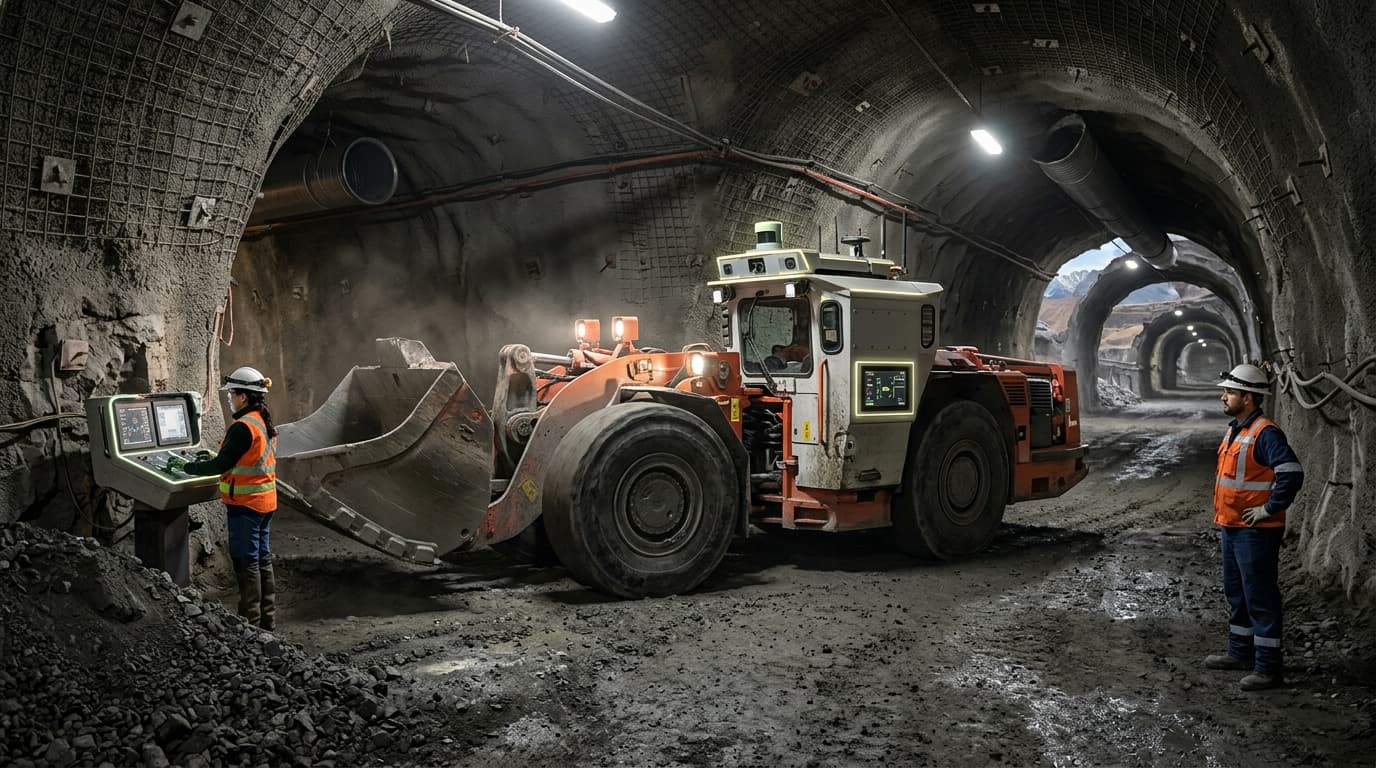
Autonomous Mining Vehicle Systems
Geography: Americas · South America · Latin America
Chile's mining industry — the world's largest copper producer — has been at the forefront of autonomous mining vehicle deployment since Codelco introduced 18 autonomous haul trucks at its Gabriela Mistral open-pit mine in 2008. The technology includes GPS-guided autonomous haul trucks (300+ ton capacity), autonomous drill rigs, and remote-operated load-haul-dump (LHD) vehicles for underground operations. Caterpillar, Komatsu, and Epiroc provide the primary autonomous platforms.
The July 2025 El Teniente mine collapse — Chile's worst mining accident in decades, killing six workers — dramatically accelerated the push toward underground automation. Codelco announced a fast-track automation program to reduce human exposure in the world's largest underground copper mine. The technology challenge is greater underground than in open-pit: GPS doesn't work below surface, environments are more confined, and rock conditions are less predictable. Solutions include LiDAR-based navigation, mesh radio networks for underground communications, and AI systems that detect geological instability.
The economic and safety imperatives align: autonomous systems operate 24/7 without shift changes, eliminate human exposure to rockfall and dust hazards, and achieve more consistent haul cycle times. As Chile's surface ore bodies deplete and mining moves deeper underground, autonomy transitions from efficiency gain to operational necessity. Chile's mining automation experience is being exported to copper, gold, and iron ore operations worldwide.
Research this in Signals
Signals turns a topic into a sourced research record you can inspect and rerun. Your first scan is free, and this one starts with Autonomous Mining Vehicle Systems already loaded, so edit it or scan as is.